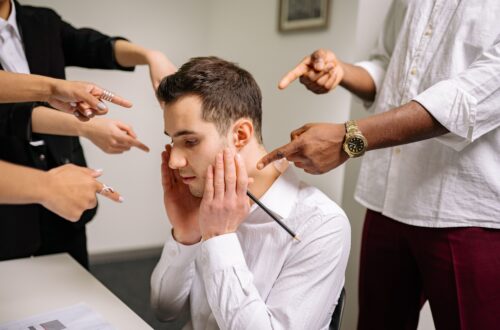








You ever notice how sometimes you can feel like you said all the right words but still not be understood?
Like, you spelled it out perfectly, you were clear, even careful, and somehow the other person still heard something completely different. I’ve been thinking about that a lot. About how much of life depends not just on what we say, but on what we mean, and how those two things don’t always line up in the world around us.
There’s this idea in anthropology about “high-context” and “low-context” societies (as has been recently pointed out to me). High-context cultures (like Japan, a lot of Indigenous communities, or, as I learned from experience, France) rely on shared understanding; things go unsaid because everyone just knows. It’s about history, tone, gestures, and mutual respect. Whereas, low-context cultures (like the U.S. or Germany) are the opposite. Everything’s explicit, written down, signed, timestamped. You don’t have to guess what someone means because it’s right there in black and white.
Both systems have their beauty; and both can drive you crazy. In high-context places, you can feel like an outsider forever because you don’t know the “unspoken rules.” In low-context places, you can feel like no one really gets you because everyone’s just following procedures. One feels too hidden, the other too hollow.
But what if we could blend the best of both perspectives?
What if we built a culture that valued both empathy and clarity? Where people said what they meant; but with kindness. Where the written mattered, but the human mattered more. Where “I hear you” wasn’t just something polite to say, but something people actually practiced in their daily interactions.
In that kind of world, communication wouldn’t be a contest. You wouldn’t need to speak in disclaimers or decode someone’s tone like a cryptographer. You’d be allowed to assume good intent. Arguments would end with understanding instead of resentment. Conversations might actually solve something.
Our systems would work that way too. Laws and policies wouldn’t just be about enforcement; they’d be about fairness and, dare I say it, compassion. We’d still have contracts, but we’d also have real conversations. We’d use rules to protect relationships, not replace them. And when something went wrong, people would ask why before they punished who.
Even schools would look different. We’d teach kids how to listen, not just debate. They’d learn that “being smart” isn’t only about grades; it’s also about reading people, timing, empathy, and context. Basically, we’d be raising people who are emotionally fluent, not just academically equipped.
I think about work, too. Most workplaces now swing between cold efficiency and fake family vibes (i.e. silicon valley). But imagine a company that’s both transparent and trusting. Where loyalty is earned, not expected. Where people feel safe to speak up, but also respected enough to be heard. I don’t think that’s fantasy; it’s just emotional intelligence with structure.
Even online, maybe we’d stop performing so much. Social media would slow down a little. Comments would sound more like conversations than press releases. All those programs that run the world would start to reward thoughtfulness over outrage. And maybe we would even start remembering that real communication isn’t about broadcasting. It’s about connecting.
It’s not about being “nice” or “sensitive” all the time. It’s about being real without being reckless. It’s about clarity without coldness, connection without confusion.
Because if you think about it, every problem we face, from politics to relationships to the internet itself, comes down to that: how we talk, how we listen, and how we make meaning together.
Maybe the society we’ve been looking for isn’t some new invention. Maybe it’s just the moment when we finally learn to meet each other halfway—between the lines.
Join us in making the world a better place. You’ll be glad that you did.
Cheers, friends.