
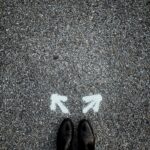






Enlightenment
One of my favorite quotes on the subject of enlightenment comes from the movie The Razor’s Edge (Bill Murray):
“It’s easy to be a holy man on a mountaintop.”
In the journey toward enlightenment, we can think of it as climbing a mountain. Reaching enlightenment is like reaching the summit — and many choose to stay there. But that is not the end of the journey. Anyone can be “enlightened” on a mountaintop where there are no real challenges. To fulfill the journey of enlightenment, you have to come back down the mountain and return to society.
Enlightenment is only half the journey.
I once had a student say to me, “I’ve achieved enlightenment.”
I replied, “Sorry to hear that. I hope you can get rid of it soon.”
I’m a Hippie
The word hippie describes more than just a movement from a bygone era, it’s a broader worldview. At the core of a hippie is someone who rejects mainstream social norms in favor of pseudo-utopian ideas like; peace, personal freedom, communal living, and a simpler, more natural way of life.
A few defining characteristics usually include:
Anti-materialism
Hippies tend to question consumer culture and the idea that success equals wealth or status. Many value experiences, relationships, creativity, and spirituality over possessions.
Peace and nonviolence
The movement grew strongly in opposition to war and emphasized pacifism, love, and cooperation instead of conflict.
Alternative spirituality
Rather than traditional religious dogma structures, hippies often explored meditation, Eastern philosophy, mysticism, psychedelic experiences, and personal paths to enlightenment.
Communal and cooperative living
Many hippies experimented with intentional communities, communes, and collective decision-making as alternatives to competitive, individualistic society.
Cultural expression and experimentation
Music, art, and self-expression were central. Psychedelic rock, folk music, colorful clothing, and free-spirited lifestyles became cultural symbols.
Back-to-nature values
They often emphasized environmentalism, organic food, gardening, and living closer to nature.
In short, a hippie isn’t just someone with long hair and tie-dye. It’s someone who believes, sometimes idealistically, that society should be organized more around love, community, creativity, and freedom than around hierarchy, competition, and consumption.
Or put more simply:
A hippie is someone who looked at the modern world and said,
“There has to be a better way to live than this.”
And then tried to do it.
Let’s try again.
“Life hurts, Eddie. It just does.”
This was an interesting line from the movie Venom. And I’ve been tossing it around in my head for several weeks now. The reason is because, on one hand, it’s painfully true. There is so much in this life that hurts that it would be difficult to deny the amount of struggle involved in living in this world—or the amount of pain that goes with those struggles.
But there’s also the other hand.
On that hand, we have the joys and the wonders. I spent a couple of hours holding my three-month-old grandson today. The joy of that makes up for a lot of suffering.
It also reminds me of a Zen saying: “Life is half pain and half pleasure. If we can only find joy in the pleasure, we’re missing out on half of life.”
Now, I’m not saying to be a masochist and enjoy pain. What I’m saying is that joy is frequently a state of mind. My mother used to say, “Life is 10% what happens to you and 90% how you choose to perceive it.” So my question is this:
How much of your daily life are you perceiving as pain unnecessarily? How much of that self-imposed suffering can be turned around into joy?
Can we really turn that frown upside down?
“Sometimes movements look foolish in their moment and prophetic fifty years later.”
Eight Kinds of Capital
Here is a wonderful 12 minute video discussing the eight kinds of capital and how to use them in balance – leveraging the ones that you do have to bolster the ones that you don’t.
(I’ll preempt the video with this primer)
The eight kinds of capital, represent diverse forms of value beyond just money. They are:
- Living (Natural)
- Material
- Financial
- Social
- Cultural
- Intellectual
- Experiential (Human)
- Spiritual
Knowing how to leverage all forms of capital (in balance) enables holistic wealth building and sustainable, long-term investments
- Living/Natural Capital: Productive environmental assets like air, water, land, and ecosystems.
- Material Capital: Non-living, human-made, or physical objects such as tools, buildings, and infrastructure.
- Financial Capital: Money, currencies, and securities used for exchange.
- Social Capital: The networks, trust, and relationships that allow people to work together.
- Cultural Capital: Traditions, customs, and shared beliefs that shape worldviews.
- Intellectual Capital: Knowledge, information, and brainpower used for innovation.
- Experiential/Human Capital: Skills, health, and experience acquired through doing.
- Spiritual Capital: A sense of purpose, integrity, and values that guide behavior.
I hope you enjoy this video as much as I did. Cheers, friends.
I’m Not Sure That I Have a Culture
Growing up in the 60s and 70s, I saw two very different worlds inside my own family. One side was German and English. The other was Appalachian. Two distinct ways of seeing life. Two sets of habits, assumptions, and quiet rules about how things are done.
Then later, as an adult, I lived in France for a while and immersed myself in that culture. I spent several years studying within a Chinese cultural subgroup. I lived in New Orleans, which may be one of the most culturally distinct places in America. I’ve traveled a bit in Mexico. Over the years I’ve had close friends from India, Vietnam, Hong Kong, Taiwan, and Germany. Jewish friends. Muslim friends. Christian friends. Atheist friends.
And I’ve spent decades immersed in the LGBT community as well.
So I’ve seen culture. I’ve lived inside it, in different forms. I’ve watched how it shapes the way people talk, think, celebrate, argue, and understand the world.
But I’ve come to realize something: I don’t think I actually have a culture. At least not in the traditional sense.
When people talk about culture, they usually mean the shared beliefs, values, customs, behaviors, and traditions that bind a group of people together. Language, rituals, food, art, clothing, manners — all the little signals that tell you who belongs to the tribe and who doesn’t.
Culture is the lens people inherit for understanding the world.
And of course, I have beliefs and values. I have habits and preferences. I have language — two, actually. I’m an artist. I have a way of seeing things.
But when I look at it honestly, what I have doesn’t really come from any single cultural tribe. It feels more like a collage. Pieces of German practicality. A bit of Appalachian stubbornness. Some French sensibility. A few Chinese philosophical threads. A touch of New Orleans looseness. Fragments of ideas picked up from friends scattered across half the world. None of them dominate. But all of them remain.
Which leaves me with the conclusion that I don’t belong to a culture. Maybe I’m a culture of one. And I honestly don’t know if that’s a good thing or a bad thing.
On one hand, there’s a kind of freedom in it. When you’re not anchored to a single cultural script, you’re free to choose what makes sense to you. You can borrow wisdom wherever you find it. But on the other hand, culture also gives people something important: a sense of belonging. A sense of shared story. A sense of home.
So I sometimes wonder if being culturally unrooted is a kind of loss… or a kind of evolution. Or maybe it’s simply the inevitable result of living in a world where borders, traditions, and identities blur a little more with each generation. I don’t know. But I do know this:
If culture is the lens through which we see the world, then my lens looks a little like a mosaic.
And maybe that’s not the worst way to see things.
Social Change
Once a system begins to reward the right behaviors, you no longer have to push very hard. People start moving in that direction on their own.
Real social change rarely begins with bigger budgets or more passionate arguments; it begins deeper in the architecture of the system itself.
The first step is shifting the underlying story, the paradigm, from competition and extraction toward cooperation, dignity, and shared well-being. Once the mindset begins to change, the goal of the system can change with it, moving from maximizing growth or efficiency to maximizing human flourishing and community.
From there, the rules and incentives must be redesigned so that helping, contributing, and building trust are rewarded rather than ignored.
Information flows then reinforce the shift: transparency, recognition, and visibility allow people to see cooperation happening and then, they want to become a part of it.
When these elements align, positive feedback loops begin to form… where small acts of participation generate trust, trust generates collaboration, and collaboration generates momentum.
At that point the system no longer requires constant force to move it forward; it begins to reorganize itself around the new values.
That’s where real transformation can happen — not by forcing people to behave differently, but by designing systems where the best parts of human nature become the easiest path to follow.
Leadership is not about forcing people to do something. It’s about inspiring them to want to.
Food Rescue
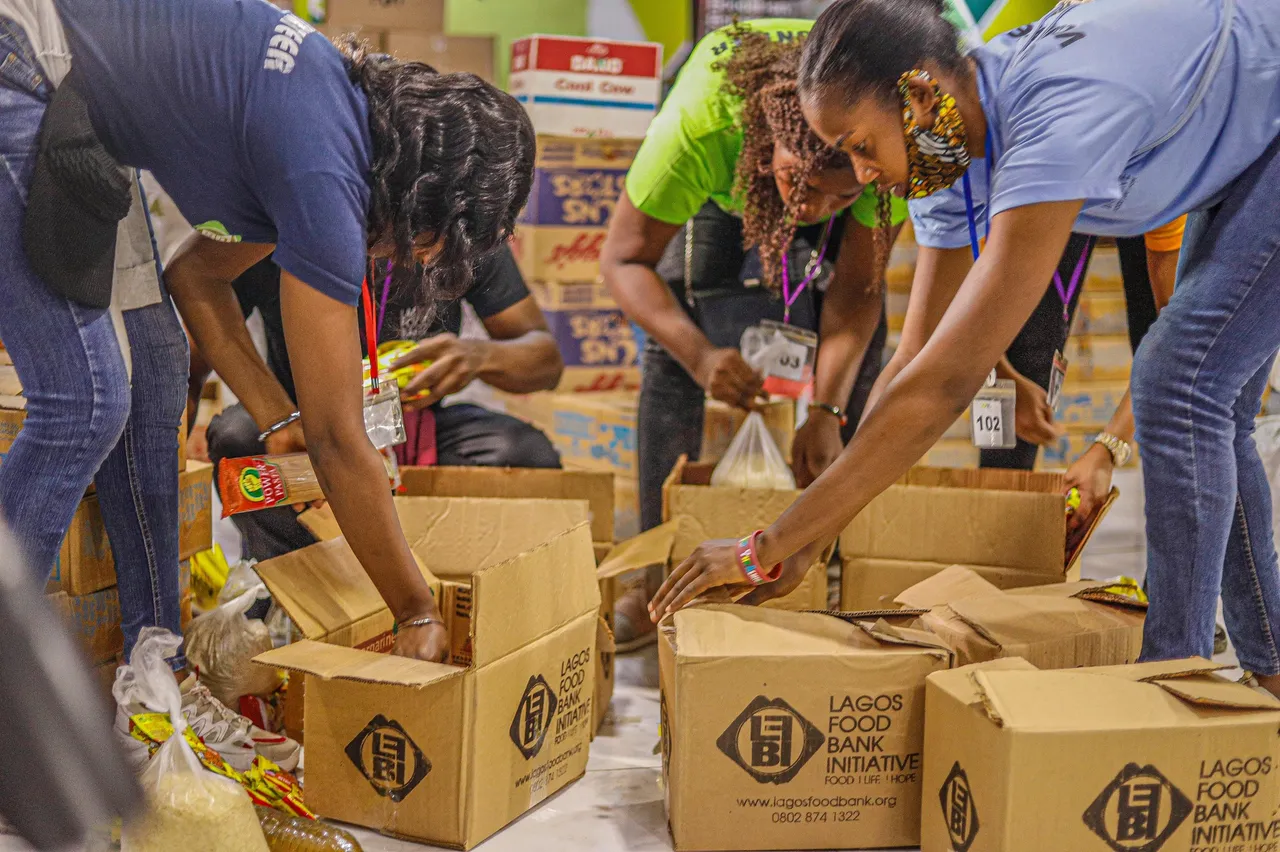
There’s an absurd contradictions in modern life: grocery stores and restaurants throw away mountains of food while people in the same neighborhoods go to bed hungry.
Perfectly good bread tossed because it’s a day old. Produce discarded because it’s slightly misshapen. Prepared food from restaurants and events crammed into trash bags at the end of the night.
Meanwhile, families line up at food pantries hoping there will be enough left when it’s their turn.
Food rescue is one answer to this contradiction and offers a simple, almost obvious solution. Instead of letting surplus food become waste, communities can redirect it to the people who need it.
Restaurants, grocery stores, bakeries, and farms all produce excess food every day – and most of it gets sent to the landfill. But with a coordinated food rescue effort, food can move quickly from surplus to supper tables.
The beauty of food rescue is that everyone benefits. Businesses reduce waste. Food production systems are less stressed. Community organizations are less burdened. Community members build stronger connections with their neighbors. Families gain access to nutritious food.
And communities learn that abundance already exists; it’s just poorly distributed.
Society often frames scarcity as inevitable, but food rescue paints another picture: we don’t necessarily need more food. Sometimes we simply need better systems, and a little more cooperation, to share what we already have.
Love is the only thing that truly matters. Everything else is just a way to pass the time.
It Takes Love
Faith without works is dead. True faith radiates from a person. A person’s actions become a living testament to that faith.
Works without love are hollow. If a person’s actions lack the demonstration of genuine love, they cannot be an emanation of true faith.
So if your faith produces works, yet those works are without love, what does that say?
You Don’t Want My Help?
There’s something that has dumbfounded me for years now. In my community service work, I’ve built programs that make so much sense. Programs that people would benefit from immeasurably. But no one ever seems willing to take much advantage of the help.
And after a great deal of soul-searching, I have concluded that there is a direct relationship between chronic need and lack of foresight. Those who would benefit the most are almost always the ones least able to take advantage of the help that is offered.
The Western world is in the midst of an apathy epidemic. Mix that with the inability (or unwillingness) to be proactive, and we have a recipe for chronic need and dysfunction – an ill that is almost impossible to cure.
When humanity gained the ability to overpower the natural systems of balance (survival of the fittest, as an example), it upset a perfectly regulated system. The resulting imbalance has not only weakened nature as a whole, but humanity along with it. This has resulted in societies with large populations that lack the basic capabilities of being self-sufficient. Nature would have weeded out the weak links and left only the strongest to carry on.
But it would seem that society has found it useful to have a dependent population. A dependent population is a controllable workforce – a workforce that feeds the never-ending extraction machine.
Humanity and society have been engineered for low agency. And maybe we can turn that around – or maybe we can’t.
But I have the compulsion to keep trying.
I don’t know what else to do.
Social Credit Score
Will a low social credit score become a new badge of honor?
It’s clear that Western countries are creating the infrastructure for digital ID and social credit score systems — and the reasons for that are obvious.
Here’s a thought experiment: those that the system deems undesirable, for whatever reason, will have lower social credit scores. And the lower the social credit score, the less access a person will have to the system. But when what the system deems desirable is morally and ethically undesirable to those with a sense of common decency, maybe the system of social credit scores will take on an inverse meaning.
Those with high social credit scores may be revealed as people of low moral and ethical integrity, while those with low credit scores may be revealed as the most upstanding humans — despite being citizens of the lowest standing.
What do you think?
Rearrange Your Screen
I’ve been thinking about the whole “digital detox” thing. Everyone talks about it like the only real solution is to throw your smartphone in a lake and go live in a cabin somewhere. Which sounds nice in theory… but most of us still need our phones to function in the modern world. Maps. Messages. Banking. Work stuff.
So here’s a smaller idea.
What if we didn’t turn our smartphones into dumb phones functionally — but we did turn them into dumb phones aesthetically?
Really, the problem isn’t just the phone. The problem is the constant visual temptation. Every time we unlock the screen we’re greeted by a carnival of colorful icons competing for our attention. News. Social media. Games. Shopping. Each one coyly calling us to “just tap for a second.”
Then, a second becomes twenty minutes.
But what if the home screen only had the essentials? Phone. Messages. Maps. Maybe a calendar.
Everything else? Move it to the second or third screen.
Out of sight, out of mind.
It’s such a small tweak. No major life overhaul. No dramatic declarations about abandoning technology.
And sometimes that’s all it takes. Not removing the temptation entirely. Just making it a little less convenient to reach for.
Enchanting You
I’ve been thinking about how the ideas of Max Weber fit into the kind of work that I do.
Weber proposed something to the effect that as societies modernize, they try to become selectively more rational, bureaucratic, and efficient. (I would add that these efforts are often undertaken simply to benefit those in control rather than making a system that is actually more rational or efficient.) Systems get optimized. Rules multiply. Everything becomes “measurable.” Quantifiable.
And, in theory, that sounds sort of like progress… I guess.
But Weber warned that something gets lost in this process. He called it the disenchantment of the world. Life becomes organized, but it also becomes hollow. Efficient, but meaningless. People start to feel like cogs in a machine rather than participants in a community.
And despite him having said this a hundred years ago, it feels familiar to most of us. (especially now).
When I talk about rebuilding social capital, or the idea that reputation and reciprocity should matter again, I’m arguing against this “machine”. Against a system that prioritizes efficiently enriching those at the top over providing a meaningful existence for the rest of us.
And I’m not saying that systems are always bad. I’m saying that systems without humanity turn living into merely existing for those inside of them.
We’ve built an economy that measures productivity but neglects to measure kindness, generosity, or neighborliness – not that those things necessarily need to be measured, but they do need to be prioritized. Because they matter. In fact, they might matter now more than ever.
So in a way, my work is about bringing a little enchantment back into a world that has been trying to optimize it away. Because after all, life doesn’t always have to be optimized. Sometimes it just needs to be meaningful.
Won’t you join me in making the world a little more human again. I think you’ll be glad you did.