







Something has slipped, quietly, from our collective memory. Not all at once, but bit by bit; like a thread unraveling from a coat we forgot how to mend. It’s the idea that we owe one another something, not in the transactional sense of favors or debts, but in the deeper, more human sense of responsibility.
Not for one another, as though the people around us are burdens to carry, but to one another, as fellow travelers trying to make sense of a world too vast for any one person to navigate alone.
This distinction matters. Being responsible for someone implies guardianship, paternalism, a kind of ownership. But being responsible to someone; that’s about reciprocity, respect, and shared ground. It’s a social contract that says: I see you. I recognize your humanity. And I will act in ways that honor that recognition.
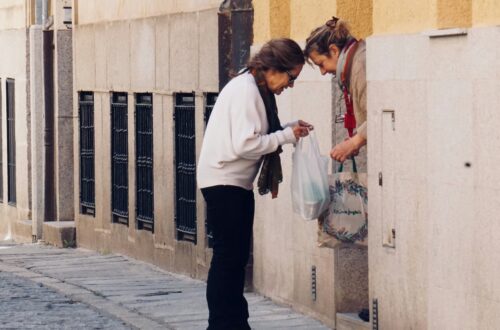
The truth is, we’re all already part of a network. Not the digital kind, though those are omnipresent, but a human one. A web of relationships, visible and invisible, local and far-flung, that sustains us. The barista who learns your name, the neighbor who helps you shovel snow, the teacher who notices when a child is struggling. These small moments are the stitches that hold the social fabric together. Without them, we unravel.
We used to have a name for this ethic: stewardship. It suggested care without control, service without self-congratulation. A steward tended something not because it was theirs, but because it was valuable. Because it mattered. Mutual stewardship is simply the act of extending that ethic to one another. Not charity. Not pity. A commitment to show up, to stay present, to lend our strength when someone else’s falters.
In today’s world, this idea feels radical. We’ve been trained, slowly and systematically, to prioritize the individual above all else. Success is personal. Responsibility is private. And freedom, we are told, means freedom from others; not freedom through them.
But the loneliness epidemic, the frayed safety nets, the growing cynicism about institutions and each other; these are all symptoms of what happens when we sever the ties that once bound us in mutual care. We were not meant to be isolated operators in a vast economy of self-interest. We are not machines. We are interdependent creatures, shaped by relationships, sustained by connection.
Rebuilding a culture of mutual stewardship won’t be easy. It requires imagination as much as infrastructure. It means resisting the impulse to retreat into our bubbles and beginning instead with small acts of intentional presence. Checking in on an elderly neighbor. Sharing resources within a community. Creating space for voices that are too often ignored. These are not grand gestures, but they are the foundation of something much larger: a social imperative that says our lives are not only our own.
There is power in remembering that. And there is hope, too.
Because once we begin to see ourselves as stewards (not owners, not saviors, not spectators) we begin to build a society not just of individuals, but of neighbors. We become capable of facing challenges not as fragmented tribes but as a shared humanity.
The work of stewardship isn’t glamorous. It doesn’t trend. It doesn’t scale easily. But it endures. It’s what makes civilization possible. And if we’re willing to remember that, to return to that ethic of care and accountability, then perhaps we can mend what has unraveled.
Not by waiting for someone else to fix it, but by remembering our responsibility; not for each other, but to each other.
Join us in making the world a better place – you’ll be glad that you did. Cheers friends.