• Finance and Economy - Making Money - Social and Self-Help

    “The Sources of Social Power” by Michael Mann – a review

    Few books attempt to chart the fundamental structures of human civilization—and fewer still do so with the depth, breadth, and intellectual rigor found in Michael Mann’s The Sources of Social Power. Published in four volumes over the span of three decades, Mann’s magnum opus is not a breezy read. It is dense, demanding, and utterly unafraid of the kind of analytic rigor that might send less devoted readers scrambling for something more digestible. But those who stay with it are rewarded with a masterwork: a towering account of how societies have been shaped, sustained, and sometimes undone by the interplay…


  • Finance and Economy - Making Money - Social and Self-Help

    “No More Throw-Away People: The Co-Production Imperative,” by Edgar S. Cahn – a review

    In “No More Throw-Away People: The Co-Production Imperative,” Edgar S. Cahn, a distinguished legal scholar and social innovator, introduces a transformative approach to social services and community engagement through the concept of “co-production.” This concept challenges traditional service delivery models by positioning recipients as active partners rather than passive beneficiaries, thereby promoting empowerment and mutual respect. Redefining Work and Value Central to Cahn’s thesis is the redefinition of work and value within society. He critiques the conventional market economy for marginalizing essential, non-market activities such as caregiving, community building, and volunteerism. By advocating for the recognition and valuation of these…

  • Finance and Economy - Making Money - Social and Self-Help

    How We Do and Should Value a Person

    How do we value a person? How should we value a person? The first question concerns what is, the second what ought to be. But to ask them together suggests a hidden third: what is our duty in the face of this question? It is not enough to analyze. The heart demands an answer. The modern world does not hesitate in assigning value. It does so with numbers, with wages, with votes, with measures of productivity, with assessments of intelligence or usefulness. A man who produces much is said to be of great worth. A man who produces nothing is…

  • Finance and Economy - Health and Wellness - Making Money - Social and Self-Help

    Will We Come Together Again?

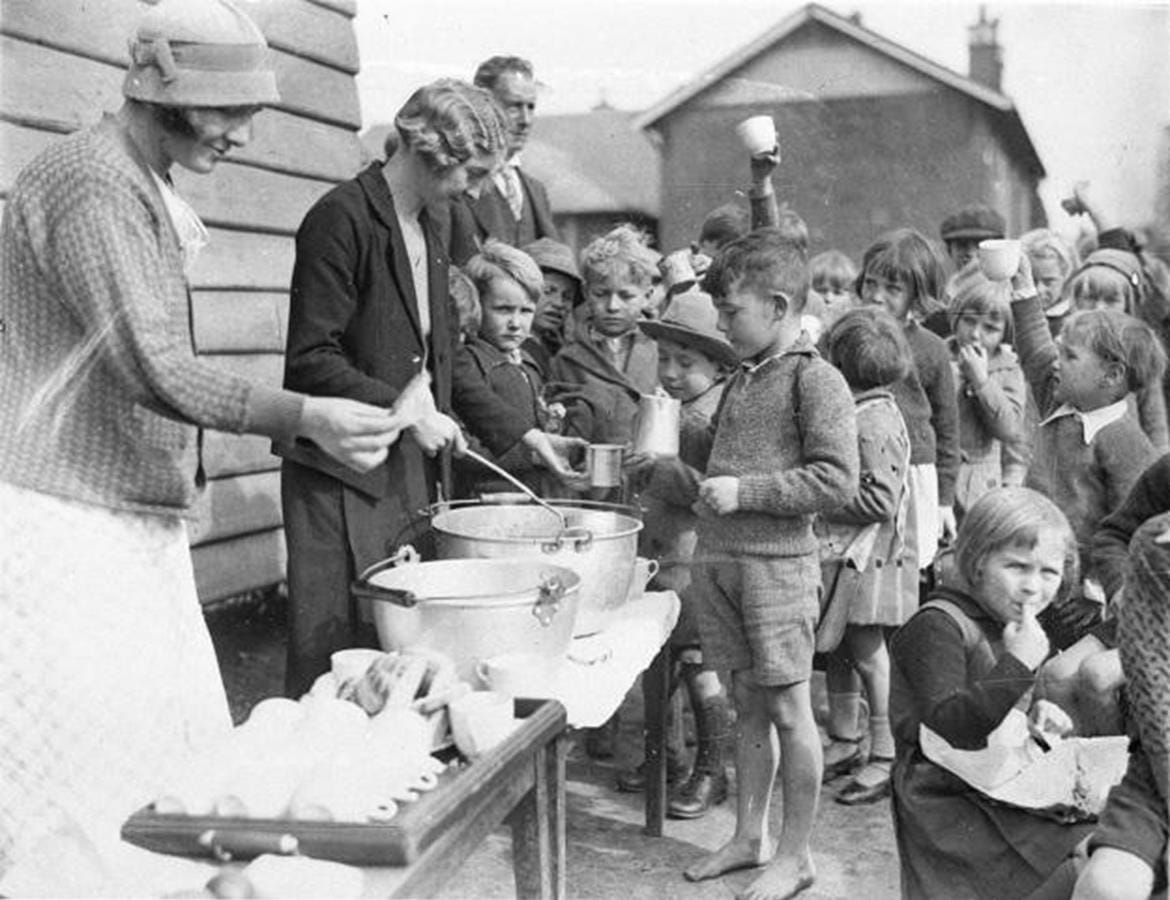
    The Great Depression taught Americans many things, but one lesson really stands out, not in the numbers or charts, but in the stories that passed from grandparents to grandchildren around dinner tables and porches. It’s the story of people who had very little, and yet gave anyway; of soup kitchens that stretched down whole city blocks, of neighbors who split their last sack of potatoes, of barn raisings and coat-mendings, of pride swallowed for the sake of community, and dignity somehow still maintained. They called it mutual aid. Not charity, not welfare, but something older, something deeply rooted in the…

  • Finance and Economy - Health and Wellness - Social and Self-Help

    The Weight of Too Much

    No one complains about having enough. Enough food, enough money, enough security; these are the markers of a good life. But what happens when “enough” turns into too much? When abundance, instead of liberating us, traps us? We don’t often think of excess as a burden. If anything, modern consumer culture teaches us that more is always better. More choices, more products, more opportunities. The economy thrives on this logic, turning every aisle, every webpage, every moment into a marketplace. But abundance, when pushed to its extreme, doesn’t always mean freedom. It can just as easily lead to paralysis. Psychologists…

  • Finance and Economy - Social and Self-Help

    “Techno-feudalism: What Killed Capitalism,” by Yanis Varoufakis – a review

    In “Techno-feudalism: What Killed Capitalism,” Yanis Varoufakis, the former Greek finance minister and renowned economist, presents a head-turning thesis: capitalism, as we have known it, is dead, replaced by a more insidious system he terms “techno-feudalism.” In this new order, technological behemoths have assumed the role of feudal lords, wielding unprecedented control over our lives, economies, and societies. Varoufakis begins by tracing the historical evolution of economic systems, drawing parallels between medieval feudalism and our contemporary digital landscape. He argues that just as feudal lords once controlled vast swathes of land and the serfs who worked them, today’s tech giants…

  • Finance and Economy - Making Money - Social and Self-Help

    The Lonely Crowd and White Collar: A Mirror to the American Soul

    David Riesman’s The Lonely Crowd and C. Wright Mills’ White Collar sit on the shelf like a pair of old photographs—faded, perhaps, but still revealing. They capture America at a moment when the country had stepped into its new postwar prosperity, blinking at the bright lights of mass media, corporate culture, and suburban expansion. The war was over, the economy was humming, but something about the American character was shifting. Riesman, along with co-authors Nathan Glazer and Reuel Denney, set out to chart those changes in The Lonely Crowd (1950), while Mills took a scalpel to the growing class of…

  • Finance and Economy - Making Money - Social and Self-Help

    Why Economic Collapse Might Be Just What We Need to Survive – Long-Term

    Economic collapse is a phrase that brings to mind images of breadlines, shuttered factories, and desperate faces. It is spoken of as a catastrophe, a specter that must be avoided at all costs. But history has shown that collapse, while painful, is often the necessary breaking point before something better can emerge. The old world must fall apart for a new one to take its place. The problem is not that our economy is failing; it is that it was designed to fail. Built on the premise of infinite growth within a world of finite resources, modern economic systems encourage…

  • Finance and Economy - Health and Wellness - Making Money - Social and Self-Help

    From Self-Sufficiency to Community-Sufficiency: Rethinking Preparedness

    I’ve been watching a lot of YouTube videos about homesteading and prepping lately. Partly because I find the whole idea fascinating; growing your own food, living off the land, being prepared for whatever the world throws at you. But also because, let’s be honest, things are looking shaky out there, and knowing how to take care of yourself just seems like common sense. One of the biggest ideas in these circles is self-sufficiency. The dream is to do everything yourself: raise your own livestock, mend your own clothes, build your own house, generate your own power. The idea is certainly…

  • Finance and Economy - Making Money - Social and Self-Help

    Living Beyond Money: Reclaiming the Wealth of a Non-Monetary Life

    Modern life is so entangled with money that imagining an existence without it feels radical, even impossible. We measure success in dollars earned, hours billed, and possessions acquired. Yet, beneath this financial scaffolding, a quieter, deeper economy persists; one of time, relationships, skill, and purpose. Stepping outside the monetary system, even partially, can seem like an act of defiance, but in truth, it is an act of restoration. To live in a way that minimizes money’s grip is to rediscover the wealth that exists in self-sufficiency, mutual aid, and the intrinsic value of time itself. Strength Through Independence Relying less…