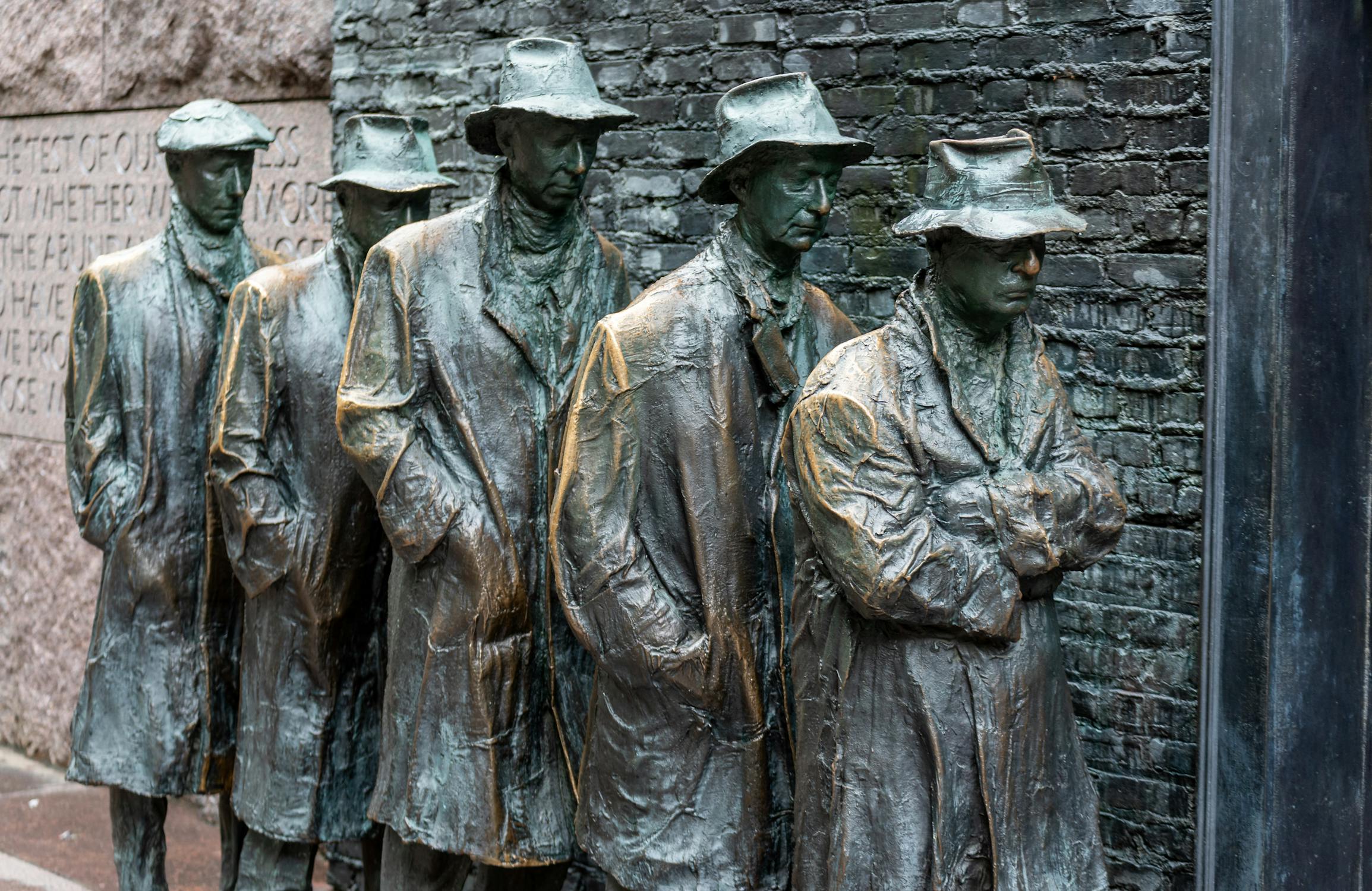
There are truths that can only be revealed through suffering, and among them is this: in hard times, the soul of a people is laid bare. The illusion of separateness, so cunningly woven in times of ease, begins to fray at the edges when real need presses in. What is comfort but a veil that lulls us into thinking we do not need one another? The moment suffering enters, that veil is torn, and we are brought back to our original dependence. Dependence of one another. Community does not arise from abundance. It is not the fruit of plenty, but…

-
-
By all outward appearances, we live in a society that prizes independence, ambition, and the self-made person. We celebrate entrepreneurs who built something from nothing, we cheer athletes who rise from obscurity to fame, and we revere stories of personal transformation. But behind this cultural ideal lies a quieter, less visible divide; one that doesn’t map neatly onto income brackets or political lines. It’s the divide between those who act on the world and those who feel acted upon. This is, at its core, the difference between high and low agency. Agency, put simply, is a person’s ability to make…
-
A review of “Mania: How Societies Go Crazy” by Lionel Shriver Lionel Shriver has never been one to avoid uncomfortable subjects. Whether skewering the politics of identity or plumbing the darker corners of family life, her fiction is often a mirror tilted at an angle, reflecting our culture not as we wish it were, but as it is, warped and raw. In Mania: How Societies Go Crazy, she sets aside fiction entirely and steps into the realm of cultural criticism with the same sharpness and precision that made her novels both admired and divisive. Shriver’s argument is deceptively simple: that…
-
I recently overheard a phrase that stuck with me like a splinter: “Not everyone wants to be an entrepreneur.” It was said casually, maybe even defensively, as if being enterprising had become some sort of modern affliction, like ambition was a pyramid scheme. But it made me pause. Because once upon a time (not so long ago, really) everyone had to be. Before the industrial age, before cubicles and time clocks and biweekly direct deposits, most human labor was grounded in meeting actual, physical needs. You tilled the land because you needed to eat. You repaired the roof because rain…
-
I have never been much fond of wrapping paper. It is a dishonest sort of thing. Like society’s expectations, it hides what is real behind something frantically decorative and almost always discarded. No sooner have we torn into the crinkled armor than we are met with another trinket, another object destined for a shelf, a closet, a drawer, or the ever-growing hinterlands of forgotten possessions. The giving of gifts has become an industry of obligation, a machinery of ribbon and receipt, humming louder each December and sputtering again with each birthday, graduation, or well-intended shower. Yet I must confess: I…
-
There was a time when citizenship was considered a birthright or a hard-won legal status; an identity rooted in history, geography, and a shared sense of belonging. But that time is slipping away. These days, citizenship is starting to feel less like a civic contract and more like a subscription service, automatically renewed unless you opt out. Or worse, unless you’re locked out. In our world, increasingly governed not by nations but by corporate cartels, the very idea of citizenship is being hollowed out and repackaged. Our passports may still bear the crests of countries, but the real forces shaping…
-
We are surrounded by so much, and yet we enjoy so little. Our homes are filled, our calendars are full, our options are endless. And still, many of us sit in front of our televisions, flipping through a thousand movies, only to sigh and say, “There’s nothing to watch.” We stand in our kitchens, staring aimlessly into cabinets stuffed with food, and feel nothing like satisfaction. In the wealthiest moment of human history, abundance has become a form of deprivation. It wasn’t always like this. After World War II, the world rebuilt itself on the promise of prosperity. Industry boomed.…
-
There’s a phrase that’s been tossed around so casually it almost sounds harmless: underachiever. The word lands like a diagnosis; mildly disappointing, but not fatal. It conjures the image of someone who could have done more but didn’t, someone with “potential” left unrealized, someone whose mediocrity, we’re told, is largely a matter of personal failure. But what if underachievement isn’t accidental? What if it’s not just a failure of individual will or bad luck or broken families or uninspired schooling? What if, instead, underachievement is an outcome; a quiet, deliberate feature of the system rather than a bug? We live…
-
By the time Thomas Paine published Agrarian Justice in 1797, he had already helped ignite revolutions on both sides of the Atlantic. Common Sense had roused American colonists to shake off British rule. The Rights of Man defended the French Revolution and dismantled the aristocratic order with Paine’s typical firebrand clarity. But Agrarian Justice, a slim, often overlooked pamphlet penned in Paine’s later years, may be his most radical work of all. It is also, strikingly, his most prophetic. In an time when the very idea of a social safety net was little more than a utopian whisper, Paine called…
-
There’s a strange mood in the air; like the moment before a summer storm. The skies look fine, but the light feels wrong. We live in a time where so much is accelerating (data, money, artificial intelligence, social unrest) yet something else seems to be winding down. Capitalism, or at least the version of it we’ve known for the last century, feels exhausted. Not dead, exactly. But fevered. Labored. Perhaps preparing for metamorphosis; or for collapse. This isn’t the first time people have stood at a crossroads like this. At the turn of the 20th century, industrial capitalism reshaped everything;…