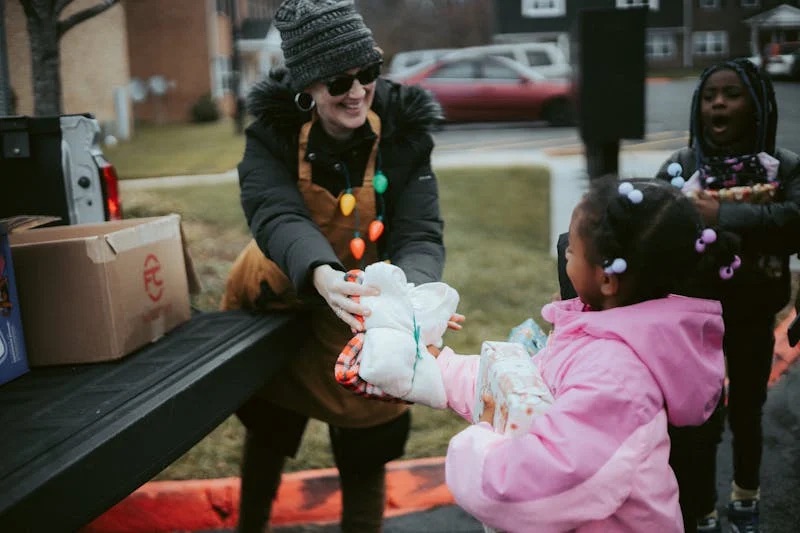
The idea of “cooperative networks of peer support”, championed by the organization called “Humans United in Mutual Aid Networks” represents an incredibly powerful, untapped potential for addressing the economic and social challenges that increasingly characterize modern life. And by leveraging platforms like KommunityKoin.com as a foundational framework, these networks can cultivate a thriving mutual aid economy that empowers marginalized groups, fosters resilience, and creates a blueprint for sustainable community living. The Vision: Cooperative Networks of Peer Support At its core, a mutual aid economy thrives on the principle of reciprocity. Unlike traditional economic systems that prioritize profit and competition, mutual…

-
-
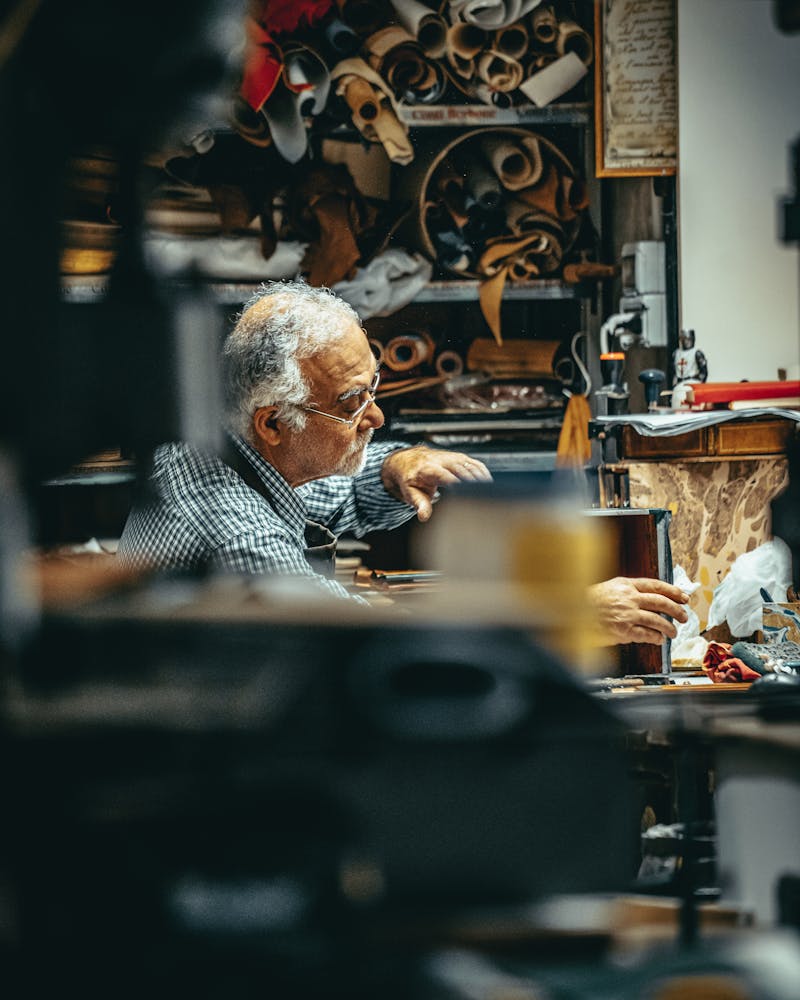
There is a distinction between having a job and working. The difference may seem subtle at first glance, but it is fundamental. A job is a position assigned within an economic system, a function performed in exchange for money. Work, however, is an act of creation, a process of bringing something into existence through effort. The former is defined by external structures, by the machinery of an economy that compels people into roles necessary for its own perpetuation. The latter is intrinsic, arising from the human need to produce, to shape the world, to act with purpose. The modern world…
-
In the years following the great war, a change swept across our land. Men and women, once masters of their own fates, began to lean on others for the tasks they once held dear. The farmer’s plow rusted in the field; the craftsman’s tools gathered dust. With each passing day, the threads of self-reliance unraveled, replaced by the convenience of another’s hand. The world grew smaller. Voices traveled over wires, goods crossed oceans in the seeming blink of an eye, and machines whispered promises of ease. It became simple to let go, to trust in the vast web of progress.…
-
The idea of retirement, once a cornerstone of the American Dream, now seems like an elusive mirage for many. It was a promise fulfilled for the baby boomer generation—a period of leisure and rest after decades of toil. This ideal was born out of the post-World War II economic boom, a time when the middle class thrived, pensions were robust, and Social Security offered a reliable safety net. But as the fabric of the middle class unravels and economic pressures mount, one must ask: is retirement still an option, or is it destined to become a relic of a bygone…
-
The second law of thermodynamics provides an interesting insight into the fabric of existence. Entropy, the measure of disorder or randomness, explains why all systems, including life itself, are engaged in a perpetual struggle against the natural trend toward chaos – or simplicity. This principle reveals why life, at its core, is marked by relentless effort and inevitable decline. Entropy tells us that in any closed system, disorder will always increase over time. Energy becomes less available to do work, systems degrade, and structures unravel. This isn’t just a physical law confined to laboratories or engines; it is a fundamental…
-
Social currency, at its core, refers to: the intangible value that individuals or groups derive from their relationships, reputation, and interactions within a community. It is the measure of trust, influence, goodwill, and reciprocity that fuels social networks and fosters collaboration. While traditionally unquantifiable, social currency has always been a powerful force in shaping communities and driving social engagement. With advancements in digital technology, the idea of making social currency quantifiable and fungible is no longer a distant dream but an achievable reality. Let’s explore the potential of a digital token system for social currency, how such a system might…
-
In our fast-paced, individualistic world, the idea of interconnected generosity often feels like a nostalgic ideal rather than an achievable reality. Yet, every so often, a new framing of an old idea sparks fresh inspiration. Recently, I was speaking with someone about time banking and time co-ops when they remarked, “Oh, you mean like a favor chain.” I was immediately struck by the elegance of that description. A favor chain not only captures the practical reciprocity of time banking and time co-ops but also evokes a vivid image of kindness perpetually passed from one person to another—a seemingly endless cycle…
-
In today’s world where traditional markets frequently fail to meet the essential needs of communities, cooperative economics provides a powerful alternative. Rooted in the idea that communities can take action to address their own needs, cooperative economic models can offer a pathway to economic security and self-sufficiency. Among these models, time co-ops and time banks stand out as accessible, community-based systems that individuals can implement in their own lives, neighborhoods, and communities. Both models promote an exchange of services based on time rather than money, allowing people to offer their skills to others in a way that benefits all. Despite…
-
Time banking is a way for communities to capture value without monetary cost through the recognition of individuals’ skills and time by the use of an indirect time-tracking instrument. Active engagement in time banking partnerships can enable members of a community to grow their personal networks, make lasting friendships, gain the knowledge and skills they need, obtain products/services with their time, grow in self-confidence, and support those at risk of “falling through the cracks”. Over time, time banking can generate profound social change and economic gains by developing human capital and reducing the financial burden of individuals and businesses... Exercises…
-
There’s an old saying that insists, “If it’s worth doing, it’s worth doing well.” This sentiment comes to us today from a time when quality was actually important, when craftsmanship was appreciated, and when people took pride in building and creating things that would last. But with the rise of the Industrial Revolution, followed by the advent of the consumer-driven economy that we “enjoy” today, that ideal has been largely eclipsed. Now, our society often equates “living the good life” with accumulating more – more possessions, more options, and more convenience. Somewhere along the way, the pursuit of quality gave…