If I had a life motto, or a working framework by which I live, it would be this: maximum efficiency and effectiveness. Or, put another way, optimization. One might even say I’m a bit obsessed with optimal outcomes. And to me, it wouldn’t make sense to be any other way. Why wouldn’t someone want the best possible result? In my worldview, anything worth undertaking should be undertaken with the goal of achieving an optimal outcome. Anything short of that feels like settling. And I don’t really like to settle. That said, we know from game theory that life is about…

-
-
I’ve been accused, more times than I can count, of being arrogant, condescending, self-righteous. There are probably a few other adjectives in that same vein that would apply, but you get the idea. The thing is, I am good. Very good, actually. At quite a few things. That sounds like bragging, I know. But it’s less a boast than an observation. I observe a lot of things. One of the things I observe most is how often people settle. Not for bad lives, necessarily. Just… acceptable ones. People seem oddly comfortable living below their own potential. That has always puzzled…
-
How do people, organizations, and businesses make money? At the most basic level, they sell something. Or they work for someone who sells something. Products. Services. Ideas. Content. Labor. Attention. It all boils down to the same thing: bringing something of value to the table for which someone else is willing to exchange their limited resources. For a long time, that was easy. Disposable income flowed in ways that now feel almost a memory. Since World War II, the global economy, especially in the West, has been built on one core assumption: convince people to buy things (consumption). Not just…
-
The French national motto is: Liberté, Égalité, Fraternité (Liberty, Equality, Fraternity). That seems like a pretty good thing on which to found a society. When we talk about liberty, we’re talking about being free within society from oppressive restrictions imposed by authority—on how we live, behave, or think politically. That sounds pretty amazing. I mean, really, who wouldn’t want that? And the next one is just as cool. Égalité. Having equal access to status, rights, and opportunities. Is it just me, or does this keep getting better and better? And finally, we have fraternity. Most people probably associate that word…
-
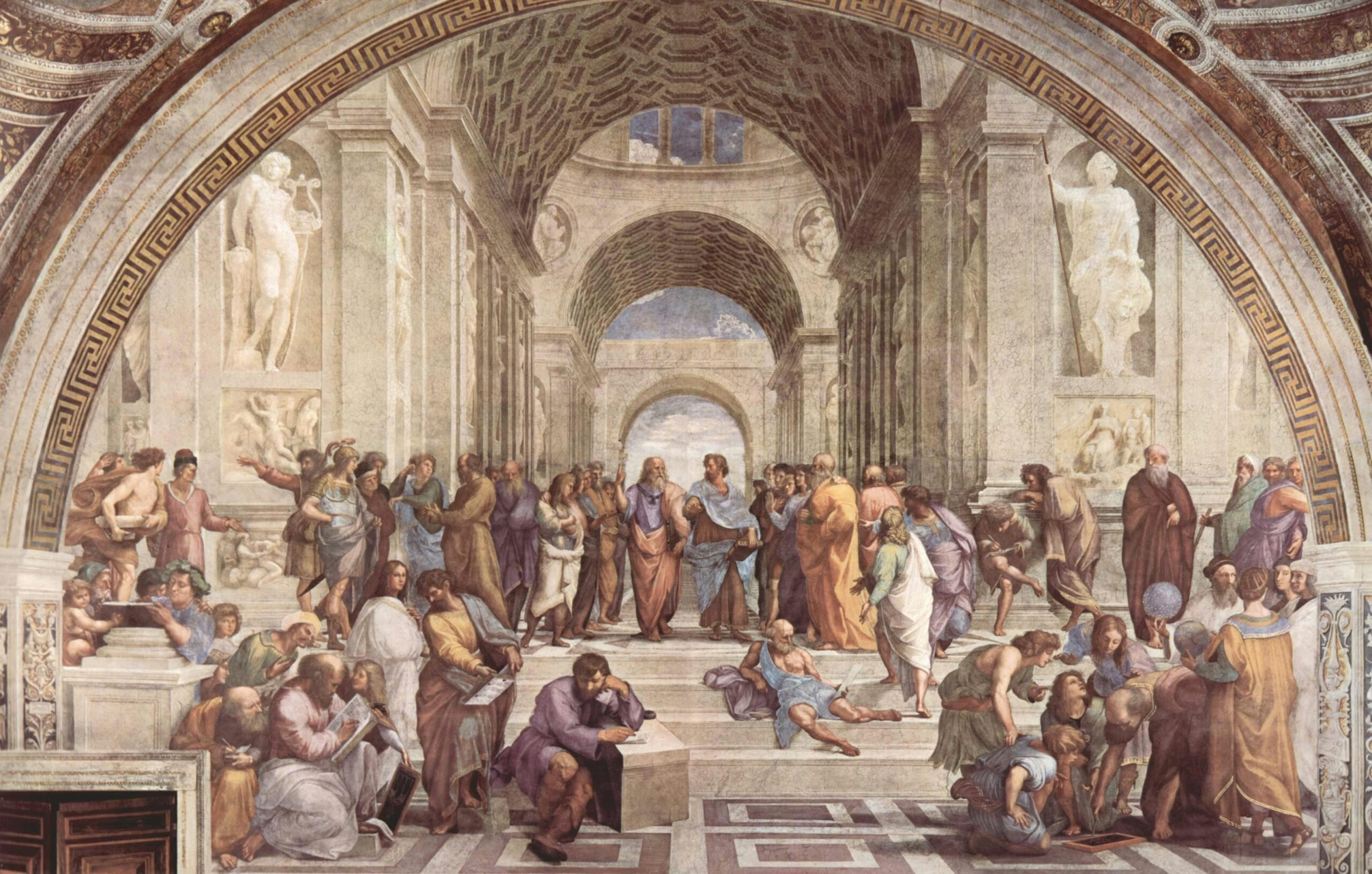
Plato’s Republic is the kind of thing that you’re supposed to have read, understood, and talked about. That is, if you want to sound smart. It ranks high on the list of “important works,” the kind of thing that people reference confidently, even when it’s clear they haven’t actually read it in years. Or ever. I’ll admit, parts of it are interesting. And parts of it make me deeply uncomfortable. The whole thing starts with a simple question: what is justice? Not just personal justice, but justice at the level of a society. And instead of answering it directly, Plato…
-
Thomas Hobbes didn’t trust us. And the truth is, he may have had good reason. In Leviathan, Hobbes imagines what humans are like without rules, without authority, without some consequence for action looming overhead. Strip away laws, customs, and those pesky consequences, and what’s left isn’t some Rousseau-esque garden of cooperation. It’s fear. Competition. Suspicion. Everyone watching everyone else, wondering who’s about to grab whatever they want. Life, in such a state, is “solitary, poor, nasty, brutish, and short.” Which is a line people quote so often it’s almost lost its sting. But maybe it shouldn’t. Hobbes is saying something…
-
Neal Stephenson’s The Diamond Age offers a strange and prophetic look at our world. In his novel, nations have faded and the globe is divided into phyles; tribes bound not by geography but by values, heritage, or culture. Each phyle maintains enclaves across cities, coexisting under a shared agreement called the Common Economic Protocol (CEP). The CEP is less a constitution than a trade agreement, ruthlessly enforcing property rights and economic capacity. If you belong to a phyle, you’re covered; protected by law, nourished by culture, defended by the tribe. If you don’t? You’re a thete, a person without belonging.…
-
It doesn’t take much imagination to sense that our world is fragile. Whether the strain comes from economics, geopolitics, the environment, or something else, there’s a feeling that the global systems we depend on are stretched thin. They are massive, complex, and interconnected; and when something that large falters, the effects are felt everywhere. If history teaches us anything, it’s that people survive upheaval not by clinging to the old system, but by finding one another again in smaller circles of belonging. When empires fall, when currencies collapse, when borders shift, what endures are the local bonds of trust; neighbors…
-
I just read an article that painted tribalism as a wholly negative thing. And, sure, it can be, in many respects. When people divide themselves into us-versus-them categories, tribalism can become a pretty destructive force in society and in the world. But even then, it doesn’t have to be all bad. When people break off into like-minded groups, that’s often a survival strategy. When the wider world feels too overwhelming, we look for comfort among those that are like us. And as long as these self-protective tribes don’t grow hostile toward others, the instinct can actually be healthy. The real…
-
If you’ve ever wondered why humans seem perfectly capable of sharing a planet but keep acting like raccoons fighting over the last slice of pizza, Elinor Ostrom has some thoughts. Governing the Commons is her quiet mic-drop to decades of economists and political theorists who insisted that people can’t be trusted to manage shared resources without either Big Government or Big Corporations stepping in to babysit. Ostrom says: “Actually… sometimes we can.” And then she brings receipts. She digs into real-world examples (irrigation systems in Spain, fisheries in Turkey, forestry in Nepal) ordinary communities that figured out how to sustainably…