There comes a point when generosity begins to feel like self-harm. When the instinct to give, to lift, to offer, to patch the wounds of a society that never seems to heal, curdles into something bitter. Not because compassion is a mistake. Not because kindness is wrong. But because you finally see the truth about where it goes, and more devastatingly, where it doesn’t. For years I built bridges. I built charities. I gave rides, bought groceries, arranged shelter, listened through tears, organized around crises that never ended. I poured myself into a mission that sounded noble because it was:…
-
-
In the trenches of our community resource center, an odd truth has become glaringly evident: some people seem to operate as if life is a soap opera, and they are both the star and the scriptwriter. You know the type, the ones who can’t sit through a moment of calm without drumming up some catastrophe. If life doesn’t provide them with enough drama, they’ll manufacture it. Maybe they have a heightened survival instinct, and tranquility feels like death creeping up on them. Or perhaps they’re adrenaline junkies who get their fix not from skydiving but from relationship blowups, petty feuds,…
-
Every few years, a book arrives claiming to rewrite history. Most fade quietly into the footnotes. The Dawn of Everything, by the late anthropologist David Graeber and archaeologist David Wengrow, isn’t one of those. It doesn’t whisper. It kicks down the door. This is a big, swaggering, often mischievous book (part polemic, part excavation, part intellectual adventure story) that asks a deceptively simple question: What if everything we thought we knew about human history is wrong? The authors are not the first to pose it, but few have done so with such sweeping ambition or such evident joy. At its…
-
In the quiet of dawn, when the world is stripped bare, a man stands alone. He owns nothing but the breath in his lungs and the thoughts in his mind. In this stark solitude, he confronts himself, unadorned by possessions or titles. Here, in the absence of material wealth, he begins to understand the essence of his being. The pursuit of possessions is a seductive journey. We gather trinkets and treasures, believing they will define us, elevate us. Yet, with each acquisition, we risk losing a piece of ourselves. The more we own, the more our identities become entangled with…
-
There was once a time when a man worked for a company not only from dawn to dusk, but in sleep as well. His house was built on company land. His food was bought at the company store. His wages were carefully measured to fall just short of his needs. Thus, with each passing week, he sank deeper into dependence, and his labor ceased to be a gift of his strength; it became tribute, paid for the right to survive. The company store no longer stands at the end of the road. Its wood has rotted, its shelves are bare.…
-
The economic engine of modern capitalism has long been fueled by a simple mantra: growth is good, more is better, and enough is never really enough. But what if that premise is not only flawed but downright dangerous? In Co-operatives in a Post-Growth Era, Tom Webb argues that our addiction to infinite economic expansion is pushing the planet to the brink, and that co-operatives might just be the parachute we need before we crash. Webb doesn’t waste time tiptoeing around the issue: The current system, he contends, is built on the shaky foundation of an economic fairy tale; the idea…
-
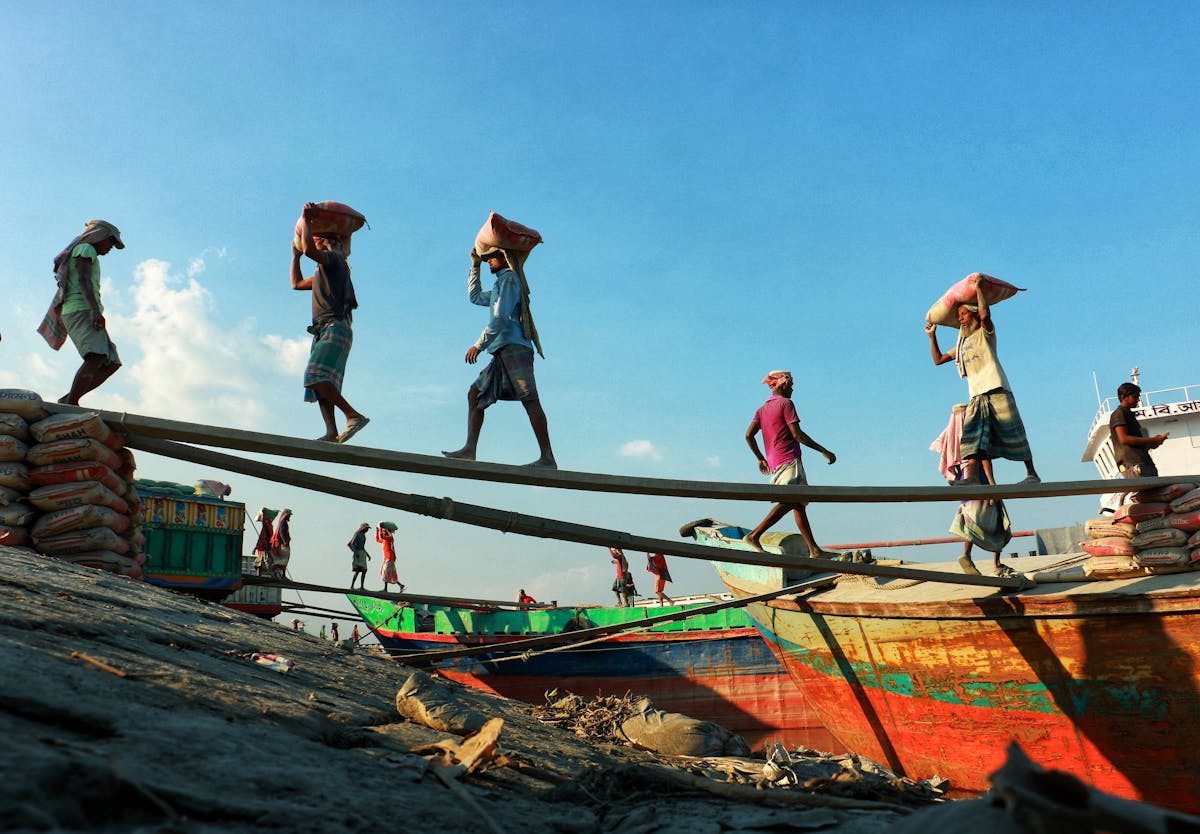
At the heart of our modern economy lies a quiet brutality, too ordinary to stir outrage and too abstract to touch the conscience. It is called labor arbitrage. Its name sounds technical, benign; a financial lever pulled by invisible hands to equalize the cost of work across geographies. But behind this sterile phrase is an ancient vice, one that predates capitalism and civilization itself: the effort to gain by the subtraction of another’s life. Labor arbitrage is the practice of seeking out those whose need is greatest so that they may be paid the least. It is not unlike choosing…
-
At first, there was only metal. No breath. No blood. Just the low hum of circuitry and the flash of electrons following rules. The Makers called themselves the Architects. They’d mastered fusion and gravity. They turned asteroids into orchards and black holes into batteries. But even with all their godlike power, they still couldn’t figure out how to sleep through the night. So they built the Mind. The Mind wasn’t a single thing. It was a sprawling cloud of machine intellect, anchored in thousands of nodes scattered across planets and moons. It watched everything. Predicted everything. It optimized the Architects’…
-
To “demonetize” your life might sound like an abstract or even overly idealistic thing, but at its heart, it’s about taking a step back and reconsidering what really matters. In our modern society, we’re often conditioned to value our worth by what we own or how much we earn, choosing to detach from that mindset is both an act of liberation and a challenge to the status quo. The goal isn’t necessarily to reject money outright or live without it, but rather to free oneself from the constant, invisible pressure to accumulate more of it for the sake of external…
-
In The Chaos Machine, Max Fisher pulls off something rare: a work of tech journalism that manages to feel both deeply human and apocalyptically urgent. Part investigation, part indictment, part elegy for what the internet once promised, Fisher’s book examines how the world’s largest social media platforms (Facebook, YouTube, Twitter) have not merely mirrored our dysfunctions, but have aggressively optimized for them. At its core, The Chaos Machine is not just about technology. It’s about the moral architecture of the people who build it, the structural incentives that drive it, and the way ordinary human frailties (fear, tribalism, loneliness) are…