There’s a quiet boldness to Peter Russell’s Forgiving Humanity, the kind that doesn’t shout but rather invites you to sit down, exhale, and consider—for just a moment—the possibility that we’ve been asking the wrong questions all along. In an age bloated with judgment, outrage, and unrelenting cynicism, Russell offers something rare: a reflective meditation on compassion—not just toward one another, but toward the human condition itself. The title alone feels provocative. Forgiving Humanity? For what, exactly? For the wars, the waste, the greed, the staggering shortsightedness? For the way we’ve poisoned the oceans and monetized every sacred thing? Russell doesn’t…

-
-
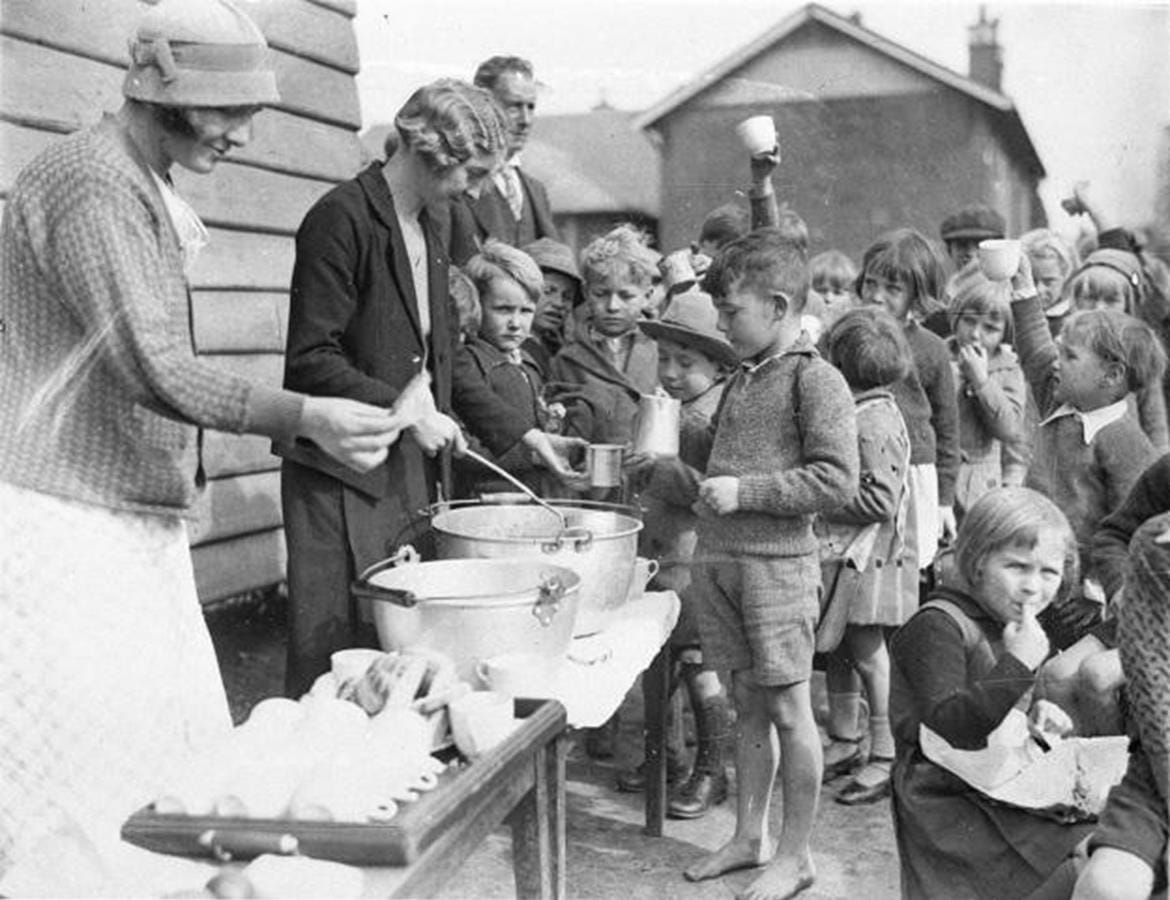
The Great Depression taught Americans many things, but one lesson really stands out, not in the numbers or charts, but in the stories that passed from grandparents to grandchildren around dinner tables and porches. It’s the story of people who had very little, and yet gave anyway; of soup kitchens that stretched down whole city blocks, of neighbors who split their last sack of potatoes, of barn raisings and coat-mendings, of pride swallowed for the sake of community, and dignity somehow still maintained. They called it mutual aid. Not charity, not welfare, but something older, something deeply rooted in the…
-
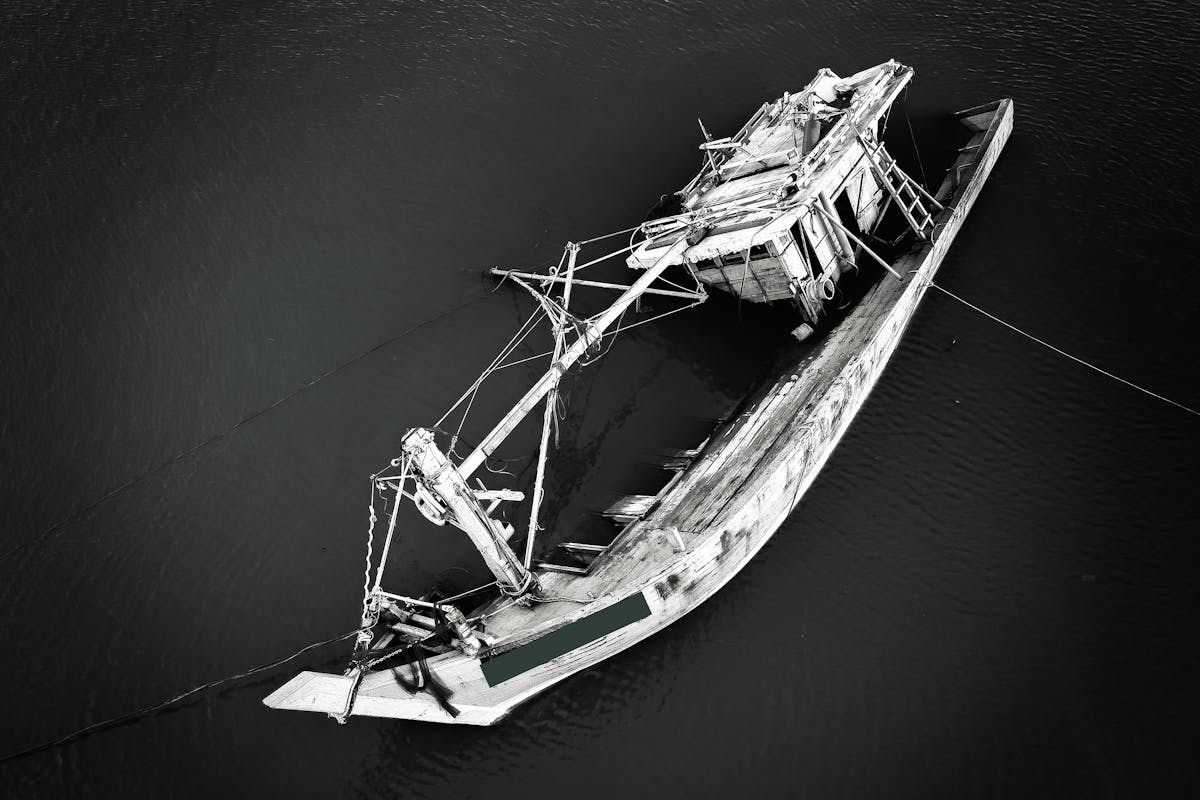
The sea does not care. It takes what it wants and leaves the rest to drift. A man can build something strong, something that holds against the wind and the waves, but one good storm can take it all away. Then he is left with what floats; broken beams, a splintered mast, the odd crate that refuses to sink. This is what remains. This is what he has to work with. A man who has sense does not waste time cursing the sea. He looks at what’s left, what might still be of use. He ties together what will hold,…
-
No one complains about having enough. Enough food, enough money, enough security; these are the markers of a good life. But what happens when “enough” turns into too much? When abundance, instead of liberating us, traps us? We don’t often think of excess as a burden. If anything, modern consumer culture teaches us that more is always better. More choices, more products, more opportunities. The economy thrives on this logic, turning every aisle, every webpage, every moment into a marketplace. But abundance, when pushed to its extreme, doesn’t always mean freedom. It can just as easily lead to paralysis. Psychologists…
-
In “Techno-feudalism: What Killed Capitalism,” Yanis Varoufakis, the former Greek finance minister and renowned economist, presents a head-turning thesis: capitalism, as we have known it, is dead, replaced by a more insidious system he terms “techno-feudalism.” In this new order, technological behemoths have assumed the role of feudal lords, wielding unprecedented control over our lives, economies, and societies. Varoufakis begins by tracing the historical evolution of economic systems, drawing parallels between medieval feudalism and our contemporary digital landscape. He argues that just as feudal lords once controlled vast swathes of land and the serfs who worked them, today’s tech giants…
-
David Riesman’s The Lonely Crowd and C. Wright Mills’ White Collar sit on the shelf like a pair of old photographs—faded, perhaps, but still revealing. They capture America at a moment when the country had stepped into its new postwar prosperity, blinking at the bright lights of mass media, corporate culture, and suburban expansion. The war was over, the economy was humming, but something about the American character was shifting. Riesman, along with co-authors Nathan Glazer and Reuel Denney, set out to chart those changes in The Lonely Crowd (1950), while Mills took a scalpel to the growing class of…
-
Economic collapse is a phrase that brings to mind images of breadlines, shuttered factories, and desperate faces. It is spoken of as a catastrophe, a specter that must be avoided at all costs. But history has shown that collapse, while painful, is often the necessary breaking point before something better can emerge. The old world must fall apart for a new one to take its place. The problem is not that our economy is failing; it is that it was designed to fail. Built on the premise of infinite growth within a world of finite resources, modern economic systems encourage…
-
I’ve been watching a lot of YouTube videos about homesteading and prepping lately. Partly because I find the whole idea fascinating; growing your own food, living off the land, being prepared for whatever the world throws at you. But also because, let’s be honest, things are looking shaky out there, and knowing how to take care of yourself just seems like common sense. One of the biggest ideas in these circles is self-sufficiency. The dream is to do everything yourself: raise your own livestock, mend your own clothes, build your own house, generate your own power. The idea is certainly…
-
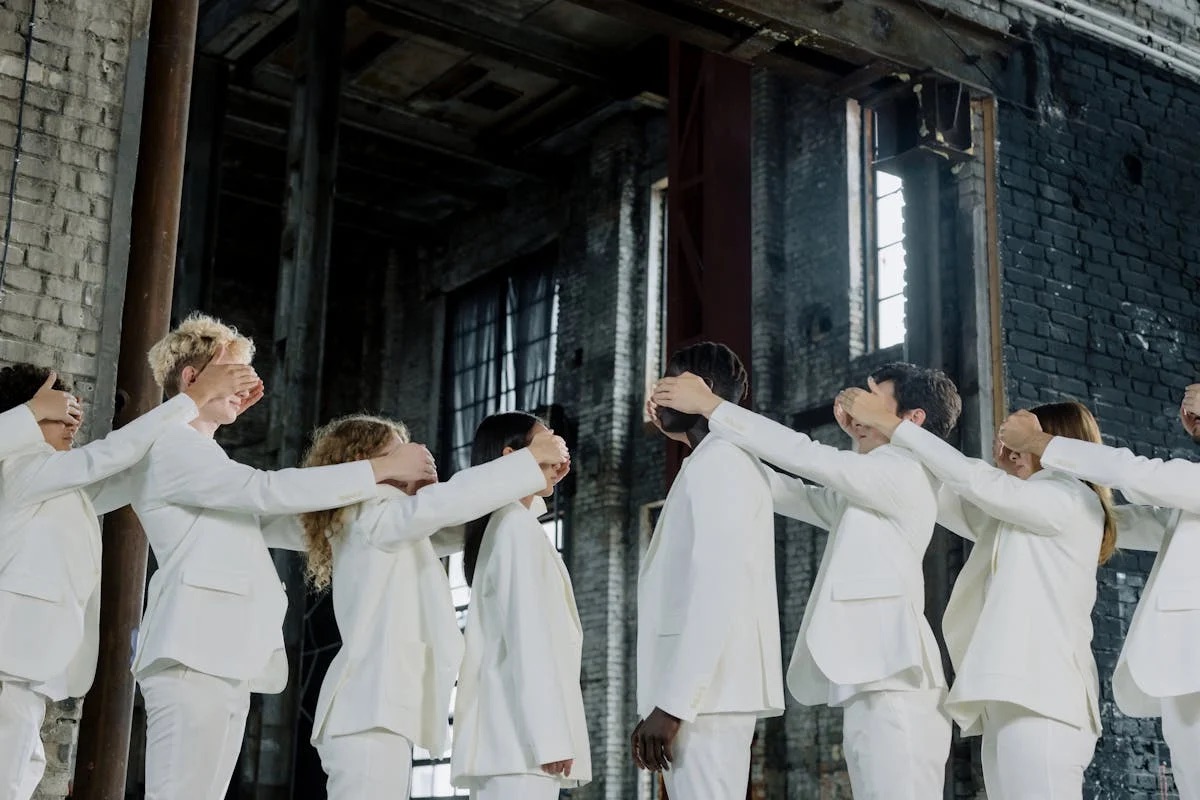
The sky over Metropole Prime was the color of dead glass, a dull, perpetual twilight where the sun had been tamed by atmospheric regulators. Citizens moved in steady streams, their steps synchronized by the Neural Harmony Network. No one lingered. No one spoke beyond what was necessary. Erasmus-9 knew better than to let his thoughts wander. The MindTrust had perfected cognitive filtration long ago—every impulse monitored, analyzed, adjusted. The implants ensured compliance, but their greatest trick was making you believe you wanted it. Desire had been optimized, pleasure synthesized, rebellion neutralized; not through force, but through irrelevance. He passed a…
-
Modern life is so entangled with money that imagining an existence without it feels radical, even impossible. We measure success in dollars earned, hours billed, and possessions acquired. Yet, beneath this financial scaffolding, a quieter, deeper economy persists; one of time, relationships, skill, and purpose. Stepping outside the monetary system, even partially, can seem like an act of defiance, but in truth, it is an act of restoration. To live in a way that minimizes money’s grip is to rediscover the wealth that exists in self-sufficiency, mutual aid, and the intrinsic value of time itself. Strength Through Independence Relying less…