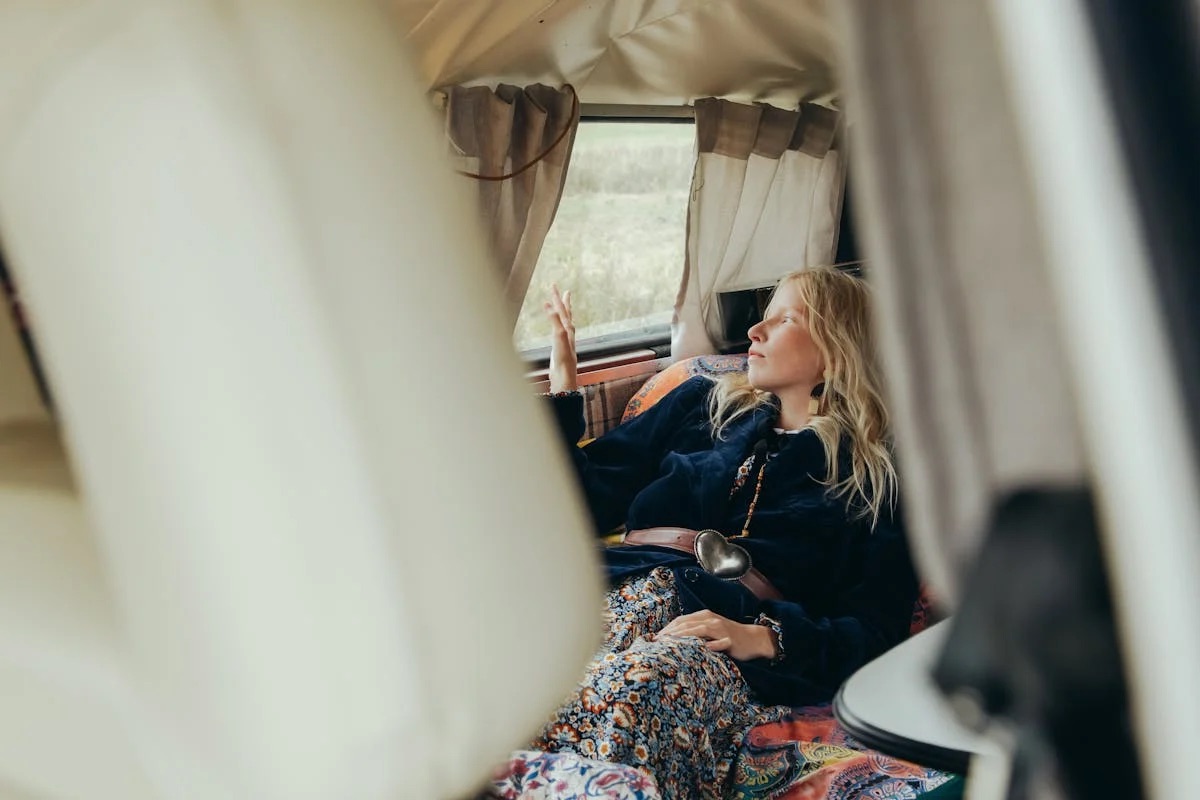
And so it starts with me, Sal Paradise, yearning for something more, restless, rolling cigarettes in a dim New York room, feeling the weight of time pressing down on my bones. Then Dean Moriarty blazes into my life like a comet, crazy and hungry and full of wild laughter, this Denver-born dynamo with a gleam in his eye and a mind spinning at the speed of jazz. He talks fast, moves faster, and before I know it, I’m swept into the mad rush of the road. The road! The great American artery stretching out before us, endless and waiting, calling…
-
-
There’s a basic rule in economics: a society can’t consume more than it produces. At least, not indefinitely. Sure, with credit and debt, countries and individuals can stretch beyond their means for a while. But if the global economy functioned like a perfectly balanced ledger, consumption would always have to match production. Now, what if we applied that same principle to a single human life? What if people were expected not to consume more than they contributed? It’s an interesting thought experiment, but also a practical one. Imagine a world where people measured their lives not just by what they…
-
Are human beings, by their essence, generous or selfish? It is a question as old as philosophy itself, debated by theologians, political thinkers, and poets. The answer is often sought in abstraction, in idealized notions of human nature. But when we strip away the formal structures of civilization—when the law no longer holds dominion over conduct—what do we see? Do people become beasts, driven by hunger, fear, and instinct? Or do they reveal a nobler truth, one in which mutual aid and generosity emerge as guiding principles? To answer this, we must not rely on theoretical constructs alone but examine…
-
The nature of obligation is such that it precedes us, as light precedes the dawn. Before a child knows how to speak, before she can name herself as an “I,” she is already held in a web of duties, spoken or unspoken. She is fed, clothed, touched, and looked upon, and in these simple acts she is instructed—without words—on the nature of belonging. Before she knows the term “reciprocity,” she has already been formed by it. To exist is to receive, and in receiving, an obligation is born. There is no duty more immediate than that which arises in response…
-
At first glance, a time co-op—where people come together in a community for the purpose of supporting and investing in the well-being of one another—might seem unnecessary or even idealistic. After all, most of us are used to handling things on our own, and the idea of building a mutual-support network can feel unfamiliar. But if you scratch beneath the surface, you’ll find that time co-ops offer something deeper: a way to build relationships, strengthen social ties, and create a support system that cultivates a sense of belonging. Still skeptical? Let’s address some of the biggest concerns. What’s the Point?…
-
In today’s world, where economic uncertainty, job displacement, and social fragmentation are on the rise, it’s time we rethink how communities function. The traditional economic model—one based on monetary transactions and individualistic success—has left many behind. But what if there were a way to harness the power of cooperation without sacrificing personal independence? Well, there is: the time co-op, a modern solution to an age-old problem. What is a Time Co-op? A time co-op, like the one proposed by KommunityKoin.com, is a decentralized system designed to bring people together for mutual aid and support. It offers the best aspects of…
-
The idea of “cooperative networks of peer support”, championed by the organization called “Humans United in Mutual Aid Networks” represents an incredibly powerful, untapped potential for addressing the economic and social challenges that increasingly characterize modern life. And by leveraging platforms like KommunityKoin.com as a foundational framework, these networks can cultivate a thriving mutual aid economy that empowers marginalized groups, fosters resilience, and creates a blueprint for sustainable community living. The Vision: Cooperative Networks of Peer Support At its core, a mutual aid economy thrives on the principle of reciprocity. Unlike traditional economic systems that prioritize profit and competition, mutual…
-
Most people go about their days as if on a set course, following patterns laid before them without questioning whether those patterns serve them or merely confine them. The habits of the world become their habits, and the expectations of others dictate the form of their existence. To live in this way may be easy, but ease is no measure of worth. A life unquestioned is a life surrendered. Yet there have always been those who choose another way—not out of defiance for its own sake, but because something within them resists being shaped by convention. Whether by nature or…
-
It’s the end of the world as we know it. And I don’t feel so good about it at all. Back in the late ‘80s, R.E.M. gave us an anthem for impending doom, a frenetic list of global chaos wrapped up in a catchy tune. They rattled off images of disaster, corruption, and decay—and yet, somehow, they felt fine about it. I’d love to borrow some of that optimism, but these days, I’m fresh out. It feels less like an alternative rock song and more like watching a train derail in slow motion, each car tipping, sparks flying, the inevitable…
-
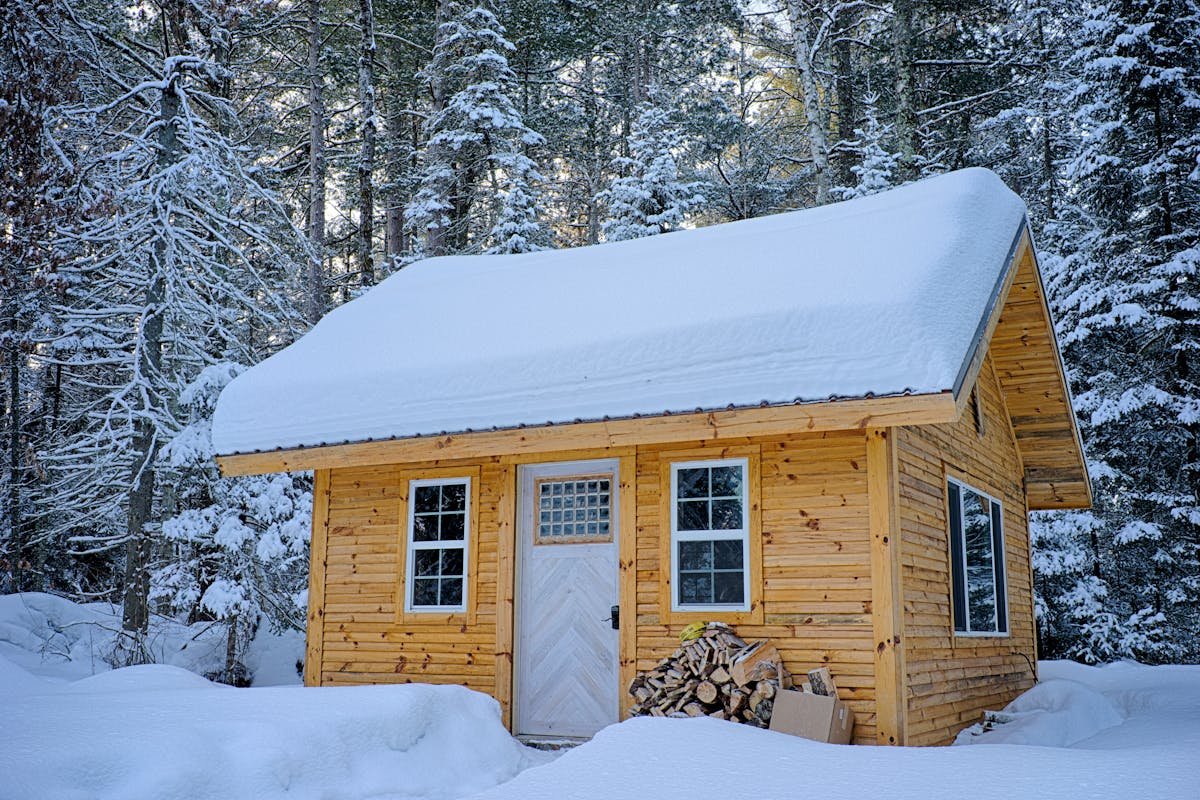
I left my comfortable life in the city, sold my house, quit my job, and went to the woods because I wished to strip away the superfluous, to lay bare the marrow of existence and to ask of life what it had to teach. In those quiet hours by the pond, in the honest labor of chopping wood and fashioning my dwelling, I found what no marketplace could ever sell me—purpose. Not in acquisition, not in the swelling of possessions, but in the shaping of things by my own hands, in the giving of my labor freely to the earth,…