




I don’t think Mad Men was ever really about nostalgia. I mean, It looked nostalgic. The suits. The cocktails. The cigarettes smoked ironically. But underneath it all was the warning of something to come.
What Mad Men was really showing us, taunting us with, was the moment America learned how to sell itself to itself. As incestuous and cannibalistic as that might be.
Before that shift, products mostly just did what they said they would do. Soap cleaned. Cars moved. Food fed us. But at this turning point in the mid 20th century, that was no longer enough. The object itself stopped being the product and meaning became the product instead.
A cigarette was no longer just tobacco. It was masculinity. A car was no longer just transportation. It was freedom. A refrigerator was no longer just cold storage. It was proof you were winning at life. And seriously, isn’t everything in our lives these days just a symbol of some idealized self-image that we’re lazily chasing – without getting off the couch, of course.
Those early ad men figured it out. They realized that they weren’t selling things; they were selling stories. They were manufacturing identity and attaching it to objects. Buy this, and you become that kind of person. A combining of postmodernistic philosophy and hyper-consumption economics.
And people bought it.
What made Mad Men so sharp, so almost cruel in its honesty, is that the people creating the illusion were trapped inside it themselves. Don Draper wasn’t just the architect of fantasy. He was a fantasy. A man literally constructed out of reinvention, performance, and erasure. A brand with a pulse.
That’s the real crux of all this.
Because once identity becomes something you perform rather than inhabit, it doesn’t stop at advertising. It spreads. It metastasizes. It consumes everything. And in our time, we see that social media didn’t invent this shift. It just finished the job.
What advertising did at scale, social media did personally. The billboard moved into our pockets. The pitch deck became a profile. Suddenly, everyone had a brand, whether they wanted one or not. You weren’t just living your life anymore – you were curating it. Editing it. Optimizing it.
Likes replaced thundrous applause. Followers replaced social status. Engagement replaced real meaning. Blah blah blah.
And just like in Mad Men, the feedback loop tightened. You adjusted yourself based on response. You learned which version of you performed best. Which opinions landed. Which moments were worth sharing. Which ones weren’t.
Slowly, almost imperceptibly, the lines blurred. Am I doing this because it matters to me? Or because it looks good when I post it?
Then came influencer capitalism; the final, logical step.
This is where the self stops being adjacent to the product and becomes the product. Life itself turns into raw material. Breakfast. Workouts. Relationships. Grief. Joy. Even vulnerability; all of it monetizable, if framed correctly.
Authenticity becomes performance. Relatability becomes strategy. And consumption economics hides behind sincerity. What once required an agency, a studio, and a national campaign now happens in a bedroom with a ring light.
And this isn’t a moral failure. It’s a systems problem.
When visibility becomes currency, people will chase visibility. When attention becomes survival, people will optimize for attention. When real meaning is scarce, symbols will step in to replace it.
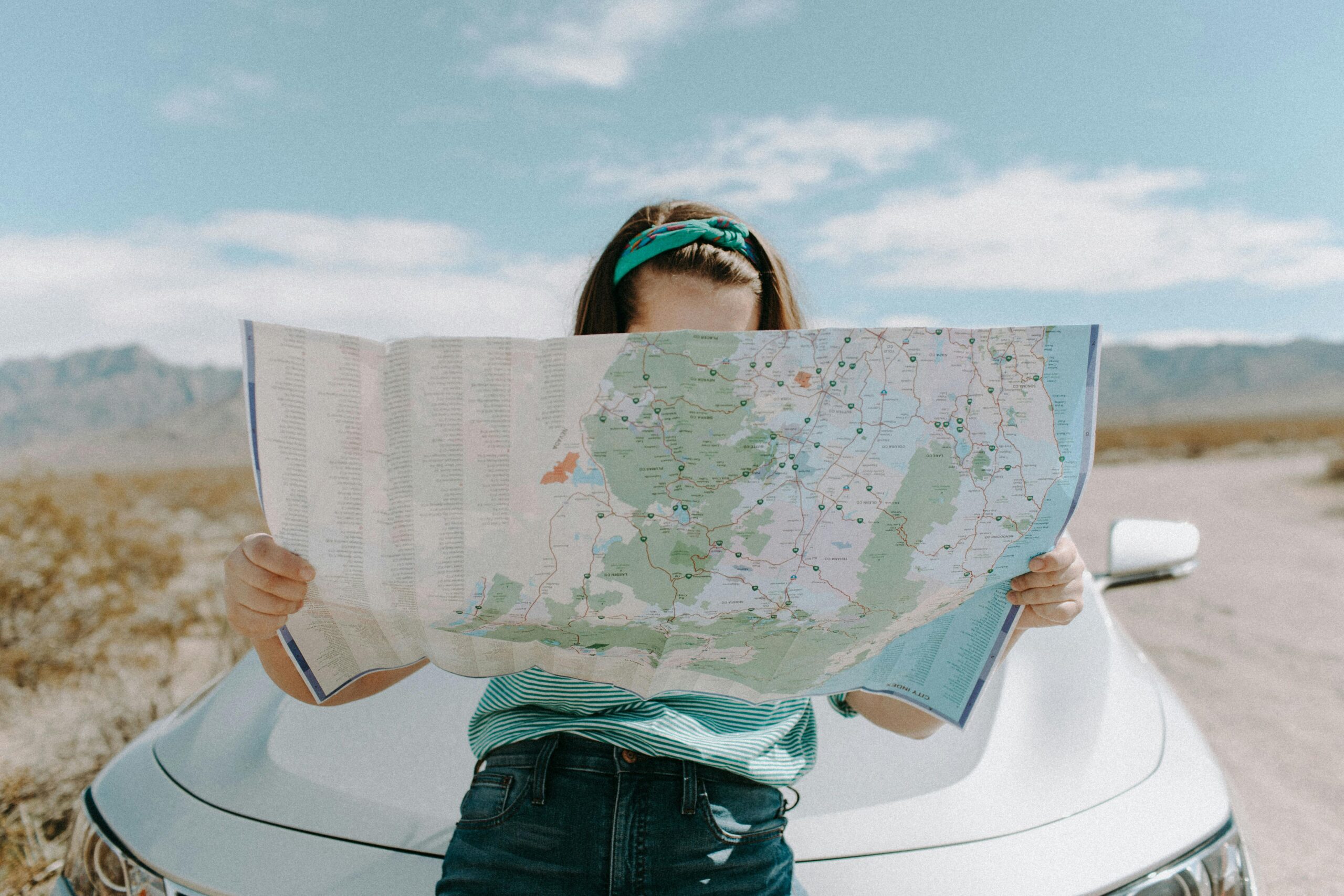
Jean Baudrillard would say this is where the map replaces the territory. Where representations stop pointing to reality and start pointing only to other representations. A closed loop. A hall of mirrors. You’re not buying the thing anymore. You’re buying the image of the thing. And eventually, you’re buying the image of yourself buying the image.
That’s hyperreality.
And the weirdest part is that it feels normal now. Comfortable, even. We don’t question it because it’s all we’ve known. We live inside the dream the ad men built – and we maintain it ourselves, for free.
Mad Men wasn’t nostalgic. It was prophetic. It showed us the first clean version of a world where meaning is manufactured, identity is relative, and the self is endlessly reinvented to remain desirable. Social media scaled it. Influencer capitalism personalized it. And now we live inside it.
The question is no longer whether this system is real. The question is whether we remember what existed before it. What really is real. Before the performances. Before the branding. Before we learned to see ourselves as something to be sold. That memory, thin as it may be, might be the only thing that still points the way back.
Now, on to a related tangent: Underconsumption, or Stepping Out of the Ad… Man.
What’s interesting about the underconsumption trend is how quiet it is compared to the branding stampede.
No manifesto. No dramatic exit from the system. Just people… stopping. Wearing the same clothes. Using what they already have. Living in spaces that look lived in. Posting videos where, frankly, not much happens. And that’s the point.
After years of hyper-polished lives and relentless self-branding, the emerging desire for boredom is a collective, unspoken… “enough.”
Underconsumption Core doesn’t necessarily scream anti-capitalism. It doesn’t even scream anti-influencer. It simply refuses to perform abundance as proof of worth. It opts out of the spectacle while still staying in the room. Which is why it feels different.
It’s not about buying nothing. It’s about not turning everything into content. Not every moment needs a caption. Not every object needs a story. Not every life needs to look aspirational. And, in our modern version of living, where we have been trained to monetize experience, this is almost radical. Refreshingly so.
Baudrillard might say it’s a flicker of resistance against hyperreality. A brief glance back at the territory. Not a full return, just a reminder that something real still exists underneath all the symbols. And maybe that’s all it is. A reminder. A reminder that you don’t have to sell your life to prove you’re living it. That meaning doesn’t require novelty. That it’s okay, maybe even healthy, to be a little boring.
Because boredom, it turns out, might be what reality feels like when the performances finally stop.
Cheers, friends. Let’s keep discovering together.
Join us in making the world a better place. You’ll be glad that you did.