




What it means to have agency…
in this new world is a critical distinction in how humanity is splitting. Humanity is dividing into those that contribute meaningfully and those that the new system will have little consideration for.
All the rules are changing. Being a passive participant in the new economy and the new order of things will no longer be acceptable to the system. The days of luxury are coming to an end. The days of leisure are coming to an end. The days of mass consumption are coming to an end. The days when you just show up, punch the clock, go home and spend your paycheck, are coming to an end.
In this new system, if you don’t bring value, you don’t have value. And all of those who do not, can not, or will not adapt to this new ecosystem, will be left behind.
Society is splitting. I don’t know which is the better side of the split to be on, but I do know that adaptation is a survival issue.
The question is, I guess, how willing are we to adapt to change? How far are we willing to go? These are questions that we will all have to answer over the next few years.
And the questions have already started being presented. Make your choices wisely.
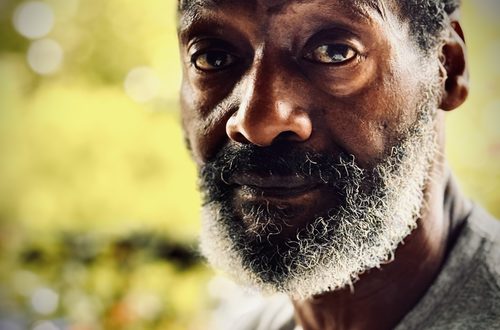
“At its core, homelessness is about absence and loss.”
People aged 50 and older are the fastest-growing demographic experiencing homelessness in the Western world, with women in this age bracket particularly vulnerable.
This crisis is driven by lifelong economic disadvantages (such as lower earnings, caring roles, and limited superannuation) combined with housing insecurity and rising rents, with many experiencing homelessness for the first time in their 50s.
They’re In A Better Place
When someone dies, it’s often said: “they’re in a better place”. Why do we say that?
We say it because this place, this place in which we all find ourselves, this place leaves a lot to be desired. Suffering. Pain. There’s so much. Philosophy and religion and alcohol and drugs have been trying to deal with this pain and suffering since the beginning of time. And it helps. It helps us cope. It helps us escape. It helps us hide.
And for a few, a few that follow the true journey of philosophy or religion. The true path. A few of them find a kind of heaven in the midst of this hell.
And for them, they’re in a better place too.
Right here.
Glengarry Glenn Ross?
I remember growing up and watching my father and his brothers. I remember what the economy meant for them. I remember what the American dream looked like. Work hard, retire, draw your pension. Maybe get a condo in Miami.
And that deal felt… steady. It felt reasonable. It made sense.
Work hard. Be decent to people. Stick with it. And life would meet you somewhere in the middle. Not always perfectly, but enough. Enough to make plans. Enough to believe the effort went somewhere.
That was the world of Death of a Salesman. You can feel it in the background of that story… the sense that something real is there, even as it starts to slip. And the truth is, for a while, it wasn’t imaginary. People built lives on it. Mortgages got paid. Kids grew up thinking the future would open up the same way for them.
It worked.
But nothing lasts forever.
Now it’s a very different game. Something closer to Glengarry Glen Ross. The brutal reality of it is out in the open. No one’s really pretending anymore. We know where this goes. Or at least… we can feel it.
There’s no sense now that time invested turns into anything durable. You can do everything right and still feel like you’re standing on something that shifts under your feet. It’s not even dramatic. That’s the strange part. It’s just… constant.
A relentless pressure to keep proving you belong.
Provide value. Stay relevant. Do what the machine can’t. Re-skill. Up-skill. Re-train. And if you don’t…
What gets people, I think, is this gap. The liminal space. That strange in-between. We still talk like the old deal is in place. Work hard, stay loyal, it’ll pay off.
But everyone knows better.
You’re asked to commit long-term inside a system that thinks short-term. And that wears on you. Not just physically… but mentally. You start to wonder if it’s you. If you missed something. Or if the whole thing just changed and nobody sent the memo.
And maybe that’s where this turns.
Not in trying to win something that keeps resetting… but in asking what would actually hold. What would still matter a year from now. Five years. Something that doesn’t disappear the second the numbers do.
That’s the question now.
That’s our future.
Cheers, friends.
“Tricky Times: Navigating The Messy Middle of Change” by Jitske Krammer
This book is really about that strange place we all feel we’re in, but don’t quite have language for… the in-between.
The part where the old world has clearly stopped working, but the new one hasn’t shown up yet.
Jitske Kramer calls this the “messy middle,” and she leans on anthropology to say: “this isn’t new, this is human”. Every culture, every era, goes through these liminal stretches where the rules loosen, identities blur, and people start reaching for certainty wherever they can find it.
And what happens in that space? We get uncomfortable. We grab onto simple stories. We elevate loud voices and “tricksters” who sound confident, even if they’re not grounded in truth.
Power shifts. Narratives compete. Everything feels unstable. But underneath all of that chaos, there’s also possibility… because when the structure breaks, so does the illusion that it was permanent in the first place. That crack is where something new can actually be built.
But she always circles back to the crucial point… you don’t get transformation just by hanging out in the chaos. A lot of people get stuck there. Endless transition. Endless talk. Endless “almost.” She warns about that drift… this idea of permanent liminality, where nothing ever resolves and nothing actually changes.
The work is to move through it. To sit in the discomfort long enough to understand it, but not so long that you lose the will to act.
And that takes something we’re not very good at right now… patience, honesty, and a willingness to not have clean answers.
And maybe the most grounded takeaway is this: we’re not uniquely lost. It just feels that way. Humans have always gone through these periods where the map stops making sense. The difference is whether we try to rush out of it with false certainty… or whether we slow down, pay attention, have real conversations, and actually participate in shaping what comes next.
It’s sort of like a field guide for being human in uncertain times… reminding you that feeling disoriented isn’t failure, it’s the signal that something real is shifting.
Liminal Space
The word liminal is often heard lately. Youtube videos. Substack essays. It describes a state of being in between… not where you were, but not quite where you’re going either. A doorway. A crossing. The moment after something has ended, but before the next thing has fully begun.
Liminal spaces can be things like: An empty hallway late at night. The last day before a big life change. That strange emotional space after a loss… or even after a success.
Waiting rooms. Airports at 3 a.m.
These “spaces” often feel a little disorienting. Sometimes eerie. Sometimes sacred. Because the usual rules don’t quite apply there. One’s sense of contrived identity loosens. Certainty fades. And for a moment, things feel open… unsettled. Almost peaceful and refreshingly undefined.
But they’re not always just uncomfortable… sometimes they’re also creative.
Transformation happens there. You’re not locked into what you were, and not yet constrained by what you’ll become. It’s unstable… but also full of possibility.
Most people try to rush through it. Get to the next “solid” thing as quickly as possible. But if you stay there for a minute… there’s something. Something freeing. A feeling that you’re free from all of societies expectations and demands. Free from your own expectations and demands. It’s an empty space that is honest. Truly and purely honest. No narrative. No spin. No social contract.
Just beingness.
A kind of recalibration. Not quite this. Not quite that.
But something… new.
Death by 1000 Cuts
Incessant pain that holds your attention. You can think of nothing else. It holds you in the now of suffering. Blood loss, yes. But more so, loss of the will to keep enduring.
We can endure any how, as long as we have a why. But when the why is gone, that thing which holds the soul tethered to this world is let loose. Willingly. With relief.
The cuts keep coming.
We must hang onto the why.
What is your why?
Potlatch and Kula
In many traditional cultures, wealth was not something that accumulated. It moved. It circulated. It lived in that wonderful space between people; not inside boxes buried in the backyard, or deeds, or notes, or accounts.
The Potlatch understood this. The Kula ring understood this. You didn’t become significant by holding more… you became known and valued by giving more. By participating in the flow of human networks and relationships.
Status wasn’t a matter of accumulation, it was about recognition, respect, and trust. A social memory that said, “this person shows up… this person contributes… this person can be trusted.”
And that’s the thing we’ve been losing. We stopped the flow. We turned living systems of reciprocity into static systems of storage. And in so doing, we made wealth visible… but meaning invisible.
What’s interesting is that both Potlatch and Kula weren’t just cultural quirks. They were functioning economies. Not economies of extraction, but economies of relationship.
You gave, not because you had excess, but because giving was the system itself. It created bonds. It reinforced roles. It built a kind of a distributed social ecosystem where value didn’t sit in one place long enough to become power over others.
And that’s a smart way to do it. An understanding that when value moves, communities become stronger… and when it pools, they break apart. Social capital wasn’t a buzzword in these systems. It was a living currency. Not tracked in numbers, but carried in reputation, in story, in the collective knowing of a people.
And it seems, that’s where we should be heading again. Not backward, but back into alignment.
Because when systems start to fail, people don’t reach for abstractions… they reach for each other. They look to the things that have always had value. Trust. Reciprocity. Contribution. The things that actually hold.
What we’re (re)building and promoting isn’t something new. It just feels new because we’ve been away from it for so long. But the idea is ancient. Make contribution visible. Let value move. And let reputation… not accumulation… be the thing that endures.
Cheers, friends.
Create A Culture
I keep coming back to this idea that we’ve been trying to build community backwards.
We seem to want to start with systems. With platforms. With structures. And then we hope people show up and somehow… feel something. Feel motivated. Feeling inspired. Feel like they want to participate.
But that’s not how it works.
The people. The cause. The reason for gathering is the thing that creates community. Not the tool around it. It’s the moment itself. Why these people, here, now? What are they actually meant to do together that matters?
Because if that part isn’t clear, everything else is just scaffolding with nothing inside it.
And it’s uncomfortable to admit, but most “communities” today are exactly that. Places where people can be… but not places where anything is really happening. No tension. No need. No reason to rely on each other. So nothing sticks.
What I’ve been circling is this… you build community by creating situations where contribution becomes necessary, visible, and remembered.
Pria Parker, in her book The Art of Gathering, talks about designing the room. I’d say we’ve forgotten how to design the need inside the room. Because once people actually need each other, something changes. Trust starts to form. Roles start to emerge. Reciprocity stops being an idea and becomes the way things move. And only then does it make sense to capture it… to make that invisible economy visible. Not before. Never before. Otherwise you’re just measuring something that doesn’t exist yet.
And I think that’s the miss. We’ve been trying to build systems for a culture we haven’t taken the time to create.
So, create a culture. I am.