




“Analog 2026”
The “Analog 2026” movement is a cultural trend that picked up significant momentum at the start of this year.
What it is:
The Analog trend is defined as a movement towards embracing physical and tactile experiences over digital ones. It’s not anti-technology, but there’s more intention behind the use of technology and a growing philosophy centered around slow living, mindfulness, and a return to physical creation.
What’s driving it:
It’s different from a short-term digital detox — it’s an effort to slow down and find tangible ways to complete daily tasks and find entertainment, especially as generative AI platforms increasingly do the thinking and creating for us. Individuals report that excessive screen time leads to feeling overwhelmed, anxious, and unsatisfied with their lives.
What it looks like in practice:
Common swaps include using a digital camera instead of an iPhone, writing in a journal instead of the Notes app, trading Spotify’s AI-powered recommendations for a self-curated iPod playlist, and joining snail mail groups. Some people are even building “analog bags” stocked with puzzle books, knitting, magazines, and sketchbooks to combat online dependency.
The numbers:
Arts and crafts company Michael’s has seen real effects: searches for “analog hobbies” on its site increased 136% in the past six months, sales for guided craft kits increased 86% in 2025, and searches for yarn kits increased 1,200% in 2025.
The criticism:
Perhaps the most pressing criticism is the irony of promoting an analog lifestyle online. There’s also the question of whether this is overconsumption masquerading as wellness; the implication being that to succeed at going analog, you must first buy a bunch of new things. Critics also point out that the lifestyle can be expensive and therefore exclusionary.
The bigger picture:
Calling 2026 “the year of analog living” is arguably an aspirational forecast rather than a proven cultural majority. The movement builds on pre-existing digital-minimalism currents, intensified (but not created) by AI anxiety. The real story is balance: consumers seek intentional technology use that enhances, rather than replaces, human creativity and community.
In short, it’s less a revolution and more a collective cultural exhale; a pushback against algorithmic overload and AI fatigue that’s reshaping how many people relate to their devices and their time.
Maybe we can no longer have everything that we used to think we wanted.
But that gives us room to now have everything we never knew we needed.
RIVER
Just Me Being Ernest
People move faster now, but they do not go very far. They wake to a screen and sleep to a screen and call it living because something is always happening there.
The noise never stops. It hums in their pockets, sits with them at the table, follows them into bed. A man used to sit with his thoughts and let them come slow, like a gator rising in dark water.
Now he checks them, counts them, measures them against other men’s thoughts, and calls that truth.
He is busy all day and empty all night. He mistakes motion for purpose. He forgets that most things worth knowing do not announce themselves. They just come. In their own good time.
Once, a man knew the weight of a thing because he carried it. Work had a shape. So did rest. You could look at a man’s posture and know where he stood.
Now the lines are blurred and everyone’s backs are bent from staring into the scrying glass of a smartphone.
A man can spend his whole life arranging small comforts and never once feel at home. He grows careful. Too careful. He avoids loss and so avoids living. But the truth is simple and it has not changed. You must choose what is worth living for. You must do it plainly and without spectacle.
And when you find something true, you hold it close and keep it clean.
Everything else is just nonsense.
“Intentional is choosing to help someone today. Intentionality is building a culture where helping each other becomes normal.”
RIVER
How We Forgot What Food Is
Well, between the last mason jar cooling on a windowsill and the first automatic door sliding open at the Piggly Wiggly, we misplaced our acquaintance with food.
Not just the eating of it, mind you, but the knowing of it. There was a time when a man could look at a row of beans and tell you how they were feeling that day, or a woman could lift a lid and, by the smell alone, declare whether the peaches had set properly or gone off to meet their maker.
Supper was not a product but a conclusion… the final chapter of a long and intimate story involving dirt, weather, patience, and a bit of stubborn hope.
Back then, food had a biography. You knew where it came from because, more often than not, it came from you. Or from someone whose hands you had shaken, whose fence you had leaned on while discussing the stubbornness of tomatoes or the unreliability of rain.
Chickens were not abstractions; they were personalities, some of them agreeable, others less so. And when the time came to eat, there was an understanding that something real had been given, and something real would be received.
It made a person grateful in a way that no printed expiration date ever quite manages.
Now we wander fluorescent aisles, pushing carts with a mild sense of purpose and a faint suspicion that something is missing, though we cannot quite say what.
The apples shine like they’ve been polished for inspection, and the bread arrives already sliced, sparing us the ordeal of effort or thought.
And yet, for all this convenience, the food feels conspicuously anonymous, as if it had been assembled rather than grown, issued rather than offered.
We have, in our efficiency, managed to remove not just the labor from eating, but the relationship… and what remains, for all its packaging and promise, is something that resembles food in much the same way a photograph resembles a place you once loved.
John F. Kennedy said, in a 1962 Yale commencement address, something to the effect of (paraphrasing):
“The real enemy of truth is very often not the deliberate, contrived, or dishonest lie. But rather, the persistent, persuasive, and unrealistic myth.”
When you come to the end of your life and look back, will you have:
1. Left the world better than you found it?
2. Just simply existed, leaving nothing?
3. Or, left the world worse than you found it?
Because when that day comes, you will reflect back on how you have lived. And if you think you won’t be satisfied with the answer, you still have time to change things.
Expect the Beatings to Continue Until Morale Improves
It’s funny, but maybe not quite as funny these days. It reminds me of “you’ll own nothing and be happy”. Maybe we can come up with a few more:
“Sure, you’ll be hungry, but you won’t need Ozempic anymore”.
“Unemployed? Think of it this way, now you don’t have to go to work.”
“You just need another booster.”
“You could get a third job.”
“Sure, three families can fit in this apartment.”
“The car payment is only $1200 a month.”
“We don’t insure houses anymore.”
“$350? But I only have one bag of groceries.”
“It only cost $200 to fill up my truck.”
“Is that a whistle? RUN.”
“So, should we pay the rent, the electricity, or refill my heart medicine this month?”
“The city has a program for that, but no one answers the phone anymore. Budget cuts.”
“Marge, ChatGPT says aliens just landed in Iowa. Do you think it’s hallucinating again? I don’t know… ask it if this rash looks serious.”
Well, I’m sure morale will improve any day now. 😂🤣
The future of the past
I remember when there was a future. When there were things to think and plans to make and places to go and people to see. Hopes and dreams.
The past had a future. But little did we know.
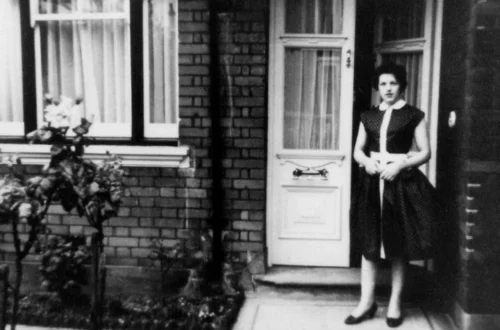
Old ladies in hats with too much lipstick. Smiling out of habit. Lost in the memories of youth.
A youth with a future.
Young ladies today know not of a future; they know of the now. No hats, no lipstick, no smiles, no… dreams. Lost in reverie, but not of the future – daydreams of survival.
That is the future now. Those old enough to have had a future, have their memories. Everyone else; hopes for hopes and dreams for dreams.
The past had a future. But the future will have no past.
“Don’t you understand? When you give up your dream, you die; inside. Where it matters. It’s our dreams that make us live.”
RIVER
The world moves with such a restless energy
We watch nations armed not only with weapons, but with suspicion, each fearing the other while neglecting the meaningful work of understanding.
We have learned to master the forces of technical progress, yet we have not mastered ourselves.
This is the greater failure.
True civilization is not measured by what we can build or command, but by the degree to which we restrain our impulses and act with compassion toward one another.
Where there is greed, there can be no peace. Where there is falsehood, there can be no trust. And without trust, no society can endure, no matter how great its wealth or power.
Yet I do not despair, for the remedy has always been within reach. The change we seek in the world must begin in the smallest of places, within the human heart and in the conduct of daily life.
If we would resist the forces that divide us, we must do so not with greater force, but with greater truth.
Nonviolence is not weakness; it is the highest expression of strength, requiring discipline, humility, and an unwavering commitment to the dignity of all people.
Let each person take up the responsibility of living simply, speaking truthfully, and serving others selflessly.
In this, the world may yet find its balance again, not through conquest, but through conscience.
We Shouldn’t Try to Do It Alone
We keep telling ourselves that the problem is excess. Too much information. Too much news. Too many options. Too many things to worry about.
But maybe it’s not so much the knowing that feels so heavy… maybe the problem is that we are carrying it all alone.
It’s this modern expectation that we’re supposed to absorb all of the loss and fear and uncertainty, but still show up to our lives like everything is fine.
Still go to work. Still smile. Still function. As if the human heart was designed to process global grief in isolation and call it “being informed.”
It wasn’t. It never was. We are trying to metabolize something that was meant to be shared… dispersed… held in common. And instead, we sit alone with it, scrolling, internalizing, pretending this is normal.
It’s not normal… It’s lonely.
And history, if you look at it honestly, has never been about individuals muscling through the weight of the world by themselves. It’s always been collective.
Always.
People survived because they leaned into each other. Because they built circles, not silos. Because grief was witnessed, not hidden. Shared, not privatized. That’s what we’ve forgotten. Or maybe, that’s what’s been slowly stripped away.
But our community nature is still there, underneath everything… waiting.
We don’t need to be stronger on our own. We need to be closer. More honest. More willing to say, “this is heavy… can you carry it with me for a while?”
Because that’s how we make it through. Not alone. Never alone.
Always… together
“The future won’t belong to the most influential. It’ll belong to the most trusted.”
RIVER