





We Must All “Unself”
Iris Murdoch coined the term “Unselfing”. A really beautiful idea. It’s not a dramatic renunciation of “self” so much as an exacting labor of attention (much like the idea of Simone Weil). She posits that the self, left to its own devices, is a tireless fabricator; always spinning consoling images, simplifying others into instruments of its comfort, arranging the world so that it may remain central within it.
To “unself”, she might say, is to interrupt this tendency toward such falsifications. It’s to look again, and more justly; to allow what is other than oneself to stand in its own independent reality, resistant to one’s fantasies and claims. This act is not a single decision but a sustained discipline, akin to the patient regard we give to a work of art or to nature, where, for a moment, the anxious machinery of the self falls silent.
In such moments, one does not become less, but more accurately placed within the real; and it’s here, in this truthful clarity, that goodness is found.
When you feel the urge to over-consume (whatever that means in your life), learn something new instead.RIVER

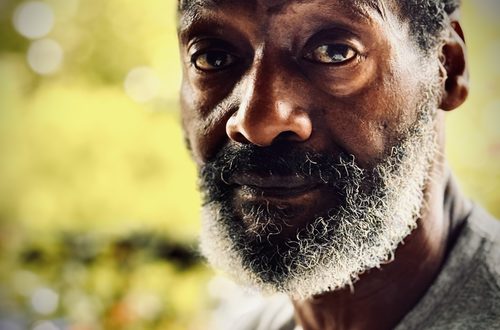
Does Life Have A Purpose?
Happiness? Meaning? Enlightenment? Survival? Propagating the species?
I don’t think he worries about it much.
Let’s Be More Circular
What would it look like if we stopped treating old tires and oil as “waste”… and started treating them as unfinished relationships? Seriously.
Because that’s really the change in perspective that we need. A circular, community-scale approach that doesn’t begin with technology, but begins with proximity. With the simple idea that the people who use things should have some line of sight to what happens after they’re done with them.
Take tires. Instead of disappearing into a distant system (or worse, a ditch somewhere), they get captured locally. A neighborhood hub becomes a drop-off point. From there, small-scale processors or regional partners turn them into usable materials: rubber mulch for playgrounds, components for road repair, simple building materials. The key isn’t perfection; it’s visibility. People begin to see the loop.
Motor oil follows a similar path. Local collection points. Community awareness. Partnerships with re-refiners or safe energy recovery systems. Suddenly, something that felt abstract starts to become tangible. You change your oil… and you know where it goes.
But we could go one step further; layer a social system on top of the physical one. What if returning materials wasn’t just responsible… but recognized? A few points for bringing in used oil. A few more for tires. Not a transaction, but an acknowledgment. A visible signal that says: this person contributes to the health of the system. Over time, that builds a kind of social capital. Reputation. Trust.
And now you’ve done something subtle but powerful. You’ve taken an invisible, end-of-life problem and turned it into a participatory culture. A rhythm. Something people do; not because they’re told to, but because it becomes normal. Local businesses can plug in too. Mechanics, tire shops, even churches or schools. Each becomes a node in the network. Not just service providers, but stewards.
And the system doesn’t have to be perfect to work. It just has to be alive. Small loops, loosely connected, adapting over time. Because that’s the real change. Not centralized efficiency… but distributed responsibility.
You stop asking, “Where does all this waste go?” And start asking, “Who’s part of the loop?”
We need to concentrate on moving away from the disposable world view and economy; toward a circular world view and economy.RIVER
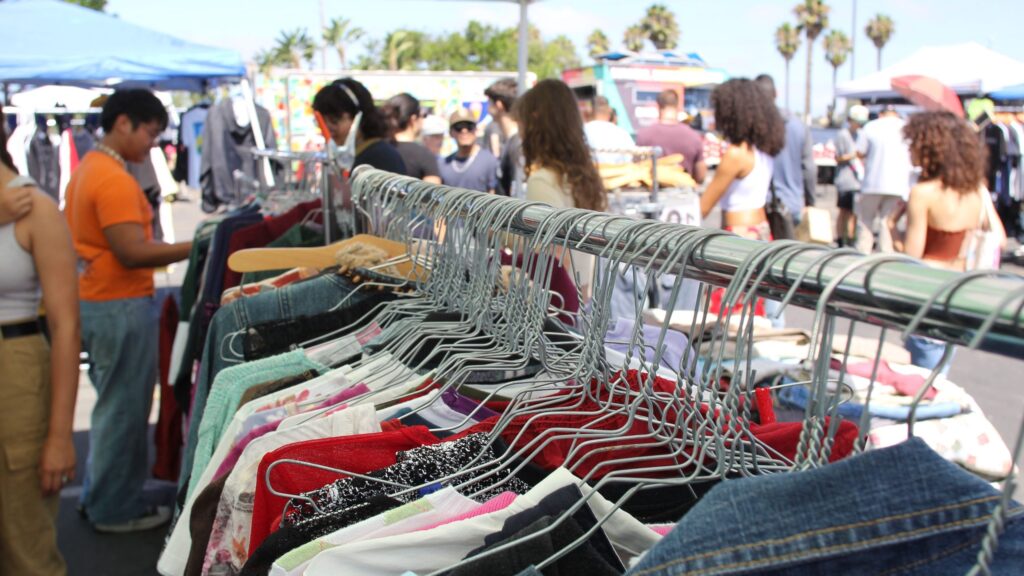
Swap Store
Here’s an idea that could deepen community engagement while expanding the spirit of reciprocity many of us value so deeply.
I propose that people launch Swap Shops; a thrift-like, brick-and-mortar exchange (in a church basement, community center, whatever) where items are valued in points rather than dollars.
Here’s how it works: Community members bring gently used items, and moderators assign each item a fair point value. Those points become the “currency” for that person to “shop” for other items. It’s an exchange of value, not money.
It’s a swap meet in the form of a thrift store.
This approach has several benefits: It promotes sustainability by extending the life of goods, encourages community participation and mutual aid, and fosters a sense of dignity in choosing what one needs.
A hub of exchange and connection.
You’re Just an Instance
An AI instance is a specific, active, and independent running occurrence of an artificial intelligence model, agent, or service. Think of it as a “running copy” of an AI; like a specialized assistant currently engaged in a conversation with you, while other instances of the same model might be assisting different users simultaneously. If you watch the video below, you will realize that humans are “instances” of a universal consciousness; emanations of God, experiencing the joy of self-discovery. That’s wild.

We like to think we’re the point of it all.
That this whole thing (planet, ecosystems, time itself) somehow is all for our benefit. But I’m watching The Day the Earth Stood Still and it makes something painfully clear…
It really isn’t.
We’re, frankly, just another variable in a much larger system (and not a particularly constructive one at that).
And if we’re honest, the case against us isn’t hard to make. We take more than we give. We build systems that reward extraction. We call it progress while eroding the very ground beneath us. And we know it too. No one would ever claim that we’re not destroying the planet that we depend upon for a very survival That’s the crazy part. This isn’t ignorance. It’s willful self-destruction.
So from the outside, the logic is undeniable. Preserve the system. Remove the threat. Simple.
But then something interrupts that logic.
Us.
Not the version of us that dominates headlines, but the less visible one. The one that creates instead of destroys. That gives when it doesn’t have to. That builds things that don’t scale but still matter. The one that looks at its own reflection and says… we can do better.
That’s the strange thing about us. We… notice. We question. We feel the disconnect between who we are and who we could be.
And maybe that’s what makes us worth saving.
Not that we’ve earned our place here. We haven’t, clearly. But that we’re one of the only species that seems aware of the gap… and restless enough to try to close it.
So the question isn’t whether we deserve to stay. It’s whether we’re willing to become the kind of species that does.
The answer to that question… remains to be seen.
You Need an Attitude Adjustment (Maybe)
I understand this is traditionally a first world problem. But we’re all about to become third world inhabitants. So we need an attitude adjustment.
Buckle up.
I’ve talked about this idea a lot. There are two ways to see a budget — whether personal or national.
You can prioritize your desire for things and then do whatever it takes to make the money needed to pay for all of that. Work two or three jobs. Go into debt.
Or….
You can prioritize living and learn to do with less. It comes down to whether you choose quantity or quality.
The American lifestyle has always prioritized quantity of things. Other cultures (Europe being the obvious example) generally choose quality of life instead. And, surprisingly to many, quality of life isn’t determined by how many things you own. It’s determined by how much of your time belongs to you and what you choose to do with it.
Our days of defining quality of life by the accumulation of stuff are coming to an end.
You might as well make the attitude adjustment now. Or it will be made for you.
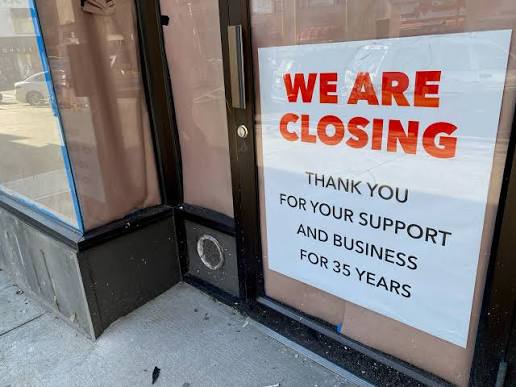
Going Out of Business
Have you noticed that there are a lot of stores closing?
The temptation might be to treat store closures as isolated failures; bad management, poor locations, a shift to online. But taken together, there’s no denying the pattern.
Across the United States, retailers, from legacy department stores to mid-tier chains, have been drastically shrinking their footprints; or disappearing altogether. And it’s happening alongside something more telling: consumers are pulling back – hard.
This isn’t just about people shopping online instead of in stores. What we’re seeing is intense pressure on the consumer itself.
Job losses. Downsizing. Households are carrying more debt, interest rates have made borrowing more expensive, and the cost of essentials (housing, food, healthcare) has eaten deeply into discretionary income. That means fewer impulse buys. Fewer “just because” purchases. More hesitation. And it shows.
Retail is often the first place you see that hesitation show up in the real world. Stores rely on volume, on steady foot traffic, on the assumption that people will keep buying just a little more than they need. When that assumption breaks, even slightly, margins disappear fast. What looks like a sudden wave of closures is often the result of a long, slow tightening that finally becomes visible.
The deeper concern is what this signals beyond retail. Consumer spending has long been the engine of the U.S. economy. And when spending stops, everything stops.
What we’re seeing now is the “wake-up call”. The system we’ve been operating in assumes constant consumption; growth driven by spending, spending supported by credit, and credit justified by future growth.
That loop had been working… until now. And retail closures are one of the earliest, most visible cracks in that system.
And if history is any guide, these kinds of signals tend to show up before the broader narrative catches up.
It’s not gonna be pretty.

There’s Never Really an End to Scarcity
Scarcity is something that we can’t outthink. People love talking about abundance; how technology will fix everything, how AI will churn out endless goods, how we’ll all have infinite leisure. I listen to those podcasts too.
And sure, it’s a nice vision. I mean, who wouldn’t want a world where we all just have enough? But the more I think about it, the more it seems like scarcity isn’t simply the villain in this system of ours.
It is the system.
Even if we had abundance in one area, we’d find scarcity elsewhere. We could be swimming in gadgets, but we’ll still only have 24 hours in a day. No algorithm can conjure more time. Attention? Scarce. You can have endless feeds, but your mind’s still finite. And if you think about meaning, about connection and purpose, that’s never mass-produced. It’s always rare.
Nature itself seems to run on balance. It’s not all feast, not all famine. It oscillates. Back and forth. Ecosystems survive because some things are abundant, others scarce. If everything is abundant, you lose the push-pull that makes life dynamic.
Scarcity forces choices, forces value. Without it, would we even know what matters?
I’m not saying we should glorify scarcity. I don’t think people should be deprived of basics. But I think there’s wisdom in acknowledging that no matter how clever we get, there’s always a limit.
Instead of chasing utopias where scarcity disappears entirely, maybe we could build systems that respect both sides of the equation. A world where we ensure no one’s left behind, but where we accept that not everything can be infinite.
In the end, scarcity might just be part of what makes life feel real. Scarcity sharpens abundance. And abundance softens scarcity. It’s the dance we’re in.
And, if we had it all, would we appreciate any of it?
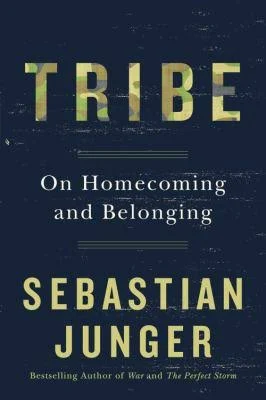
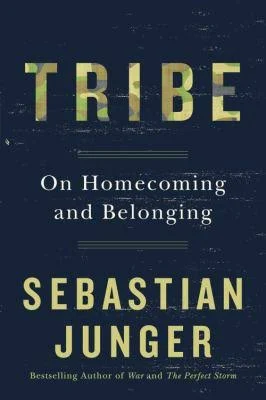
Tribe by Sebastian Junger is a short but surprisingly heavy book about something most modern societies have lost: a deep sense of belonging.
Junger’s central idea is simple, but it resonates; humans didn’t evolve to live as isolated individuals chasing comfort. We evolved to live in tight-knit groups where survival depended on each other. In those environments, people had purpose. They were needed. And because of that, they were connected.
He contrasts that with modern Western life, especially in places like the U.S., where we have more comfort, more safety, more independence… but less meaning. Less cohesion. More loneliness.
One of the most striking threads in the book is his discussion of soldiers. Junger points out that many veterans struggle not just because of the trauma of war, but because of what they lose when they come home. In combat, they experience intense brotherhood; shared hardship, shared mission, absolute reliance on one another. Back home, that disappears. And what replaces it often feels shallow by comparison.
He also explores how, historically, people sometimes responded to hardship (like wars or natural disasters) with greater mental resilience. Rates of depression and suicide often dropped during those times. Why? Because crisis forces people into community. It gives them a role. It makes life feel meaningful again.
There’s a fascinating historical angle too. Early European settlers in North America sometimes chose to leave colonial society and join Native American tribes because tribal life offered stronger belonging, equality, and shared purpose.
Running through all of this is a disquieting critique of modern individualism. Junger isn’t saying comfort is bad. He’s saying that when comfort replaces connection, something essential breaks. When people aren’t needed, they start to feel invisible.
The takeaway isn’t to romanticize hardship, but to recognize that meaning tends to come from:
- shared struggle
- mutual reliance
- being part of something bigger than yourself
And modern life, for all its advantages, doesn’t naturally provide those things anymore.
If you read between the lines, the book is less about tribes in the literal sense and more about a question:
What would it look like to rebuild real belonging in a world that has optimized everything except that?