


I Imagine and Re-imagine Community Social Safety Nets…
Social safety nets that are community-based systems able to catch those who fall through the cracks of the larger public systems.
The answer to social precarity cannot be entirely top down. A big part of the answer must come from the bottom up; community based initiatives.
I imagine and re-imagine community as necessary social infrastructure for the future.
Because the truth is, modern life has become increasingly precarious for a lot of people. More people are falling through the cracks of large institutional systems than most societies are comfortable admitting.
Economic instability. Isolation. Healthcare insecurity. Housing insecurity. Mental health struggles. Elderly abandonment. Burnout. Food insecurity. Social fragmentation. A growing number of people exist one unexpected emergency away from crisis.
And large systems, by their nature, struggle to respond to human complexity at the local level.
That is not necessarily because people within those systems are uncaring. Often they care deeply. The problem is scale.
Bureaucratic systems are designed for administration and efficiency. But human beings are not statistics. Communities are complex. Real life does not always fit neatly into categories, paperwork, eligibility requirements, office hours, or funding structures.
That is why the answer to social precarity cannot come entirely from the top down.
We need bottom-up systems too. Human systems. Relational systems. Community-based systems capable of responding to the realities that formal institutions often cannot fully see.
I believe healthy communities function as social safety nets long before crisis reaches catastrophic levels. A strong community notices when someone disappears. Notices when a family is struggling. Notices when an elderly neighbor becomes isolated. Notices when someone loses work, falls into depression, experiences grief, or simply begins to lose hope.
And more importantly… healthy communities respond.
Not through charity alone, but through reciprocity. Participation. Shared responsibility. Social trust. Meaningful relationships. Local resilience.
That is the work I care about.
I am interested in building systems that strengthen the connective tissue between people. Systems that make contribution visible. Systems that encourage participation, belonging, mutual aid, dignity, and agency. Systems that help communities become more capable of caring for one another before problems become downstream societal crises.
This includes rethinking social infrastructure itself.
- How do we rebuild local trust in an age of fragmentation?
- How do we create environments where people feel needed again?
- How do we help communities become more resilient without becoming dependent entirely on distant institutions?
- How do we design systems that reward contribution, reciprocity, and care rather than isolation and extraction?
These are not merely economic questions. They are cultural questions. Psychological questions. Civilizational questions.
I do not believe the future will be sustained by systems alone. I think the future will belong to communities that relearn how to organize trust, reciprocity, and participation at the human level.
Not to replace larger institutions entirely. But to complement them. To fill the spaces they cannot reach. To catch those who fall through the cracks before they disappear beneath them.
Because ultimately, community is not a luxury.
It is survival.
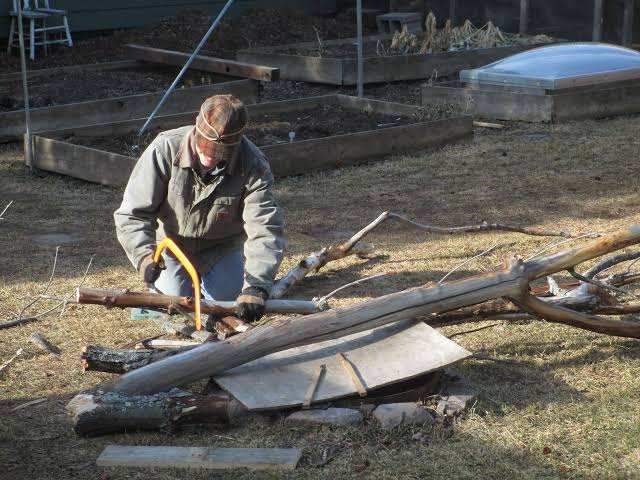
In a healthy economy, people do good work because they take pride in what they do. In an unhealthy economy, the system tries to force people to do acceptable work through threat of punishment.
I’ve seen both. I know which one I prefer.
Reciprocity is a Matter of Survival
The thing that fascinates me about social capital is that humanity already ran on it for most of history. We act as though it’s some radical new experiment, but it’s actually older than money itself.
Imagine a tiny Alaskan bush town with 300 people. Brutal winters. Isolation. Limited resources. In that kind of environment, survival is relational. Everybody knows everybody. Everybody knows who shows up when someone’s roof collapses. Who helps pull a truck from the snow. Who brings soup when someone is sick. Who disappears when work needs to be done.
And interestingly… nobody has to keep score.
No central authority tracks “community contribution points.” No algorithm calculates worth. Yet everyone knows. The social fabric itself remembers. Reputation becomes a living thing carried collectively by the group.
The person who constantly contributes develops social gravity. Trust follows them naturally. People WANT to help them because they’ve demonstrated that they are part of the reciprocal fabric of the community. Meanwhile, the person who consistently takes while giving little back slowly finds fewer people willing to sacrifice for them.
That doesn’t mean that the town is cruel. It means; reciprocity is part of survival itself.
And many modern societies somehow have forgotten this. We often frame all forms of merit or contribution as oppressive, while simultaneously living inside systems where invisible contribution already determines trust every single day. We naturally trust reliable people more. We naturally invest in people who invest in others.
My work is exploring whether that ancient human instinct can scale into the modern world without reducing everything to money. Whether contribution, trust, reciprocity, and reputation can become visible again in a society that increasingly measures value only through financial accumulation.
Not replacing human dignity with a score. But remembering that healthy communities have always known who carries the weight… and who doesn’t.
That used to matter. And it should again.
The Devil Among Us
Isn’t it interesting how humanity keeps telling the same story over and over again across completely different civilizations. Different names. Different gods. Different symbols. But underneath it all… the same archetype keeps popping up.
Prometheus steals fire from the gods and gives it to humanity. Enki sides with humanity against the harsher decisions of the divine assembly. The serpent in Book of Genesis offers knowledge of duality. Odin sacrifices himself for wisdom. Maui steals fire for mankind. Even Lucifer literally means “light-bringer.”
Humanity can’t seem to let go of this same strange idea; that there exists a figure (or force) who crosses boundaries to elevate mankind. Someone (or something) that brings knowledge, consciousness, technology, civilization, or awakening itself into the human world… usually against the wishes of authority.
But the thing that strikes me most is that these stories are never celebrations of progress. Quite the opposite in fact. They are a warning. The “gift” is always double-edged. Fire gives warmth… and power. Knowledge gives civilization… and conflict. Even consciousness itself seems to come with suffering attached to it.
The ancient world understood something we still struggle with today:
- Every leap forward creates new problems we could not have previously imagined.
- The human desire for god-likeness never goes unpunished.
- And almost always, the one who brings the “gift” suffers for it.
Prometheus is tortured. Lucifer falls. Odin hangs from the world tree. The serpent is cursed. It’s almost as if these myths are trying to tell us that awakening comes at a steep cost. That becoming “more” than we were is both miraculous and tragic at the same time.
And honestly, I think that’s why these stories still resonate right now. Because we are once again standing in front of a new kind of fire. Artificial intelligence. Genetic engineering. Mass surveillance. Algorithmic control. God-like tools in the hands of deeply imperfect creatures (the devils of our own time, perhaps).
Maybe the old myths weren’t really about ancient gods. Maybe they were about us. About the struggle inside humanity itself; our endless desire to reach beyond our limits (babel) while never being entirely wise enough to handle the consequences thereof.
Every civilization eventually arrives at this same threshold. Every generation touches the flame and asks the same question:
Is this enlightenment… or is this the beginning of a new downfall?
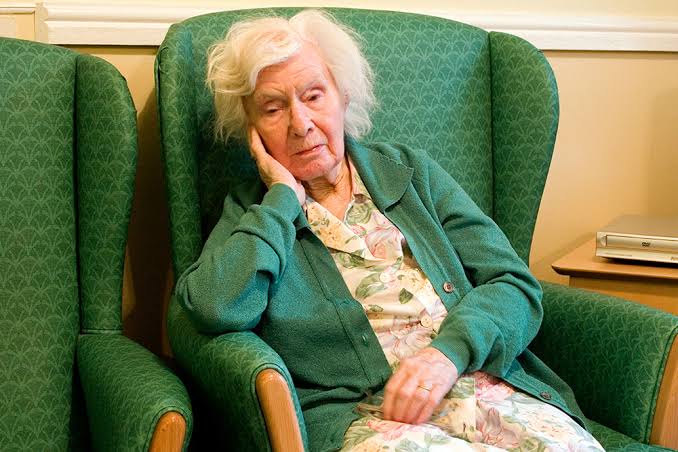
I’ve noticed that since late 2020 – early 2021, after the Covid crisis peek, when things started to open up again, life has been gradually losing its flavor. Its zest. Its… aliveness. Increasingly, life is becoming puzzlingly bland. As if a blanket of apathy is being pulled over our collective heads.
I’ve noticed that I care less and less about things that used to be important to me. I’ve noticed other people make similar comments. I’ve noticed… I’ve noticed… ah who cares.
The future of human-centered economics is upstream problem solving. (I talk a lot about this in my posts.)
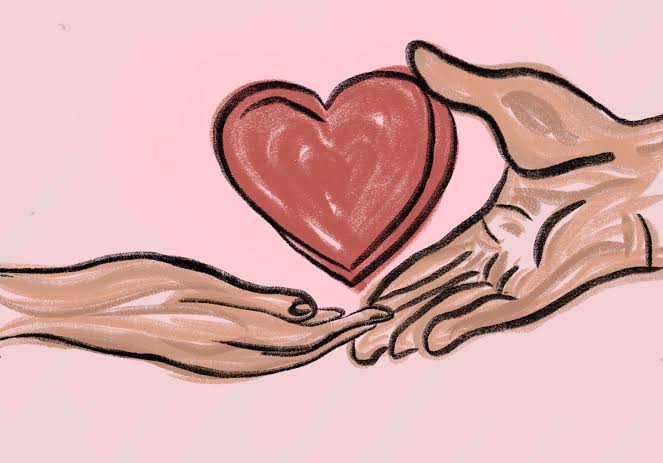
Whenever you feel the urge to judge someone…
Love them instead.
Could You Follow Your Dream?
The hardest part of pursuing a dream is being brave enough to dream in the first place…
Believing in yourself enough to think that maybe you can accomplish something beyond your current situation.
Most dreams die in their infancy. They never get a chance to grow up and flourish and produce something amazing.
And I think that people don’t talk about it enough. Don’t talk about the power of agency.
I think that most people assume the hard part is the work. The risk. The possibility of failure. But often the hardest moment comes before any of that… not so much when you dream, because everyone dreams, but when you start to believe that dream is possible. As it was said: success is 1% inspiration and 99% perspiration. But translating the inspiration into action takes belief in oneself. And that is the hardest part.
Because allowing yourself to think that your dreams could come true, carries a lot of weight.
The moment you allow yourself to dream, you also allow yourself to feel the weight of not having it yet. You expose yourself to disappointment. To embarrassment. To the opinions of people who stopped dreaming a long time ago and now mistake cynicism for wisdom.
A dream changes your relationship with the world. Suddenly your current life is no longer neutral. It becomes either a bridge or a barrier to something else. And that realization can be terrifying.
I also think many people are trained out of dreaming. Institutions tend to reward predictability more than imagination. Stability more than vision. We are taught to be reasonable. Practical. Realistic. Keep your expectations manageable. Don’t get too ambitious. Don’t risk humiliation.
But nearly every meaningful thing humanity has ever built started with someone being irrational enough to imagine a reality that did not yet exist.
And maybe that’s why courage matters so much here. Not because dreaming guarantees success… but because refusing to dream always guarantees failure… to some degree.
There’s another layer too. Sometimes the dream itself isn’t even the point. Sometimes the dream is simply the thing that calls a person into becoming more alive, more awake, more themselves. Even unfinished dreams can transform people.
That’s why I think bravery comes first.
Not the bravery to succeed.
The bravery to believe.
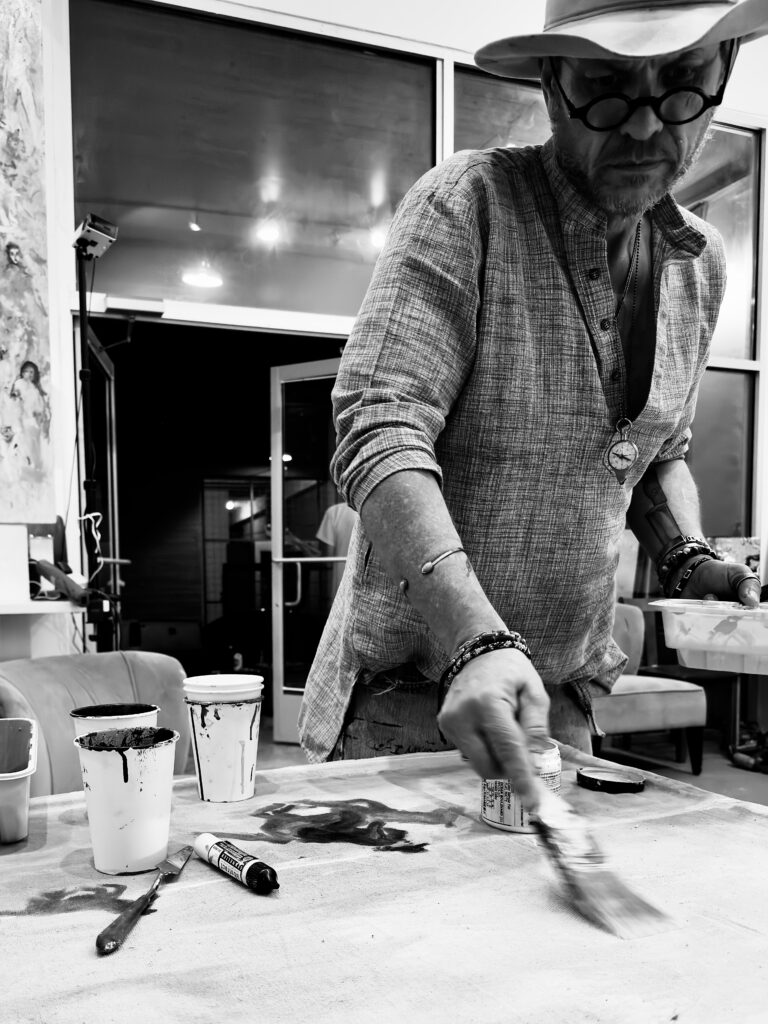
Purpose Work. Meaning Economy. Abundance Mindset.
There’s a saying: “If you do what you love, you’ll never work a day in your life.”
But, unfortunately, most people will never get close enough to that idea to discover its veracity.
I’ve always been averse to trading hours of my life for money; in a direct relationship, anyway. Not because I don’t need money. We all need money. But because time is the one thing you can’t earn more of.
It seems to me that the most valuable resource, the most valuable asset, that we have are the hours of our life.
Life is the ultimate finite commodity. And the people who treat it that way, who manage it with the same intentionality they’d bring to anything truly scarce, tend to be the ones who eventually close the gap between what they do and who they are.
That’s what purpose work really means to me.
Not passion as a luxury…
Alignment as truly living.
“The Obstacle Is the Way” by Ryan Holiday
Draws on Stoic philosophy (particularly the teachings of Marcus Aurelius, Epictetus, and Seneca) to argue that the impediments we face in life are not just inevitable but actually essential to growth and success.
The core idea is that our perception of obstacles determines our experience of them: by reframing adversity as opportunity, we transform resistance into fuel.
Holiday structures the book around three disciplines:
- perception (seeing clearly and without panic)
- action (moving deliberately and persistently through difficulty)
- and will (cultivating the inner resilience to endure what cannot be changed)
Through historical examples ranging from Ulysses S. Grant to Amelia Earhart to Steve Jobs, he illustrates that the most accomplished people weren’t those who avoided hardship but those who used it, turning every setback into a setup for forward movement.
The book is ultimately a practical Stoic manual: obstacles don’t block the path; they are the path.
Own Nothing. Be Happy?
Fractionalized physical assets are real-world things like houses, buildings, farmland, artwork, classic cars, machinery, even infrastructure projects that are divided into smaller ownership shares so multiple people can collectively own them.
Instead of one person needing $500,000 to buy an apartment building, for example, 500 people might each buy a $1,000 share. Each person then owns a fraction of the asset and may receive a proportional share of the income, appreciation, or utility generated by it.
Blockchain technology and tokenization have accelerated this idea because ownership shares can now be represented digitally as tokens. That allows assets that were traditionally illiquid and accessible only to wealthy investors to become: More accessible. More liquid. Easier to trade. Potentially global in participation
Examples:
- Fractional real estate platforms where people buy shares of rental properties
- Shared ownership of fine art or collectibles
- Community-owned solar farms
- Fractional ownership of expensive equipment or vehicles
- Tokenized infrastructure or local development projects
Philosophically, it represents a move from exclusive ownership toward networked ownership. In some ways, it mirrors older communal models like villages sharing mills, grazing land, or fishing boats, but updated through digital infrastructure.
There are also interesting implications for broader ideas around social capital and local economies. Fractionalization potentially allows communities themselves to become partial owners of the systems they depend on. Imagine:
- neighborhoods co-owning grocery stores
- residents owning shares in local clinics
- community-owned housing
- or local energy cooperatives where participation and contribution influence governance.
But there are serious risks too:
- regulatory complexity
- securities law issues
- speculative bubbles
- over-financialization of everyday life
- the loss of freedom that come with ownership
- loss of agency
- loss of self-directed living
- massive social control infrastructure
- and everything starts to become “investable” rather than relational
That dichotomy is incredibly important.
Fractionalization can either democratize ownership… or turn every part of life into another speculative marketplace. The outcome probably depends less on the technology itself and more on the values and culture surrounding it.
But like it or not, it’s coming.
I have an idea!
I was just watching a video about poor communities in the United States and how they are food deserts, healthcare deserts, education deserts, opportunity deserts.
And the only way that that is going to change is if grassroots community efforts work to change it. Top-down systems won’t change that.
What if there were nonprofit organizations (or something similar) that would move in to such communities and start a regenerative farm that could produce and provide good quality food to the community. And what if we seeded lots of food deserts with such farms?
I know that there are all sorts of regenerative farming initiatives out there, what if we could start a movement to seed food deserts with these sorts of food producers?
I would love to have a conversation about that. Could we start a conversation in the notes section of this note?
I’m watching Eat, Pray, Love.
A definite must watch, if you haven’t already. Deeply human.
Anyway, the main character just mentioned a joke:
An old Italian man goes to church every day and prays to the statue of a Saint; “please, please, please let me win the lottery”. After months of doing this, the statue comes to life and says to the man; “My son, please, please, please buy a ticket.”
This is just one example of the incredible life lessons in this movie.
How many of us move through our lives wishing for more? Wanting more? Wishing we had done more?
But how many of us have actually bought the ticket?