My work is founded on the premise that the current system doesn’t reward merit; it rewards capital. And the two are not the same thing. A person with inherited wealth accumulates more. A person with the right connections gets the contract. A person with leisure time and stability has more opportunity to thrive. The system isn’t blind to effort; it’s blind to everything except money. What I propose is a genuinely multi-dimensional contribution model. Social capital, relational investment, skill-sharing, showing up. These aren’t soft alternatives to real value. They are the real value. I’m simply trying to make them legible and reciprocal. And…

-
-
We Must All “Unself” Iris Murdoch coined the term “Unselfing”. A really beautiful idea. It’s not a dramatic renunciation of “self” so much as an exacting labor of attention (much like the idea of Simone Weil). She posits that the self, left to its own devices, is a tireless fabricator; always spinning consoling images, simplifying others into instruments of its comfort, arranging the world so that it may remain central within it. To “unself”, she might say, is to interrupt this tendency toward such falsifications. It’s to look again, and more justly; to allow what is other than oneself to…
-
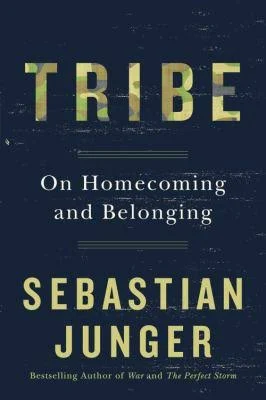
Tribe by Sebastian Junger is a short but surprisingly heavy book about something most modern societies have lost: a deep sense of belonging. Junger’s central idea is simple, but it resonates; humans didn’t evolve to live as isolated individuals chasing comfort. We evolved to live in tight-knit groups where survival depended on each other. In those environments, people had purpose. They were needed. And because of that, they were connected. He contrasts that with modern Western life, especially in places like the U.S., where we have more comfort, more safety, more independence… but less meaning. Less cohesion. More loneliness. One…
-
Here’s a brief conversation between two characters in the movie The Day the Earth Stood Still. (I bring it up at the beginning of this essay because this is exactly what we’re going to be talking about.) Professor Barnhardt: But every civilization reaches a crisis point eventually. Klaatu: Most of them don’t make it. Professor Barnhardt: Yours did. How? Klaatu: Our Sun was dying. We had to evolve in order to survive. Professor Barnhardt: So it was only when your world was threatened with destruction that you became what you are now. Klaatu: Yes. Professor Barnhardt: Well that is where…
-
There’s something that I say so often, I sound like a broken record: It’s better to be proactive rather than reactive. Sounds simple enough. Most people would agree with it. Most people also aren’t doing it. Because being proactive is about being predictive. It’s about developing the discernment to look down the road and understand what the needs are going to be at that time. It’s about building before you need what you’re building. And right now, in this particular moment in history, what needs to be built is community. Not community as a nice-to-have sort of thing. Not community…
-
I figure we thought we were building tools to help us think. Now those very same tools are shaping what we think. The problem is, most of us haven’t noticed the difference. Artificial intelligence is changing the world. That’s not a controversial statement. What we’re slower to reckon with is the more dangerous version: AI is changing humanity itself. And it’s not just changing what we do. What we believe. What we consider true, important, or relevant. The line between helping us and influencing us shifted so quietly we missed it. Here’s one of many problems. These systems, the large…
-
A tapestry of my facets; Woven together, carelessly. And yet, woven. Perhaps by destiny. No less beautiful.
-
The Wachowskis (Lana and Lilly) have made a career out of showing us “realities” that we never knew existed – assuming that they do. The Matrix. V for Vendetta. Cloud Atlas. Film after film that didn’t just entertain but seemed to know something. Something about the nature of reality. Something about where society is heading. Something about what it means to be human in a world that increasingly feels like it’s being run by forces we can’t quite figure out. And one has to ask; are they just brilliantly insightful, or do they know something we don’t? Here’s what I…
-
In the modern Internet-based economy, it’s inevitable that everything be paywalled. The economy is becoming more and more built on information, and the only way to monetize information is to charge people to access it. First, we had content creators who monetized their content. Then we had influencers who monetized their ability to influence others. Then we had context creators who took the masses of content and information and distilled it down into something contextual and meaningful. But now we have something new…. What? You might be asking. I’ll get to that soon enough. But, back to the problem. The…
-
I’ve been thinking about something lately. How much of what we “know” these days comes from watching rather than doing. We listen to podcasts. Watch videos. Read threads. Join chat forums. And eventually, it starts to feel like experience. Like we’ve been there. Like we understand it. Like a war reenactment enthusiast eventually might feel he knows what it is to be in combat. And sometimes we do gain some experience and insight from our vicarious endeavors… at least conceptually. But there’s a difference between understanding something in theory and carrying it in your bones. Between seeing it… and living…