• Culture - Finance and Economy - Social and Self-Help

    The Community Memeplex

    Much of my work is often described as community building, time co-ops, social capital, trust economies, mutual aid, mutual support, human capital, or social infrastructure. And those descriptions are certainly all true. But, they’re also incomplete. What I’m really interested in is something larger: a memeplex; a set of interconnected ideas that reinforce one another and gradually change how people understand value, belonging, and society itself. At the center of this memeplex is a simple belief: people are the source of value and community is the environment where that value plays out. Money has utility. Markets have utility. Institutions have…


  • Culture - Finance and Economy - Health and Wellness - Making Money - Social and Self-Help

    It’s More than Just “Capacity”

    A lot of modern ideology assumes humans are infinitely interchangeable units with equal ability to navigate complexity independently. But lived reality says otherwise. People vary tremendously in capacity, tenacity, perception, and adaptability. Healthy societies historically compensated for that through community, culture, and layered support structures rather than pretending everyone should operate as isolated hyper-competent individuals. That reality is highlighted (again and again) in my work on trust, networks, and social infrastructure. I’ve written frequently about high agency people over the years. The kinds of people who look at a difficult situation and instinctively think: “Okay… what can I do about…

  • Culture - Finance and Economy - Social and Self-Help

    “The Dawn of Everything” by David Graeber and David Wengrow 

    At its core, this book is an argument that most of what modern people assume about human history is either oversimplified… or outright wrong. The standard story goes something like this: Humans started as small egalitarian hunter-gatherer tribes. Then agriculture arrived. Population increased. Cities formed. Hierarchies became inevitable. Kings, bureaucracies, armies, and inequality emerged because complexity required centralized control. Civilization, in this telling, is basically a tragic trade-off. We gained technology and lost freedom. However, Graeber and Wengrow challenge nearly every part of that narrative. Using archaeology, anthropology, and historical evidence from societies across the world, they argue that human…

  • Culture - Finance and Economy - Making Money - Social and Self-Help

    Frameworks for a Better Theory of Change

    The Problem Statement Modern systems optimized for production and consumption have systematically dismantled the social infrastructure (trust, reciprocity, belonging, mutual obligation) that once made communities strong. And this isn’t a downstream problem. It’s the upstream condition generating loneliness, institutional distrust, political polarization, and chronic dependency on systems that were never designed to replace community. Effective Altruism (EA), begins by asking one question: Is this problem large, neglected, and tractable? Yes on all three. Social capital erosion affects virtually every developed society. It is structurally neglected because its outputs (trust, connection, civic participation) are invisible to economic metrics and therefore defunded.…

  • Finance and Economy - Making Money - Social and Self-Help

    Money Is Not Value; a Position Paper

    Reclaiming Human and Social Capital as the Foundation of Economic Life A Position Paper by River Stephens Executive Summary Modern society has become extraordinarily skilled at measuring money and remarkably poor at measuring value. We track GDP, stock prices, quarterly earnings, productivity metrics, market capitalization, and countless other financial indicators. Entire industries exist to monitor, analyze, and optimize the movement of money. Yet beneath all of these measurements lies a largely unexamined assumption: that money itself is value. This paper challenges that assumption. Money is not value. Money is a claim on value. The true sources of value reside in…

  • Culture - Finance and Economy - Health and Wellness - Making Money - Social and Self-Help

    The Economics of Solvents and Nutrients

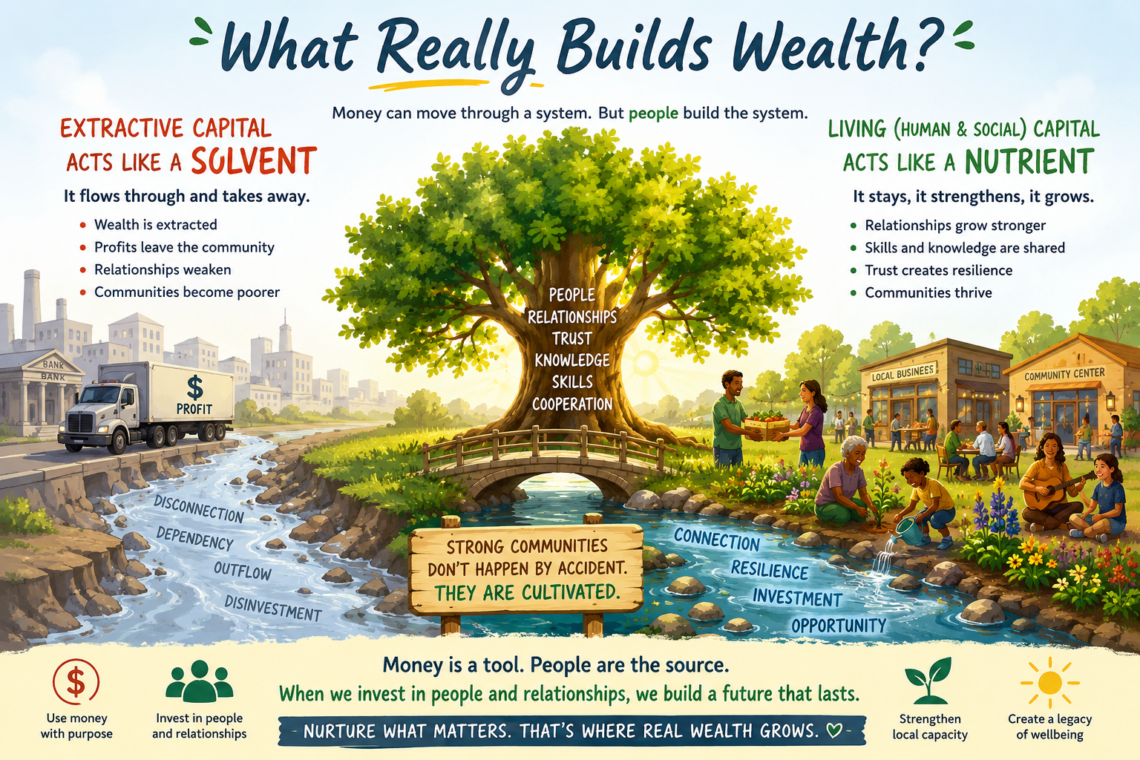
    Ernesto Van Peborgh once offered a metaphor that is, frankly… very cool. (And, thank you to Kelly Clark for telling me about it.)  He suggested that extractive capital (money) acts like a solvent as it moves through a system, while living capital (human and social capital) acts like a nutrient. The more I think about that metaphor, the more I believe that might be one of the most important ideas I’ve heard lately.  Most of us have been taught to see money as the primary measure of value. We assume that if more money is flowing, things must be getting…

  • Culture - Finance and Economy - Making Money - Social and Self-Help

    “Blood in the Machine” by Brian Merchant

    This book is essentially a re-examination of the Luddites;  and an argument that we have misunderstood them for two hundred years. Most people hear the word “Luddite” and think “anti-technology fool.” Merchant argues that this is historical propaganda. The original Luddites were not ignorant peasants terrified of machines. They were highly skilled textile workers during the Industrial Revolution who understood technology very well. What they opposed was not technology itself, but the way factory owners used technology to centralize power, cut wages, deskill labor, and turn independent craftsmen into replaceable factory workers.   The book walks through early 1800s England,…

  • Culture - Finance and Economy - Making Money - Social and Self-Help

    The Human Capital Economy

    The Human Capital Economy: Making Contribution Visible in an Age of Social Fragmentation Executive Summary For centuries, societies have become increasingly sophisticated at measuring financial capital. We can track dollars, assets, ownership, debt, investment returns, productivity, consumption, and economic growth with astonishing precision. In fact, entire industries exist to monitor, analyze, and optimize the movement of money. Yet one of the most important forms of wealth remains largely invisible. Human capital. Social capital. Relational capital. Trust. The relationships that sustain communities, create strength, generate opportunity, and improve quality of life are often unmeasured, underappreciated, and unsupported by modern systems. This…

  • Culture - Finance and Economy - Making Money - Social and Self-Help

    Diversify Your Trust Portfolio

    Modern society has become extraordinarily efficient at scaling trust upward, but relatively poor at cultivating trust sideways. We trust distant institutions more than our own neighbors. We know how to coordinate with millions of strangers through banks, corporations, governments, and digital platforms. Yet many people couldn’t tell you the names of those living three doors down. The achievement is remarkable. The vulnerability is obvious. Because trust concentrated in large systems creates efficiency, but trust distributed through relationships creates stability. That’s one of the reasons initiatives around community, reciprocity, social capital, and time banking is so interesting. It’s not anti-market or…

  • Culture - Finance and Economy - Making Money - Social and Self-Help

    The Economy of Trust: A White Paper on Re-Community, Social Capital, and the Future of Human Systems

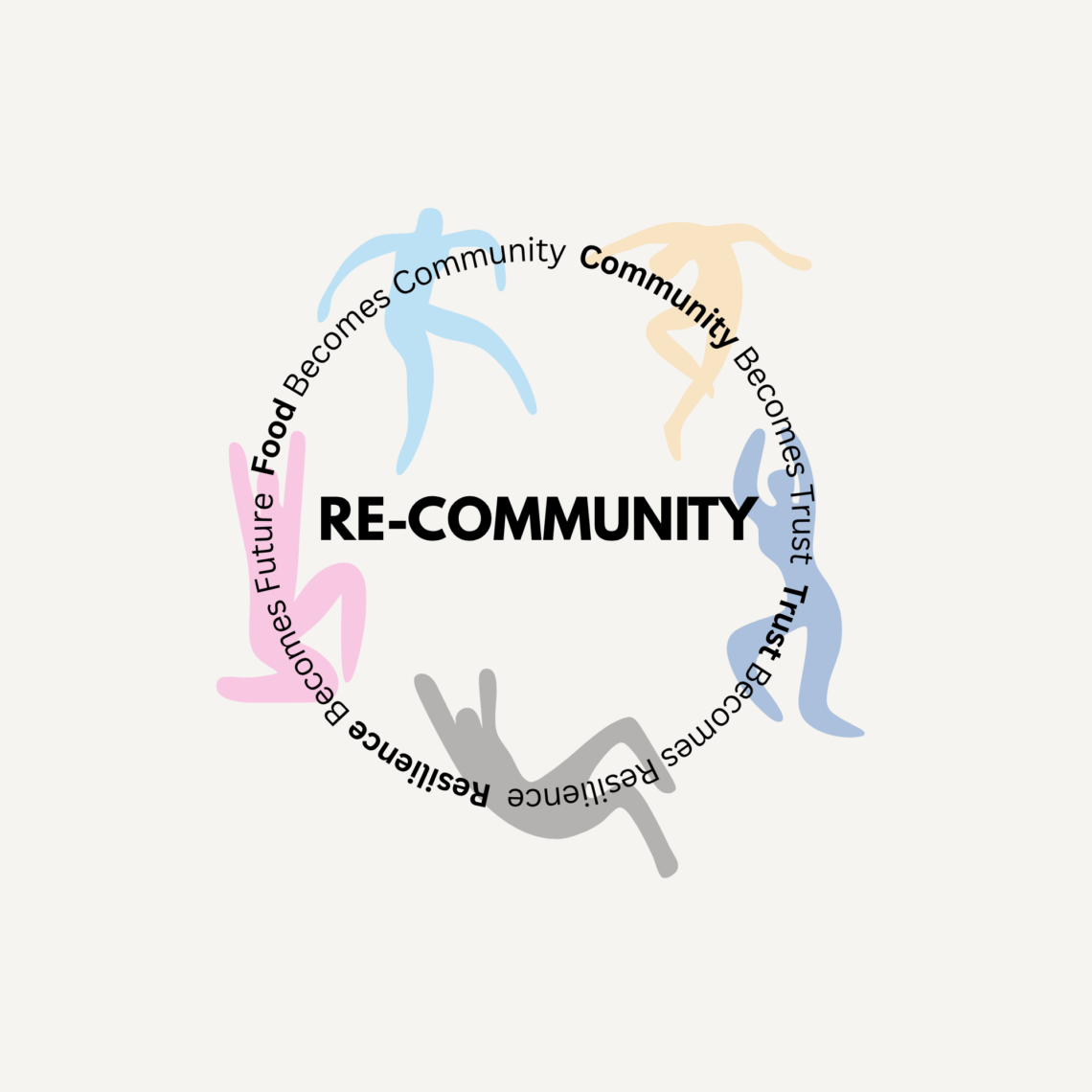
    By River Stephens Executive Summary Modern society is experiencing a crisis of fragmentation. Communities are dissolving. Institutions are losing trust. Economic systems increasingly reward extraction over contribution. People are more digitally connected than ever before, yet profoundly isolated from one another. This white paper proposes a different framework for understanding the future of society and economics: That the most valuable form of capital may not be financial capital at all… but social capital. Human civilizations have always functioned on trust networks. Long before modern banking systems, contracts, or digital currencies, communities survived through reciprocity, reputation, cooperation, and mutual obligation. Modern…