• Culture - Finance and Economy - Making Money - Social and Self-Help

    The Trust-Based Economy

    I’ve been mulling over a simple (or complex) question: What if the firm isn’t the end state… but just a workaround? That’s really what Ronald Coase was getting at in The Nature of the Firm. Firms exist because coordinating through the open market is inefficient. Expensive. Complications everywhere. So we built organizations to contain that chaos; to reduce the cost of figuring things out. It made sense. It worked. But what happens when the reason they existed starts to… become less necessary? Because that’s where we are now. And information automation has changed the playing field. The old solution: structure…

  • Culture - Finance and Economy - Making Money - Social and Self-Help

    I Am a Witness to Real Value

    Most Americans rarely stop to think about what has real value. We’ve been trained our whole lives to think of value in terms of money. How much does something cost. And even if we take a more philosophical approach, as did Warren Buffett when he said; price is what you pay, value is what you get – we’re still missing the real value proposition.  So what is the real value proposition you might ask? A value proposition is simply a clear explanation of why something matters… why someone should care, participate, invest, join, support, or believe in it. In traditional…

  • Culture - Finance and Economy - Social and Self-Help

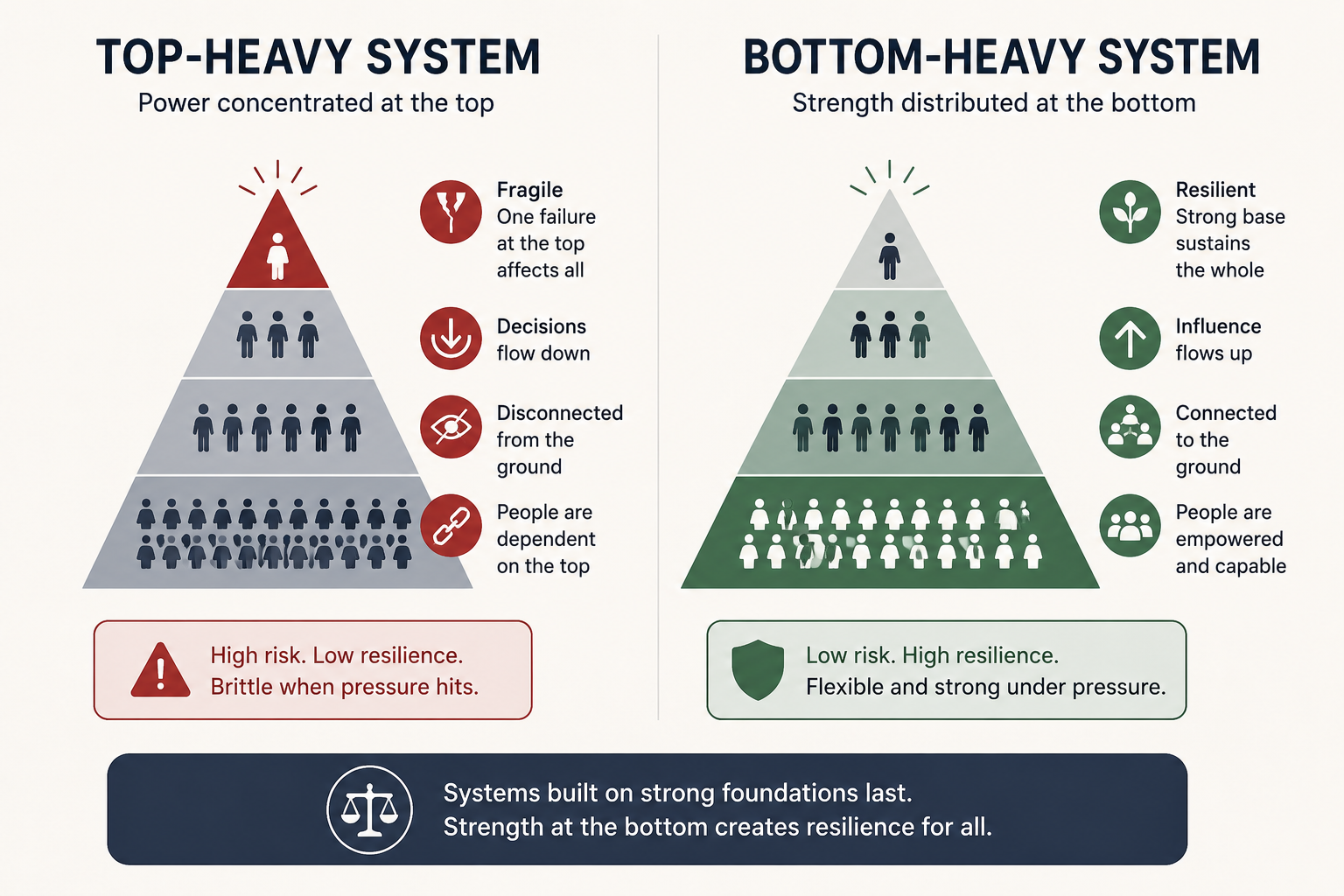
    Systems Need to Be Bottom-Heavy (not top-heavy)

    Popular thought has always been that systems should be top-heavy. That strength comes from centralization. From concentration. From a few people at the top carrying the weight of the whole structure. Governments. Corporations. Institutions. Even communities sometimes. We’re taught that stability comes from hierarchy… from control flowing downward. But I wonder if that’s backwards. Because the strongest things in nature are often bottom-heavy. Trees don’t survive entirely because of the leaves at the top; they survive mostly because of the roots underneath. Ecosystems don’t function because one organism dominates everything else. They function because millions of small interactions support one…

  • Culture - Finance and Economy - Social and Self-Help

    RE-COMMUNITY: Re-Seeding Social Deserts

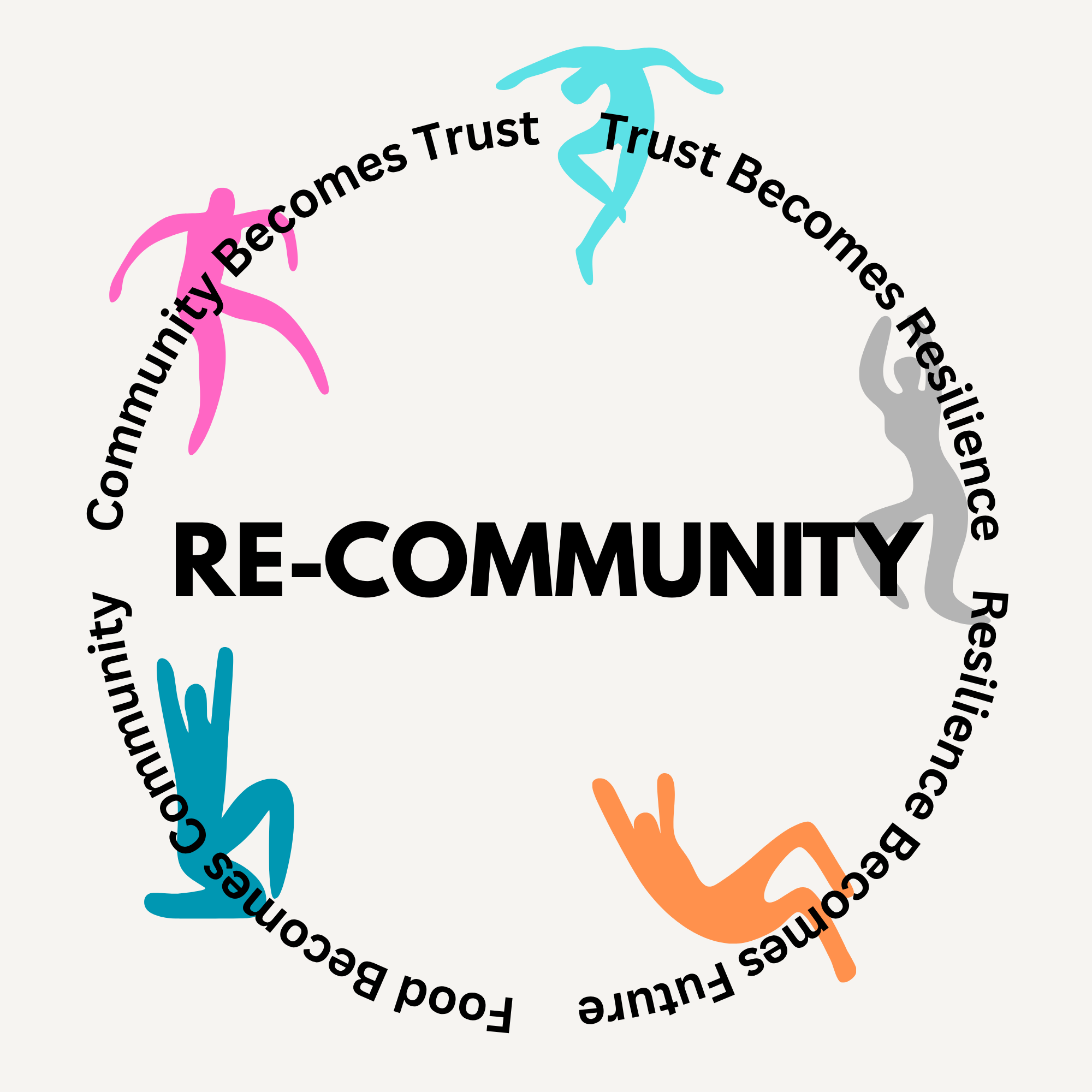
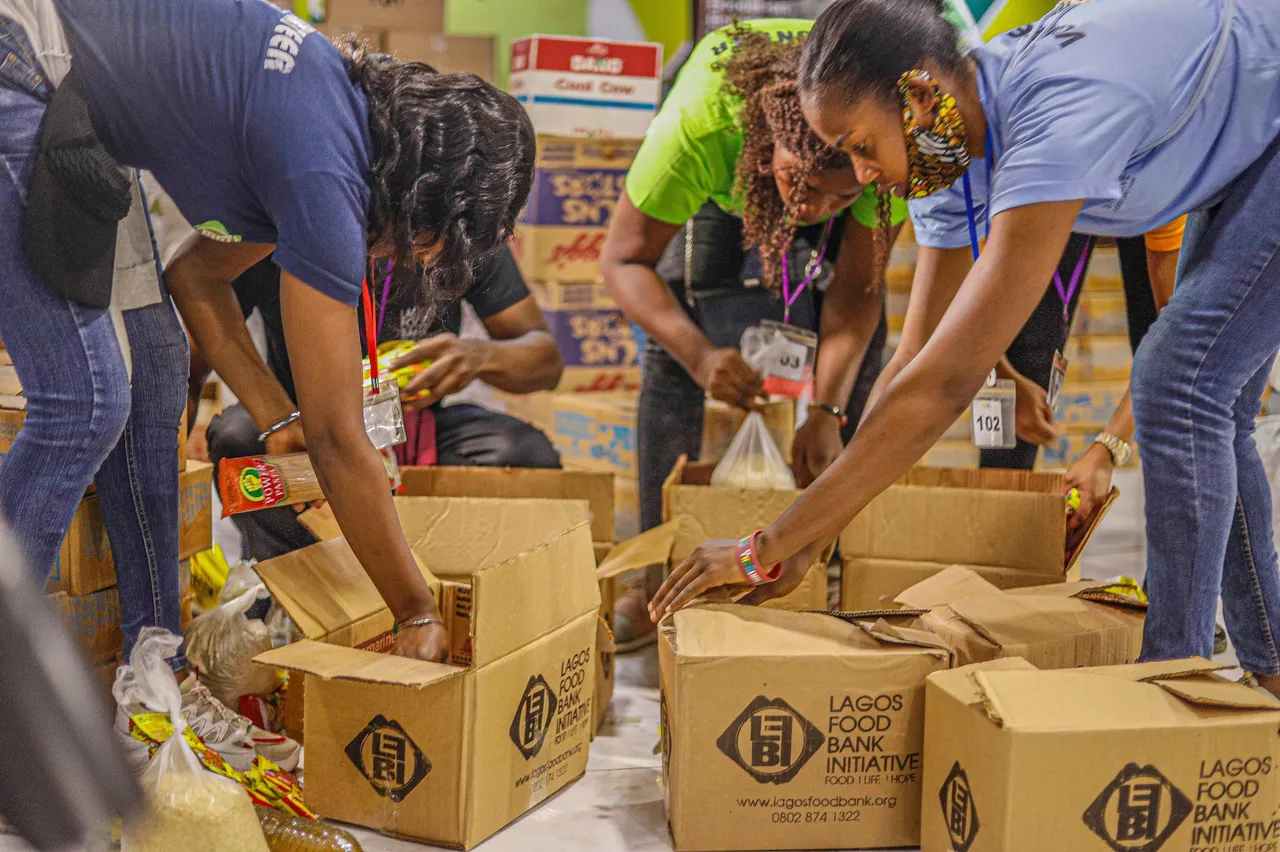
    What if the future of struggling communities isn’t charity… but re-seeding? Not just with money. Not just with programs. But with the actual conditions required for healthy communities to grow again. It all starts with tangible human needs while, at the same time, rebuilding the invisible architecture underneath them. That’s a powerful chain reaction. When you really look at many dying neighborhoods, towns, and forgotten places, you realize they aren’t suffering from a single problem. They’re suffering from collapse at every layer. Food deserts. Healthcare deserts. Education deserts. Opportunity deserts. Social deserts. Meaning deserts. A lot of these struggling communities…

  • Culture - Finance and Economy - Social and Self-Help

    Living Together at Scale (is it even possible?)

    I’ve been obsessed with a question lately, Not a new one, really. Not mine, even. How do human beings live together at scale without destroying one another? It’s the question underneath everything. Underneath economics. Underneath politics. Underneath every system we’ve ever built. An ancient problem dressed in new fashion, generation after generation, civilization after civilization. We keep inventing larger and more complex structures. Trying to solve something our ancestors couldn’t. How to coordinate human behavior in a way that creates stability without crushing the soul. And the civilizations that came before us… they learned something the hard way that we…

  • Culture - Finance and Economy - Making Money - Social and Self-Help

    What is Real Merit?

    My work is founded on the premise that the current system doesn’t reward merit; it rewards capital. And the two are not the same thing. A person with inherited wealth accumulates more. A person with the right connections gets the contract. A person with leisure time and stability has more opportunity to thrive. The system isn’t blind to effort; it’s blind to everything except money. What I propose is a genuinely multi-dimensional contribution model. Social capital, relational investment, skill-sharing, showing up. These aren’t soft alternatives to real value. They are the real value. I’m simply trying to make them legible and reciprocal. And…

  • Culture - Finance and Economy - Social and Self-Help

    Building a Collapse Community

    There’s something that I say so often, I sound like a broken record: It’s better to be proactive rather than reactive. Sounds simple enough. Most people would agree with it. Most people also aren’t doing it. Because being proactive is about being predictive. It’s about developing the discernment to look down the road and understand what the needs are going to be at that time. It’s about building before you need what you’re building.  And right now, in this particular moment in history, what needs to be built is community. Not community as a nice-to-have sort of thing. Not community…

  • Culture - Finance and Economy - Making Money - Social and Self-Help

    From Content… To Quality

    In the modern Internet-based economy, it’s inevitable that everything be paywalled. The economy is becoming more and more built on information, and the only way to monetize information is to charge people to access it. First, we had content creators who monetized their content. Then we had influencers who monetized their ability to influence others. Then we had context creators who took the masses of content and information and distilled it down into something contextual and meaningful. But now we have something new…. What? You might be asking. I’ll get to that soon enough. But, back to the problem. The…

  • Finance and Economy - Making Money - Social and Self-Help

    Upstream or Irrelevant

    We all know that things are changing in the American economy. It doesn’t show up in a single headline. But once you see the pattern, you can’t unsee it. The old assumption: that the small business, the neighborhood nonprofit, the local institution could compete on roughly the same playing field as the large corporation is becoming harder to defend. Not impossible to argue. Just harder. The ground is moving. Scale has always mattered. Capital has always mattered. This isn’t new. What’s new is the compounding speed of it all. Mass data, global distribution, and now artificial intelligence have done something…

  • Finance and Economy - Making Money - Social and Self-Help

    The Value That Stays Home

    There’s a useful way to look at the world, though it’s not the way we’re usually taught. We imagine nations as independent actors, each standing on its own. We imagine economies as things that simply happen; the product of effort, ingenuity, the occasional stroke of luck. We imagine that the wealth of the wealthy reflects some proportionate virtue, and the poverty of the poor some proportionate failing. But that isn’t quite right, and most people sense it isn’t right, even if they can’t say why. What we actually have is a system. It has layers. Some places extract. Some manufacture. Some…