What might feral living in an urban environment look like? And by feral, I don’t mean running naked through alleyways or squatting in abandoned buildings (though, to each their own). What I mean is something a bit more reserved, maybe even gentler; a kind of self-disenfranchisement from social expectations. Not as outright rebellion, but more as preservation. When the norms and demands of modern life start to feel absurd – and let’s be honest; they do – stepping outside of them is no longer an act of madness. It’s a proof of sanity. I’m not talking about dropping out of…
-
-
I get the feeling that most of us don’t really belong anywhere anymore? Like we’ve each been quietly pushed into our own little boxes; online, in our neighborhoods, in our families, even in our own heads. I don’t know that it was necessarily anyone’s grand plan. It’s just where things drifted. The internet came along and sold us on a promise of connection, but what it really gave us was mind-altering separation disguised as community. Now we live in our own personal echo chambers. Tiny, personalized little worlds where our own opinions bounce back at us until we start mistaking…
-
There’s a corner in every town that everyone drives past but no one really sees. Maybe it’s an empty lot, maybe it’s an old building with boarded windows, maybe it’s just a patch of grass that used to be something. Every community has one. It’s the kind of space that’s forgotten not because it isn’t useful, but because no one has claimed it; not as property, but as place. That’s the difference, really. A space is geography; a place is memory. It’s the difference between where you are and where you belong. For quite a while now, I’ve been thinking…
-
You ever notice how sometimes you can feel like you said all the right words but still not be understood? Like, you spelled it out perfectly, you were clear, even careful, and somehow the other person still heard something completely different. I’ve been thinking about that a lot. About how much of life depends not just on what we say, but on what we mean, and how those two things don’t always line up in the world around us. There’s this idea in anthropology about “high-context” and “low-context” societies (as has been recently pointed out to me). High-context cultures (like…
-
It might sound like a pretty odd question in this modern world of ours (how to find your tribe) but it really isn’t when you think about it. Humans have always been tribal creatures. Even today, we cluster together like magnets finding their poles. From social cliques and sports teams to fraternities, fan clubs, and the strange little corners of the internet we call “communities,” we’re always looking for people who feel like home. People who get us. People who belong to us; and us to them. I guess that instinct runs deep. Back in the early days, finding your…
-
We definitely need to rethink the way we measure a person – and ourselves. We tend to fixate on the worst moments, as if the sum of an entire life can be tallied by a single mistake or two, or three. Maybe it’s because we’re scared of our own flaws, so we point to someone else’s as a kind of shield. Or maybe it’s just easier to see the stumble than the long walk that came before and after. To really know a person, even ourselves, takes time and effort; and frequently we prefer the easy path. But grace doesn’t…
-
If you’re old enough, you may remember the Verizon commercial where a guy wanders around with his cell phone asking, “Can you hear me now?” The gimmick was meant to highlight Verizon’s supposedly superior connectivity. But lately, that question has been rattling around in my own mind for an entirely different reason. At the community resource center where I volunteer, someone had brought in several bales of hay to set up a Halloween photo booth for visitors. Nice thought, yes, but what this well-intentioned person hadn’t considered was my neurodiverse need for routine. So on Monday, when I went to…
-
There’s a Sicilian word I’ve come to love: futtitinni. It roughly translates to “don’t worry about it,” though that hardly captures its real essence. It’s often used as less of a command and more of a philosophy; a shrug of the shoulders toward life’s chaos. In Japan, there’s a cousin to this idea called wabi-sabi, which celebrates imperfection and impermanence as the natural order of things. Both words live in a sort of opposition to capitalist culture’s nervous pursuit of perfection. We spend our days sanding down rough edges (in our homes, our faces, our feeds) until nothing feels hardly…
-
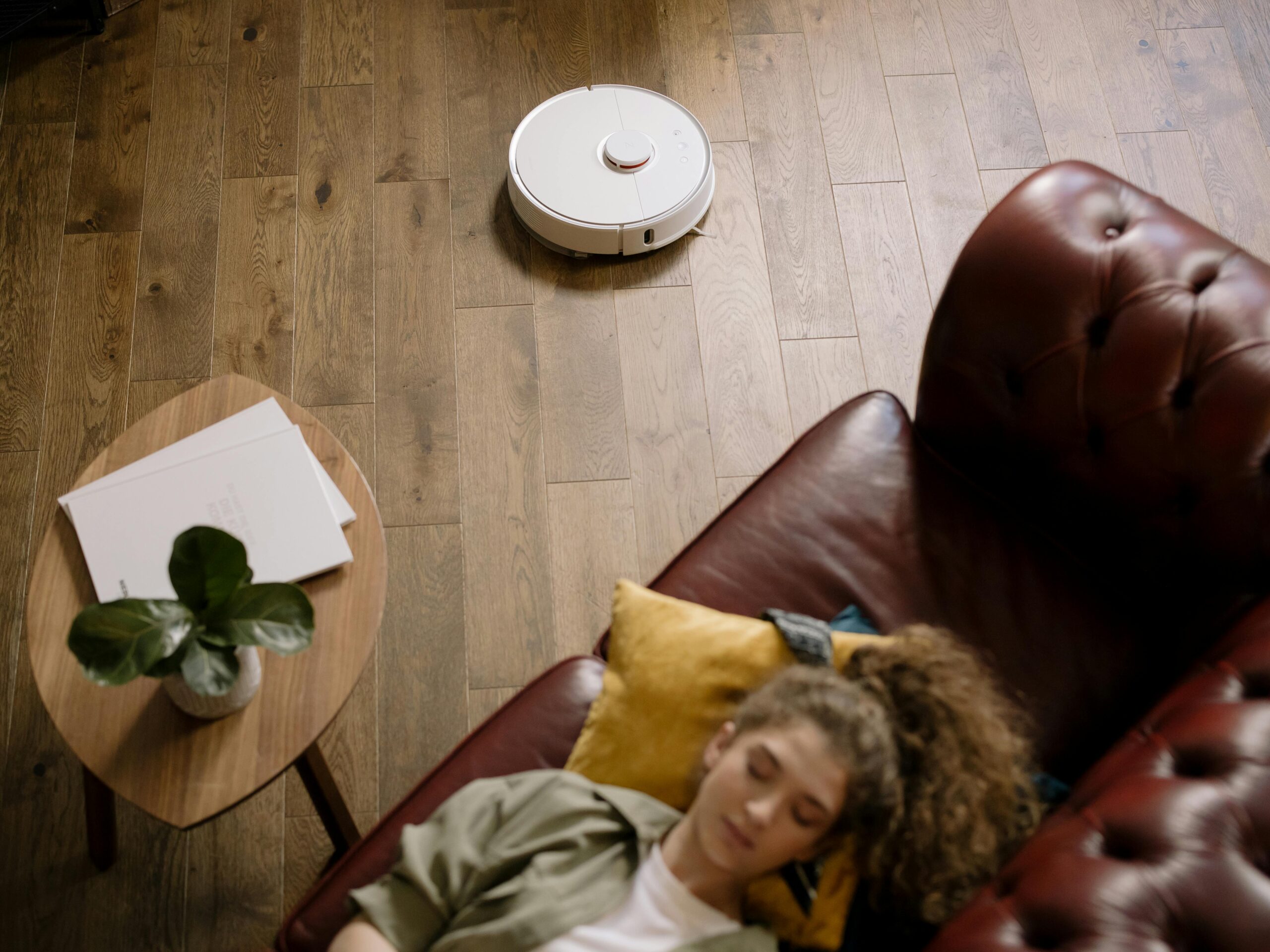
Sometimes it feels like we’ve stopped emotionally being people and started being more like appliances. Not the useful kind that make toast or brew coffee, but the little round kind that hums quietly through the living room, bumping into walls and sucking up whatever happens to be on the floor. I think that we have essentially become emotional Roombas at this point, wandering aimlessly across the vast carpet of modern life, guided by invisible algorithms and the occasional viral post that tells us where to go next. You can almost hear the whirring sound of our collective motor as we…
-
The idea of a “commons economy” sounds a bit quaint, like something out of a Jane Austin novel; like an echo of old village greens and shared pastures where people grazed their sheep before capitalism fenced everything off. But the truth is, we’re in desperate need of a modern revival of that concept. Not the literal pasture, but the spirit of it; the idea that resources, knowledge, and care belong not to private monopolies or government bureaucracies, but to the people who use, sustain, and depend on them. A commons economy is not quite socialism. It’s not quite capitalism either.…