• Social and Self-Help

    The World as We Have Always Known it – Ends with a Whimper

    The bugs are gone. I noticed it years ago when I drove west through Kansas and never once had to smear a moth from my windshield. It was the kind of thing you don’t think about until it is missing. Then you think about it a lot. When I was young, you could not go on a road trip without stopping at a gas station to scrape off the dead ones. They caked the front of the car like the aftermath of a battle. It was war, and they always lost. But now, there is no war. There are no…


  • Health and Wellness - Social and Self-Help

    Mass Society – How Will it Impact Humanity?

    For most of human history, society has been an intricate mosaic of distinct communities—villages, towns, religious congregations, and localized cultures—that functioned as semi-autonomous entities. Each possessed its own customs, traditions, and guiding philosophies, shaping individuals through the shared values and collective memory of their particular community. However, with the advent of mass communication, globalization, and most notably, the internet, these once-distinct cultural and ideological enclaves have begun to dissolve into a singular, overarching mass society. This mass society is not simply a larger collection of communities; it is something fundamentally different. Whereas communities historically provided a sense of identity, belonging,…

  • Health and Wellness - Social and Self-Help

    What Do You Want to Be When You Grow Up?

    There is a question we ask almost every child. We pose it lightly, with a smile, often in moments of calm or celebration, as if inviting them to enter the theater of possibility: What do you want to be when you grow up? At first glance, it seems innocent enough, even kind. It encourages the child to imagine, to name a star they might follow. But if one pauses—truly pauses—and examines the question as one might examine a splinter that has lodged unnoticed beneath the skin, one discovers that it is not a question at all, but a directive masked…

  • Finance and Economy - Making Money - Social and Self-Help

    The Company Store Never Closed

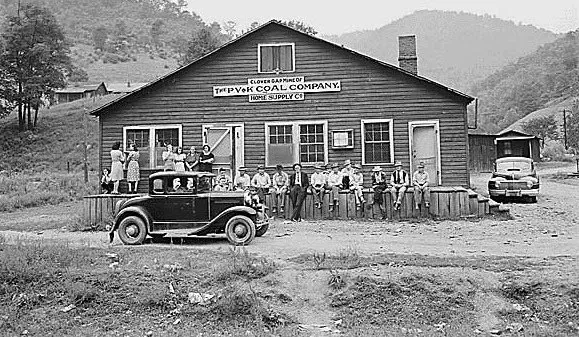
    It’s easy to forget that America once ran on company stores and scrip. Coal miners in Appalachia were paid in vouchers redeemable only at their employer’s shop, and the prices were high enough to keep them permanently in debt. It was a tidy arrangement for the owners: keep your workforce tethered to the very institution that exploits them. That system was supposed to have vanished with the 20th century. It didn’t. The names have changed—Visa, Mastercard, Amazon Prime—but the principle hasn’t. Our current economic system, so often praised for its dynamism and innovation, operates like an upgraded version of that…

  • Social and Self-Help

    Excuse Me, Are You Leaving or Moving In?

    I was sitting in my car in a Target parking lot, watching a young woman do everything except leave. She had entered the car a full five minutes ago, and yet, there she sat—head down, thumb scrolling, completely oblivious to the line of hopeful motorists circling her like vultures around roadkill. I remember a time when exiting a parking spot was a relatively swift affair. You’d get in the car, start the engine, check the rearview, and leave—just as God and the Department of Transportation intended. There was an unspoken agreement: someone was waiting, and you had the good sense…

  • Finance and Economy - Health and Wellness - Social and Self-Help

    Mammon in the Modern Age: Who (or What) Do We Really Serve?

    In today’s world, Mammon – once the symbol of wealth and material obsession – has taken on new and less obvious forms. It’s no longer just about chasing money. It’s about chasing more: the dream of success, the pull of consumer culture, the ever-present siren’s call of comfort and distraction. Mammon now wears many faces, and most of them look perfectly normal. To figure out who – or what – we really serve, we have to look closely at these desires and ask what they’re doing to us, not just on the surface, but deep down in our spiritual and…

  • Finance and Economy - Making Money - Social and Self-Help

    The End of Passive Economics: Building a Stakeholder Society

    In today’s economy, most people are locked into one role: consumer. We buy what’s offered, work in jobs where decisions are made elsewhere, and live in a world shaped by forces beyond our control. The people who make the rules—the ones who decide what gets built, who benefits, and who bears the cost—operate at a distance. It’s a top-down system, designed for efficiency and profit, not for participation. But what if that changed? What if people weren’t just passive recipients of goods and services but active participants in shaping them? That’s the idea behind co-production in a stakeholder economy: an…

  • Finance and Economy - Health and Wellness - Social and Self-Help

    The Addiction to Consumption: What Are We Really Trying to Buy?

    Walk into any shopping mall, fast-food restaurant, or social media platform, and you’ll see the same expression on people’s faces—a vacant, almost trance-like engagement with whatever they’re consuming. They scroll, they chew, they swipe their credit cards, all in a loop that feels automatic. It’s not hunger, not necessity, and often not even genuine enjoyment that drives these behaviors. It’s something else—something deeper and harder to name. Consumption has become an addiction, but not in the way we typically understand addiction. It’s not about physical dependence, at least not entirely. It’s about filling an emptiness most people struggle to articulate.…

  • Finance and Economy - Making Money - Social and Self-Help

    “The Well-Connected Community” by Alison Gilchrist: Why Networks Matter More Than Plans

    If you’ve ever been involved in community work, whether organizing a neighborhood event, running a local nonprofit, or just trying to get people to care about something beyond their own front doors, you’ve probably noticed a hard truth: good intentions aren’t enough. Some communities flourish, while others, despite funding and well-meaning policies, remain disconnected and struggling. What makes the difference? Alison Gilchrist’s The Well-Connected Community offers an answer that is both intuitive and often overlooked: it’s the networks. Not the kind you find on LinkedIn, but the real-world, everyday relationships that hold communities together. Drawing on years of experience in…

  • Finance and Economy - Social and Self-Help

    “Manufacturing Consent: by Noam Chomsky and Edward S. Herman: A Propaganda Model for the Modern Age

    In the nearly four decades since its publication, Manufacturing Consent: The Political Economy of the Mass Media has solidified itself as one of the most incisive critiques of American journalism. Noam Chomsky, the linguist turned political dissident, and Edward S. Herman, the late economist and media analyst, do not merely argue that the press occasionally fails in its duty to inform the public. Rather, they propose something more unsettling: that corporate and state interests shape mainstream news coverage so systematically that “objective journalism” often serves as an instrument of power rather than a check upon it. Their now-famous “propaganda model”…