There’s a woman in my neighborhood who bakes extra muffins every Sunday and leaves them in little paper bags on doorsteps. No note, no fuss. Just something sweet and simple, a way of saying, “I see you.” There’s also a guy down the street—handy with tools—who once spent an entire afternoon fixing a stranger’s fence because, as he put it, “I had the time, and they didn’t.” These small, almost invisible gestures don’t make the news. But in the world of KommunityKoin, they’re part of a different kind of economy—one that doesn’t run on dollars, likes, or status points. It…
-
-
There was a man who waited. He waited for the world to tell him who he was, what he was, and why he was here. He waited for a sign. He waited for permission. He waited until the waiting itself became his purpose. And then one day, he looked in the mirror and saw a stranger staring back at him. A man unmade. A man undefined. And he realized the world had told him nothing. It had passed him by without a second glance, like a river ignoring a stone that refused to shape itself against the current. There is…
-
A truly democratic free-market society would not be a contradiction in terms but a balance of forces—economic power held in check by democratic accountability, individual liberty safeguarded by collective responsibility. It would be a society where markets serve people, not the other way around, and where democracy is not merely a ritual of voting but a structure that permeates institutions, workplaces, and daily life. Such a society would begin with first principles: economic freedom must not come at the expense of democratic power, and political democracy must not be hollowed out by economic inequality. The concentration of wealth is a…
-
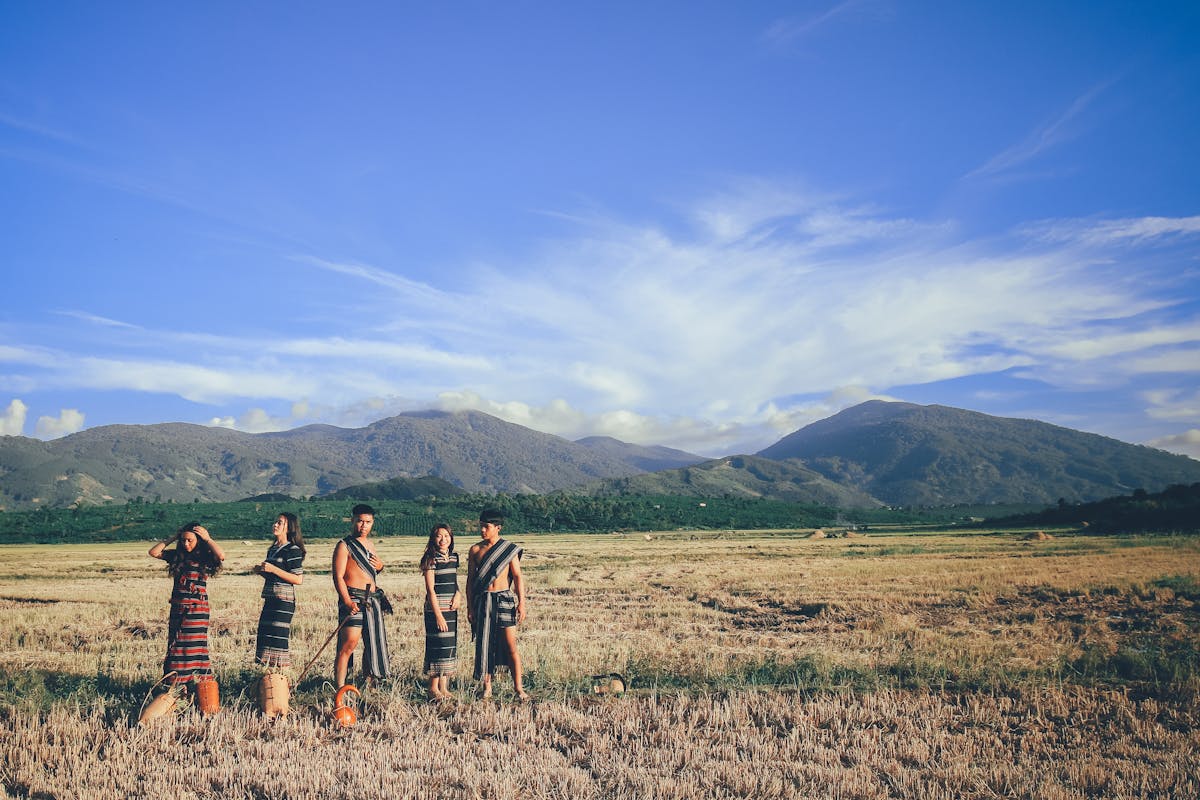
There once was a world where disputes are settled with bows and arrows, not courtrooms. Where a child roamed freely, unburdened by the paranoia of “stranger danger.” Where food was neither purchased nor grown but hunted with patience and eaten with gratitude. This isn’t some utopian fantasy—it’s the way humanity lived for tens of thousands of years before airports, Amazon, and antibiotics. And in The World Until Yesterday, Jared Diamond asks an interesting question: What can we learn from that world? Diamond, best known for Guns, Germs, and Steel, turns his anthropological eye to traditional societies—small-scale groups like the Inuit,…
-
A man spends his life chasing things. Money, maybe. Or power. Or fame. It depends on the man, but the chasing is always there. He runs after something because he thinks he must, because everyone else is running too, and because stopping feels like failure. But there comes a day when he catches what he was chasing, and he sees it for what it is. A pile of money that does not love him back. A title that does not make his food taste better. Applause that fades the moment the hands stop clapping. He thought the chase would make…
-
In the modern world, we have exchanged the act of creation for the mechanics of production. This transition has reshaped not only our material environment but also the very core of our inner lives. To create is to give of oneself, to engage in a process that bears the imprint of thought, love, and effort. To produce, on the other hand, is to operate within a system that demands efficiency, standardization, and detachment. It is the difference between a carpenter crafting a table by hand and a machine stamping out identical forms at the press of a button. One is…
-
As artificial intelligence increasingly dominates the knowledge-based economy—handling information processing, decision-making, and even creativity at unprecedented levels—humanity must redefine its economic role to adapt to this new world. This shift necessitates a post-knowledge economy, where value is no longer primarily derived from knowledge work but from human-centric activities that AI cannot easily replicate or replace. The Rise of Human-Relational Economies Despite AI’s capabilities, certain human-led economies will continue to thrive, especially those rooted in interpersonal connection and trust. Emotional intelligence and empathy, for example, remain essential in caregiving, counseling, therapy, and community-building—areas where AI lacks genuine human connection. Similarly, trust-based…
-
For most of human history, the powerful have found new ways to stay powerful. Feudalism, as a system, never really ended—it just changed costumes. The medieval model of landowners controlling serfs gave way to industrial magnates overseeing factory workers. Now, we find ourselves in a new iteration: a digital aristocracy, where control over technology replaces control over land or industry. The structure remains eerily familiar. A small class of owners dictates the terms while the majority produces wealth on their behalf, often with little agency over the rules of the game. This shift isn’t necessarily surprising. Feudalism was never just…
-
If one were to pause, just once a day, to extend an act of kindness with no expectation of return, what might change? The idea is so simple that it is often dismissed outright—too quaint, too idealistic, too fragile for the weight of reality. Yet, it is precisely its simplicity that makes it so powerful. To perform an act of goodness, not for gain or recognition, but purely because it can be done, is to resist the inertia of self-interest that governs so much of human activity. The idea itself is not new. It has been spoken of in sermons,…
-
For most of modern history, people worked to survive. If they were lucky, they worked to get ahead. In recent decades, the promise of capitalism—at least in its idealized form—was that hard work led to stability, security, and, if things went really well, a decent life. That promise is breaking. The middle class is shrinking. Homeownership, once a given for anyone with a steady job, is increasingly out of reach. Wages have stagnated while the cost of living climbs. At the same time, artificial intelligence is automating jobs faster than most industries can adapt. Millions of people, especially younger generations,…