Human history, with all its complexities and advancements, can often feel like a straight line of progress. Yet, as philosopher and ethnobotanist Terrence McKenna suggests in his theory of the “Archaic Revival,” life and society are far from linear. Instead, they are cyclical, always returning to a state of earlier balance, no matter how far they advance. McKenna’s vision is one where history is not just a series of events progressing toward an undefined future but rather a continuous cycle of growth, peak, and return. In light of recent global events, one must wonder: Have we reached another peak in…
-
-
Throughout history, societies have experienced numerous economic collapses and systemic breakdowns, some of which left governments and monetary systems in disarray. In such times, communities often turned to alternative economies – bartering, mutual aid networks, local currencies, time co-ops and time banks, etc. – to sustain themselves when conventional markets failed. In our current times, with looming global threats, ranging from climate change to political instability, it’s more important than ever to reconsider alternate systems that could allow communities to thrive when the established economic order falters. One such system, time co-ops or time banking, presents a solution that may…
-
When we hear the word “wealth,” our minds often jump to thoughts of money, investments, and material possessions. This form of wealth is universally recognized and celebrated as a symbol of success and security. For many, it represents a dream to chase, a goal to achieve, and a state of living that promises comfort and happiness. However, there are other kinds of wealth that are equally desirable and, in many ways, more attainable. These are forms of wealth that don’t come with a price tag but offer, frequently more, fulfillment and a richer quality of life. The Wealth of Compassion…
-
The “hustle economy” refers to a labor market characterized by people working multiple jobs, gigs, or side hustles, often independently or on a freelance basis, to earn a living or supplement their primary income. It’s driven by the rise of digital platforms (like Uber, Fiverr, or Etsy) that connect workers directly with consumers, allowing for flexible, task-based work. The hustle economy is marked by a shift away from traditional full-time, long-term employment toward more fragmented, short-term, and often precarious work arrangements. It offers flexibility and the potential for entrepreneurial creativity but can also come with drawbacks, such as lack of…
-
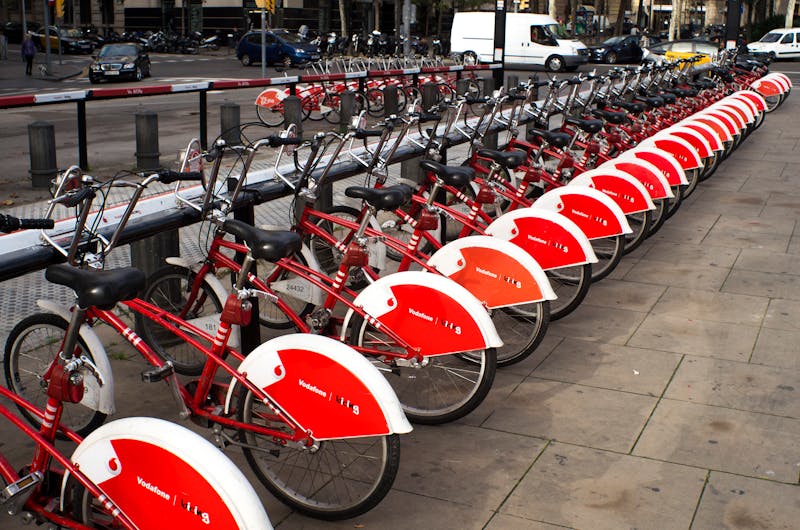
The access economy, also known as the sharing economy or renter economy, may represent a fundamental shift in how goods and services are consumed. In this economic and social model, individuals would rent or subscribe to access rather than purchasing items outright. This change would be a radical departure from the long-standing Western economic model that has historically been centered around the desire for ownership. For much of human history, the aspiration to own property, whether land, a home, or personal goods, has been a powerful economic and social motivator. Yet, the rise of the access economy brings up the…
-
In a “would-be” world not unlike our own, a different century unfolded from 1910 onward. Instead of the relentless march toward mass industrialization, digital revolution, and urban sprawl, humanity chose another road – one less traveled, guided by principles of sustainability, simplicity, and community. By 1910, the world had already tasted the fruits of industry and innovation. Factories hummed, trains chugged across continents, and the telegraph connected people at an unprecedented speed. But at the dawn of a new decade, humanity stood at a crossroads, and a great debate ensued – a debate that would shape the next century. Visionaries,…
-
The saying; “those who fail to plan, plan to fail” has never been more relevant. As we move toward increasing political chaos in Western nations and as we walk the razor’s edge of world war 3 and a meta-crisis – the likes of which humanity has never seen – failing to plan may be a literal death sentence. But how many people are even aware of the dangers that lurk just around the corner, much less actually are engaged in preparing for them? Let’s discuss why it is so incredibly important to, not only be well informed but, be proactive…
-
“if we, as a society, don’t practice true charity and compassion, then who are we, what are we?” The idea of charity, deeply rooted in religious, social, and moral traditions, has been a cornerstone of human civilization since the beginning. Across cultures and eras, the idea that the “have’s” should help the “have not’s” has been seen as a measure of a society’s humanity and moral integrity. In the Old Testament, Deuteronomy 15:11, we see, “For the poor will never cease from the land; therefore I command you, saying, ‘You shall open your hand wide to your brother, to your…
-
“be your own hero in this journey that we call life… if you don’t, who will” The idea of the hero’s journey, or monomyth, as articulated by Joseph Campbell, is a universal pattern found in myths, stories, and legends across different cultures and times. It describes the path a hero takes, often beginning with a call to adventure, followed by trials and challenges, a climactic victory, and a return home transformed by the experience. This archetypal journey is not just a framework for storytelling; it is also an important metaphor for personal growth, success, and fulfillment in our everyday lives.…
-
“A lion doesn’t have to roar…you just know.” This simple statement does a good job in capturing the essence of true power. The lion, often referred to as the king of the jungle, embodies a presence so commanding that it requires no vocalization to assert its dominance. Its strength, confidence, and authority are evident in its very being. The lion’s power is not in its roar but in its silent, unassailable presence. This idea suggests that true strength and confidence, when deeply ingrained within, do not need to be broadcasted or exhibited to be recognized. Like the lion, when we…