• Culture - Finance and Economy - Making Money - Social and Self-Help

    “Blood in the Machine” by Brian Merchant

    This book is essentially a re-examination of the Luddites;  and an argument that we have misunderstood them for two hundred years. Most people hear the word “Luddite” and think “anti-technology fool.” Merchant argues that this is historical propaganda. The original Luddites were not ignorant peasants terrified of machines. They were highly skilled textile workers during the Industrial Revolution who understood technology very well. What they opposed was not technology itself, but the way factory owners used technology to centralize power, cut wages, deskill labor, and turn independent craftsmen into replaceable factory workers.   The book walks through early 1800s England,…

  • Culture - Health and Wellness - Social and Self-Help

    Nos Misérables

    I’m watching Les Misérables and it is… tearing my heart. Is there a better depiction of the human social condition? A raw testament of how money and greed and runaway systems crush the human soul. I weep. But after the catharsis of emotion, I find there are many other issues to be considered. Les Misérables is, in many ways, about systems, communities, and what happens when society forgets that people belong to one another. And what happens when systems fail those they should be serving. The conventional reading is that Jean Valjean is redeemed through personal transformation. And that’s true. But…

  • Culture - Finance and Economy - Making Money - Social and Self-Help

    The Human Capital Economy

    The Human Capital Economy: Making Contribution Visible in an Age of Social Fragmentation Executive Summary For centuries, societies have become increasingly sophisticated at measuring financial capital. We can track dollars, assets, ownership, debt, investment returns, productivity, consumption, and economic growth with astonishing precision. In fact, entire industries exist to monitor, analyze, and optimize the movement of money. Yet one of the most important forms of wealth remains largely invisible. Human capital. Social capital. Relational capital. Trust. The relationships that sustain communities, create strength, generate opportunity, and improve quality of life are often unmeasured, underappreciated, and unsupported by modern systems. This…

  • Culture - Health and Wellness - Social and Self-Help

    Cordyceps: The Neural Network that Controls You by Marina Karlova 

    There’s an interesting YouTuber that I’ve been watching who discusses her ideas on the ills of society. And a lot of what she talks about overlaps with the themes that I’ve been exploring… memetics, social contagion, systems shaping behavior, the tension between authentic community and algorithmic culture, etc.  Her new book; Cordyceps: The Neural Network that Controls You by Marina Karlova is a psychological and philosophical self-help book that argues most human behavior is not fully self-directed, but shaped by an invisible “parasitic” social conditioning system. The title uses the real cordyceps fungus (which hijacks insects and controls their behavior)…

  • Culture - Social and Self-Help

    The Missing Ingredient in Social Change Networks

    I’ve been reading a series of essays lately about building networks; about how social change leaders must come together, collaborate, cooperate, connect. And that’s absolutely true. I believe it wholeheartedly. But let me tell you about my experience on the ground. I belong to many groups of social change leaders. We have Zoom calls weekly; sometimes two or three times a week. We talk about the change we want to see. We talk about what needs to happen and how to make it happen. And honestly? We know what we’re talking about. We’re not amateurs. We’ve been doing this work…

  • Culture - Finance and Economy - Making Money - Social and Self-Help

    Diversify Your Trust Portfolio

    Modern society has become extraordinarily efficient at scaling trust upward, but relatively poor at cultivating trust sideways. We trust distant institutions more than our own neighbors. We know how to coordinate with millions of strangers through banks, corporations, governments, and digital platforms. Yet many people couldn’t tell you the names of those living three doors down. The achievement is remarkable. The vulnerability is obvious. Because trust concentrated in large systems creates efficiency, but trust distributed through relationships creates stability. That’s one of the reasons initiatives around community, reciprocity, social capital, and time banking is so interesting. It’s not anti-market or…

  • Culture - Social and Self-Help

    Newspeak

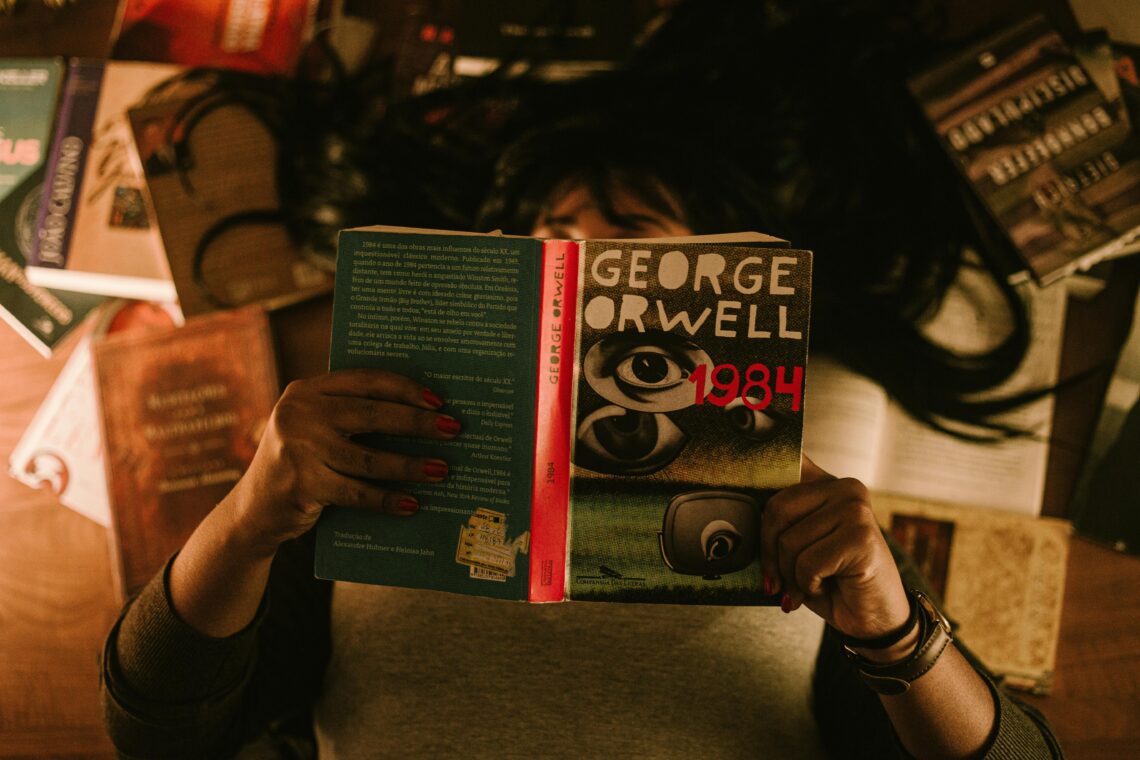
    Orwell’s 1984 warning is more than chilling. And the part that haunts me most is;  Newspeak. It was more than propaganda. It was designed to shrink the range of thought itself. The Party in the novel understood something important: people think through language. If you remove the words for certain ideas, over time it becomes harder for people to even conceptualize those ideas clearly. Not impossible, necessarily, but foggier. More difficult. Easier to suppress. So instead of simply banning dissent, the regime engineers language so dissent becomes linguistically inconvenient. Words associated with rebellion, individuality, freedom, nuance, or independent reasoning are…

  • Culture - Social and Self-Help

    On The Virture of Stubbornness

    I’ve been thinking. I know, I know — that’s dangerous. But I do it anyway. We often praise words like courage, agency, grit. We like them on our motivational posters and LinkedIn bios and self-help book covers. We treat them like distinct virtues; separate muscles you develop through separate disciplines. What if they’re not? What if they’re all just… different expressions of stubbornness. We admire people who succeeds against the odds. But if we really think about them. Strip away the myths we build around them after the fact; the destiny, the talent, the timing. What’s actually there, at the…

  • Culture - Health and Wellness - Social and Self-Help

    You Are What You Eat; Even the Junk

    One of the strangest things I noticed when I lived in France wasn’t the history, or even the slower pace of life. It was the Doritos. I’m serious. You could walk into a convenience store, buy a bag of Doritos, and they tasted different. Less artificial. Less like something engineered in a laboratory and more like something that had once been connected to actual food. That raises an uncomfortable question: “Why don’t more Americans know this?” We spend enormous amounts of money treating chronic illness. Diabetes. Obesity. Heart disease. Digestive disorders. Autoimmune conditions. Depression. Anxiety. Yet very little public conversation focuses…

  • Culture - Health and Wellness - Social and Self-Help

    Eco-Civilization

    Ecocivilization: Making a World That Works for All is, at its core, an argument that humanity’s crises are not separate crises at all. Climate collapse. Loneliness. Economic inequality. Political polarization. Ecological destruction. Mental health decline. Meaninglessness. They are all symptoms of the same deeper problem: the way modern civilization has taught us to think about ourselves and the world around us. Jeremy Lent argues that modern industrial culture is built on a worldview of separation. Human beings separated from nature. Individuals separated from community. Economics separated from morality. Growth separated from limits. We’ve been taught to see life as competition…